
This week, a long-overdue conversation finally happened, bringing the White House’s foundational truths into stark relief through the voices of confirmed **Descendants**.
ABC News, collaborating with the genealogical experts at American Ancestors, has reportedly unearthed and confirmed the first living descendants of an enslaved individual who labored to construct the very seat of American power. The interview, timed to coincide with a national holiday meant to celebrate freedom, arrived with the weight of centuries behind it. It’s a moment that forces the nation to look squarely at the hands that built its most iconic symbol, hands that were anything but free.
The political context is, as ever, layered. In an era where historical narratives are fiercely contested, and the teaching of America’s complicated racial past is often politicized, the emergence of these voices carries particular resonance. It’s a direct challenge to any sanitized version of history, presenting an undeniable, human link to a past many would rather forget. For some, it’s a long-awaited act of recognition; for others, perhaps, an uncomfortable intrusion into a carefully curated national myth.
What landed
The sheer fact of this interview’s existence is, in itself, a momentous landing. ABC News and American Ancestors deserve credit for the meticulous investigative work that brought these individuals, and their ancestral stories, into the public light. It’s not simply a matter of historical curiosity; it’s an act of reclamation. For generations, the contributions of enslaved people to the nation’s infrastructure and institutions have been deliberately obscured or relegated to footnotes. To confirm a direct, living lineage to an enslaved person who literally built the White House is to tear through that veil of anonymity.
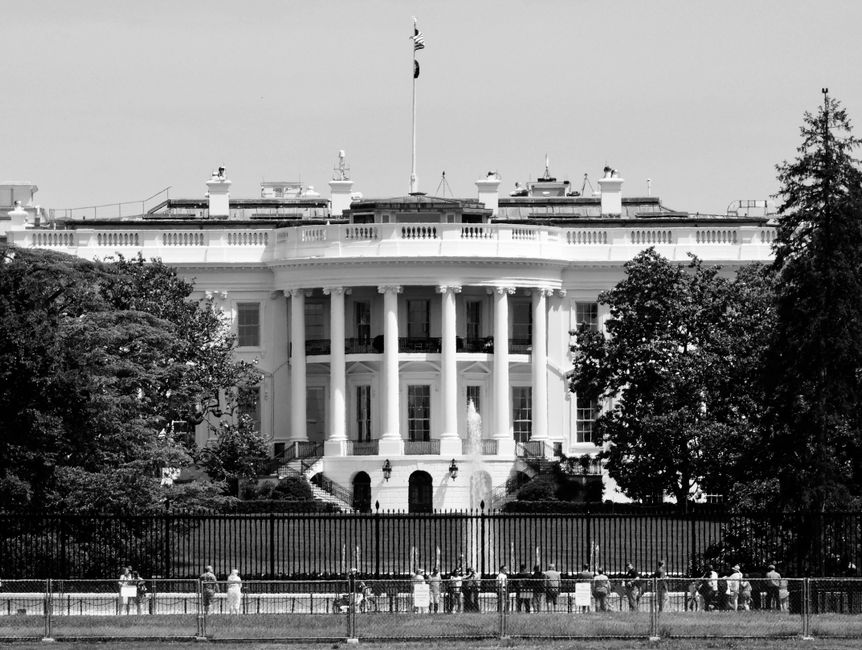
The interview, as described, serves as a powerful, humanizing counter-narrative to the abstract discussions of slavery. It moves beyond statistics and academic debates, putting faces and family histories onto the ledger of forced labor. One can imagine the quiet dignity and profound sense of connection expressed by the descendants as they spoke of their ancestor, a man or woman whose name may have been lost to history but whose genetic and spiritual legacy endures. This is more than just a story; it’s a living testament to resilience, a testament that should rightly shake any complacency regarding the nation’s historical amnesia.
Furthermore, the interview implicitly validates the efforts of countless historians, activists, and educators who have long insisted on a more complete, unvarnished telling of American history. It offers tangible proof that the “uncomfortable truths” are not merely theoretical constructs but deeply rooted realities with living consequences. The ability to connect specific individuals to such a pivotal, yet painful, historical moment creates a powerful focal point for national introspection. It gives permission, perhaps even demands, that the public acknowledge the true cost of constructing a republic founded on ideals of liberty while simultaneously upholding the institution of slavery.
What doesn’t add up
While the recognition is undeniably significant, the discerning observer can’t help but ask: why now? Why did it take until 2026, over two centuries after the White House was built, for such a direct and confirmed lineage to come to light? This isn’t a critique of the descendants or the excellent work of ABC News; rather, it’s a pointed question about the historical priorities and selective memory of a nation that has often chosen convenience over comprehensive truth. For too long, the contributions of enslaved people were not merely overlooked but actively suppressed, their identities erased from official records, making such confirmations extraordinarily difficult. The very “discovery” of these descendants highlights the profound, systemic gaps in historical documentation and national consciousness that allowed this truth to remain in the shadows for so long.
One might also wonder about the broader implications beyond this singular, powerful story. While the focus on “an enslaved individual” is compelling, it risks inadvertently minimizing the collective trauma and immense contribution of the *multitude* of enslaved people who toiled on the White House and countless other national projects. Does this interview, however impactful, serve as a kind of symbolic absolution, allowing the nation to pat itself on the back for acknowledging *one* story without committing to a more expansive, challenging reckoning with the full scope of its racialized past and present? There’s a fine line between meaningful recognition and performative symbolism, and the critical eye must remain vigilant.
Moreover, the interview, by its very nature as a media event, raises questions about its ultimate utility. Will this powerful narrative translate into tangible action? Will it inform policy discussions around reparations, historical education reform, or the ongoing struggle for racial justice? Or will it remain a poignant, isolated moment, celebrated and then filed away, a historical box ticked without truly challenging the underlying structures that continue to perpetuate inequality? The “contradiction” here lies between the profound historical revelation and the potential for it to be absorbed into the national narrative without truly disturbing the status quo. It’s a beautiful, painful truth, but truth alone doesn’t always dismantle entrenched systems.
Come Monday morning, the White House will still stand, its foundations unshaken, but perhaps now viewed through a slightly different lens. For many, the knowledge of these descendants will deepen their understanding of American history, pushing past platitudes to a more complex, honest truth. For others, it might be a passing news item. The real stakes lie in whether this powerful interview marks a genuine shift in the national conversation, or merely another poignant, yet ultimately contained, reflection on a past we’re still struggling to fully confront.
Source: OnTheRecord