
The Statue of Liberty, illuminated by the ambitious “Liberty Lights” spectacle, promised a dazzling celebration of America’s quarter-millennium, but what it truly illuminated was the stark contrast between historical ideals and present-day complexities.
The grand stage for this commemorative display was none other than New York’s iconic Statue of Liberty, an enduring symbol of Franco-American friendship and democratic aspirations. Produced by Monumental Tour and Auditoire, featuring a performance by Michael Canitrot, the event was explicitly stated to be in “close partnership with the consulate general of France in New York,” marking America’s 250th anniversary. It was a spectacle of lasers, lights, music, and dance, a visual feast designed to evoke unity, history, and the enduring flame of liberty. Yet, in the absence of any direct statements from the leaders whose nations were being celebrated, the dazzling display became a masterclass in political symbolism, inviting us to read between the lines of light and shadow.

What landed
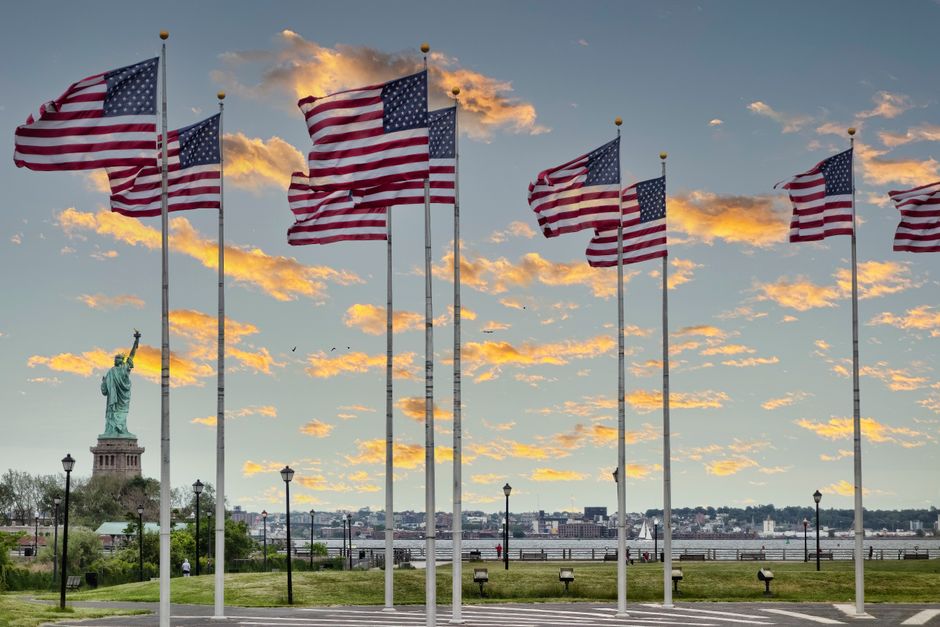
The sheer ambition and visual artistry of “Liberty Lights” undoubtedly landed with a powerful emotional punch. As reported by ABC News, the production transformed the familiar silhouette of Lady Liberty into a dynamic canvas, a beacon of light against the night sky. The choice of lasers, music, and dance offered a modern, immersive tribute, acknowledging the technological advancements of 250 years while harkening back to the foundational principles of a nation. This was, in essence, a grand gesture, a shared moment of spectacle that, on its surface, sought to unite.
The explicit involvement of the French Consulate General underscored the historical bedrock of the relationship between the two nations. It was a clear nod to Lafayette, Rochambeau, and the pivotal French support during the American Revolution – a reminder of a camaraderie forged in shared revolutionary zeal. In a world increasingly fractured, such a visible reaffirmation of a centuries-old alliance, even if purely symbolic, can be seen as a welcome anchor. The event successfully projected an image of enduring partnership and a universal appeal to the abstract ideal of liberty, momentarily transcending the everyday political fray to celebrate a shared heritage that, at its best, represents the highest aspirations of self-governance and human rights.
What doesn’t add up
While the spectacle was undeniably breathtaking, the very silence surrounding it, the absence of any explicit, on-the-record statements from either American or French leadership, speaks volumes. This grand, historical celebration, produced in partnership with a foreign consulate, offered a carefully curated vision of harmony and shared values that, upon closer inspection, doesn’t quite add up to the realities of contemporary Franco-American relations or America’s own internal dialogues about liberty.
The event presented an idealized tableau, a pristine vision of “Liberty” through light and sound. Yet, this glossy historical re-enactment felt curiously detached from the complex, often contentious, global stage. Where were the reflections on current geopolitical challenges, the trade disputes, the occasional diplomatic snubs, or the diverging approaches to international crises that have periodically strained the U.S.-French alliance? The celebration seemed to float above these realities, presenting a frictionless partnership that exists more in historical memory than in the daily grind of foreign policy. It felt like a deliberate act of political theatre, designed to highlight an aspirational past while neatly sidestepping a more complicated present.

Furthermore, the very concept of “Liberty” in America’s 250th year is far from a settled, universally agreed-upon notion. The lasers danced, the music swelled, but the profound questions about who truly enjoys liberty, what its limits are, and how it is protected or curtailed in modern America were left unaddressed. The dazzling display, by its very nature, offered no space for dissent, for critique, or for the uncomfortable truths of a nation still grappling with its founding promises. It presented liberty as a pre-packaged, celebratory ideal, rather than a dynamic, contested, and often fragile pursuit. This gap between the event’s celebratory messaging and the ongoing, difficult conversations within the United States felt less like an oversight and more like a deliberate narrative choice – a beautiful distraction from the messy work of actual governance and societal reconciliation. The implied statement from both nations, delivered through light, was one of unwavering unity and idealized freedom, a narrative that conveniently contradicts the more nuanced and often fractious truth of their interactions and internal struggles.
When Monday morning rolls around, the “Liberty Lights” will have faded, but the underlying questions persist. Did the spectacle genuinely reinforce a shared commitment to liberty, or did it merely serve as a convenient, albeit stunning, evasion of the harder truths facing both the United States and its allies? The beautiful facade of unity, while momentarily inspiring, may only deepen the skepticism of those looking for substance over spectacle, for a clear-eyed assessment of where liberty stands, rather than just a dazzling light show.
Source: OnTheRecord