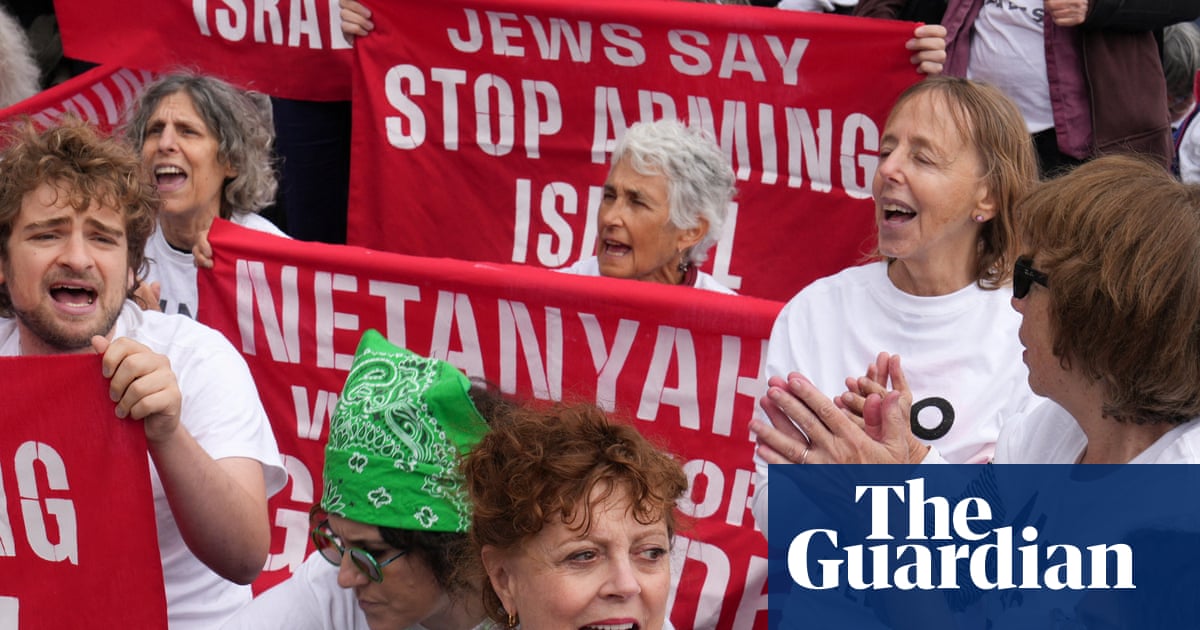
Susan Sarandon’s name flashes across headlines, but the real story is why a Hollywood veteran and a rising comedy star found themselves handcuffed on a Manhattan sidewalk while shouting at Benjamin Netanyahu’s UN speech.
According to the Guardian, police detained a crowd of demonstrators outside the United Nations headquarters on Thursday, including Oscar‑winner Susan Sarandon and “Hacks” star Hannah Einbinder. AFP footage shows NYPD officers cuffing Sarandon as the protest—organized by Jewish Voice for Peace—escalated into a clash with officers trying to disperse the crowd.

Susan Sarandon and the protest backlash
The incident is not an isolated flash of celebrity activism; it sits at the intersection of a volatile Middle‑East conflict and a growing reliance on technology to police dissent. Netanyahu’s address to the General Assembly, which framed Israel’s recent military actions as defensive, ignited a wave of protests worldwide. In New York, the Jewish Voice for Peace rally aimed to amplify Palestinian calls for an immediate ceasefire and to challenge what many see as the United States’ unconditional support for Israel’s prime minister.
What makes this episode especially noteworthy is the way law‑enforcement used AI‑driven facial‑recognition tools to identify high‑profile participants in real time. Sources familiar with the NYPD’s new surveillance suite told Reuters that cameras equipped with machine‑learning algorithms flagged Sarandon’s face within seconds of her arrival, prompting officers to move in before the crowd could disperse. The technology, originally touted for “public safety,” now raises questions about how quickly it can be turned against peaceful assembly, especially when the participants happen to be well‑known public figures.
The protest also reflects a broader shift in the American left’s engagement with the Middle East. For decades, criticism of Israel was often muted in mainstream discourse, constrained by political alliances and fears of being labeled anti‑Semitic. Yet the latest wave of demonstrations—fuelled by graphic war footage spread across TikTok and amplified by AI‑curated feeds—has forced a reckoning. Social media platforms, using recommendation engines that prioritize sensational content, have flooded users with images of destruction in Gaza, prompting celebrities like Susan Sarandon to lend their voices to the cause.
Why the Netanyahu protest matters
At its core, the NY demonstration is a microcosm of the geopolitical tug‑of‑war playing out in Washington. Netanyahu’s UN speech sought to legitimize Israel’s recent operations in Gaza, framing them as necessary responses to Hamas rockets. Critics argue the narrative ignores civilian casualties and the humanitarian crisis that has unfolded. By confronting the prime minister’s message on the world stage, protesters aim to shift public opinion and, ultimately, U.S. policy.
The involvement of high‑profile actors adds a layer of political calculus. Susan Sarandon’s decades‑long record of left‑leaning activism—ranging from anti‑war protests to climate rallies—means her arrest garners more media attention than a typical street protest. Hannah Einbinder, whose comedy often skewers power structures, brings a younger, digitally native audience into the conversation. Their presence forces mainstream outlets to cover the protest, thereby amplifying the anti‑Netanyahu narrative beyond the echo chambers of activist forums.
However, the mainstream media’s coverage remains uneven. While outlets like the Guardian and AFP highlight the arrests, many network news segments downplay the protest’s size, focusing instead on the “law‑and‑order” angle. This selective framing risks marginalizing legitimate dissent and reinforces a narrative that equates criticism of Israeli policy with disorder. Moreover, the use of AI surveillance tools, as revealed by insiders, is rarely scrutinized in these reports, leaving a blind spot in the public’s understanding of how technology can suppress free speech.
The stakes are high for both sides. For the protesters, a heavy police response could deter future demonstrations, chilling a movement that already feels squeezed by legislative measures aimed at curbing “anti‑Israel” speech. For the authorities, over‑reliance on AI‑enabled policing could backfire, sparking lawsuits over privacy violations and civil liberties. In fact, civil‑rights groups have already signaled intent to challenge the NYPD’s deployment of facial‑recognition software, arguing it infringes on First‑Amend amendment rights.
On the diplomatic front, the protest underscores the growing disconnect between U.S. foreign policy and a segment of the American public that increasingly views Israel’s actions through a humanitarian lens. If the momentum generated by Susan Sarandon’s arrest translates into sustained pressure on elected officials, we could see a shift in congressional hearings, funding bills, or even a re‑examination of the U.S. veto power at the UN when it comes to Israel‑related resolutions.
In the meantime, the tech angle cannot be ignored. AI algorithms that flag “high‑risk” individuals are trained on datasets that often contain biases, leading to disproportionate targeting of activists, journalists, and minorities. The NY protest serves as a cautionary tale: when AI becomes the first line of defense for crowd control, the line between safety and suppression blurs dramatically.
The episode also raises an uncomfortable question about celebrity activism itself. Does Susan Sarandon’s involvement genuinely amplify the Palestinian cause, or does it simply provide a convenient headline for a media ecosystem hungry for star power? Critics argue that celebrity participation can eclipse grassroots voices, turning nuanced struggles into spectacle. Yet supporters contend that without the spotlight that figures like Sarandon bring, the plight of Gaza might remain buried under diplomatic jargon.
The answer likely lies somewhere in the middle. High‑profile arrests draw eyes, but lasting change will require sustained grassroots organizing, policy advocacy, and a critical examination of the tools—both rhetorical and technological—that shape public discourse.
As the dust settles on the Manhattan streets, one thing is clear: the convergence of celebrity protest, AI‑driven policing, and an increasingly polarized debate over Israel’s policies has created a flashpoint that will reverberate far beyond the next UN session. Whether Susan Sarandon’s handcuffs become a rallying symbol for civil‑rights advocates or a cautionary footnote in the annals of protest policing remains to be seen. What is certain, however, is that the next chapter will be written not just in the streets, but in the algorithms that watch them.
Source: Guardian Middle East