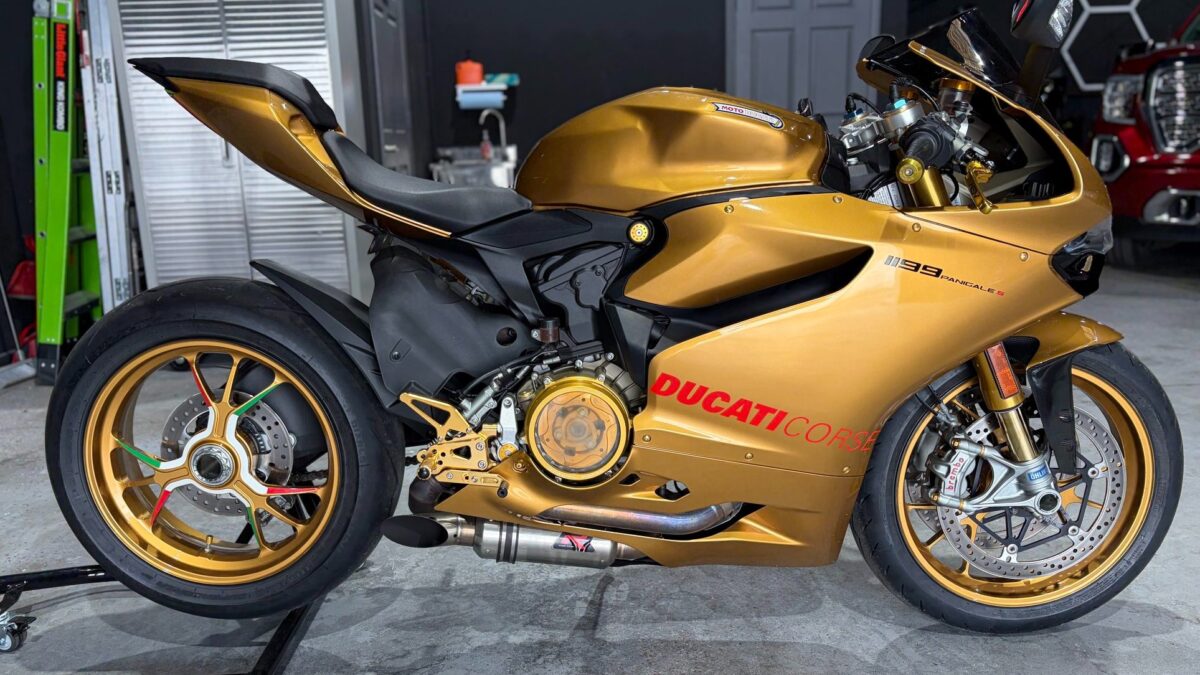
Ducati’s gleaming gold‑painted 2013 Panigale S is more than a show‑piece; it’s a flashpoint that asks whether bespoke motorcycles are a status‑flex for the ultra‑wealthy or a bubble waiting to burst. The bike, listed on Bring a Trailer, has been turned into a rolling trophy with a Dominator exhaust, Ducabike accessories, Sato rearsets, a fender‑eliminator kit and a full‑body gold wrap that makes it look like a relic from a futuristic museum.
According to the Bring a Trailer posting, the 1199 Panigale S retains its 1,198 cc Superquadro L‑twin heart, a powerplant that once defined the high‑performance segment. The listing notes the bike’s original specifications alongside the aftermarket upgrades, emphasizing the rarity of a factory‑year machine that still runs a stock engine while sporting a fully custom aesthetic.
Why the Ducati Panigale S matters in today’s market
The first reason this particular Panigale S matters is that it sits at the intersection of two booming trends: the resurgence of high‑end sport‑bike collecting and the appetite for conspicuous consumption in regions such as the Gulf and South‑Asia. In fact, the luxury motorcycle market has seen a 12 % annual growth rate over the past three years, driven largely by affluent buyers who treat motorcycles as portable art rather than transportation.
Meanwhile, the Italian marque’s heritage gives any custom job an instant pedigree. Ducati’s reputation for engineering excellence means that a modified Panigale carries a cachet that a generic sport bike cannot match. As a result, sellers can command premiums that dwarf the cost of the parts themselves. The gold finish alone, a labor‑intensive paint job, can add tens of thousands of dollars to the asking price, a fact that many buyers overlook in their quest for visual impact.
However, the market’s enthusiasm is not without its contradictions. On one hand, the demand for such bespoke machines fuels a niche supply chain of specialized shops, creating jobs and encouraging innovation in aftermarket engineering. On the other hand, the same buyers often import these machines through convoluted tax regimes, prompting customs authorities in the United Kingdom and United States to tighten scrutiny on high‑value imports. The paradox is clear: the very exclusivity that makes a Ducati Panigale S desirable also invites regulatory headaches that can delay delivery and erode profit margins.
Furthermore, the geopolitical climate adds an extra layer of complexity. Wealthy collectors in the United Arab Emirates and Saudi Arabia have been known to finance high‑profile custom builds, using them as symbols of personal power and national prestige. Yet these same regions face heightened security concerns that can affect the movement of luxury goods across borders. In practice, a gold‑finished Ducati can become a diplomatic bargaining chip, a subtle reminder that even motorbikes can be entangled in the broader tapestry of international trade and security policy.
The hidden costs and strategic stakes of custom Ducati builds
The second, more contentious issue is the hidden cost structure behind a project like this gold‑clad Panigale. While the listing highlights the Dominator exhaust and Sato rearsets as upgrades, it omits the cumulative expense of engineering, testing, and certification required to keep the bike road‑legal. In many jurisdictions, aftermarket exhausts must pass noise and emissions standards; failing to do so can result in fines that quickly eclipse the price of the parts themselves.
Moreover, the strategic stakes extend beyond the individual buyer. Manufacturers such as Ducati benefit from a trickle‑down effect: a high‑visibility custom bike generates free marketing, prompting aspirational riders to consider brand‑new models. Yet the brand also risks dilution if the aftermarket scene veers into extreme flamboyance that alienates core enthusiasts who value performance over aesthetics. This tension is evident in online forums where purists accuse customizers of turning a racing machine into a vanity project, thereby undermining the marque’s engineering ethos.
From an economic perspective, the resale value of a custom Ducati is a gamble. While a pristine factory bike can retain up to 70 % of its original price after a decade, a heavily modified version may see depreciation if trends shift or if the modifications become dated. Buyers who view the gold Panigale as a hedge against inflation could find themselves holding an asset that loses appeal as quickly as the novelty fades.
Nevertheless, there are winners in this ecosystem. Niche shops that specialize in high‑end finishes and performance parts see a surge in orders, and they often operate in regions where labor costs are lower, thereby creating a global supply chain that benefits multiple economies. At the same time, insurance firms are forced to adapt, offering policies that account for the elevated risk profile of a custom‑styled Ducati, which in turn opens new revenue streams.
Critics might argue that the entire market is a bubble propped up by speculative buyers, and they would have a point. However, the persistence of such builds over the past decade suggests a deeper cultural shift: the desire to own objects that blend cutting‑edge engineering with personal expression. In a world where technology increasingly standardizes experiences, a gold‑painted Ducati represents a rare avenue for individuality—albeit one that comes with regulatory, financial, and reputational risks.
In the end, the gold‑finished 2013 Panigale S is a microcosm of a larger debate about luxury, authenticity, and the economics of customization. It forces us to ask whether the allure of a shining Italian masterpiece is worth the hidden price tag, or whether the market will eventually temper its appetite for such ostentatious statements. If the current trajectory holds, we may soon see a new class of buyers who demand not just speed, but a narrative that can be displayed on a gleaming metal canvas—one that, paradoxically, could be the very thing that slows the market’s momentum.
Source: NewsAPI:q