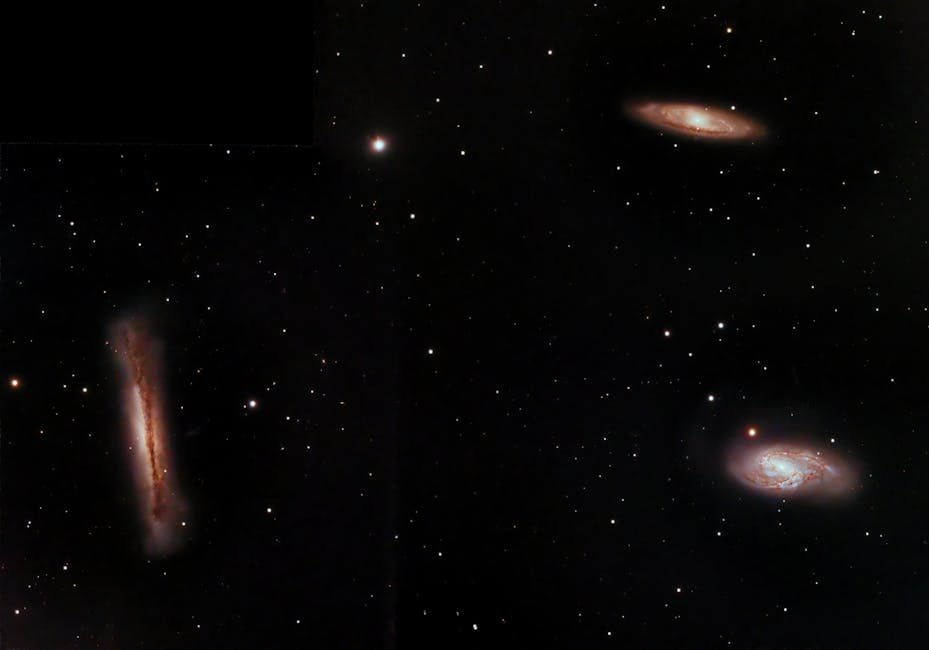
What if everything we thought we knew about the universe was wrong? The latest findings from the James Webb Space Telescope suggest just that, unveiling a black hole that formed before its host galaxy—a revelation that shakes the very foundations of our understanding of science.
According to reports from Google — Space & Science, scientists have stumbled upon a black hole whose existence predates the galaxy it resides in. This anomaly raises profound questions about the origins of celestial bodies and the mechanisms that drive their formation.
The Science Behind the Discovery
To grasp why this discovery is seismic, we have to appreciate how the scientific community has traditionally approached black hole formation. Typically, black holes are thought to emerge from the remnants of massive stars, collapsing under their gravity after burning out. The expectation was that they would evolve alongside their galaxies. However, here we have a black hole that seems to defy this timeline, suggesting that our models of cosmic evolution could be fundamentally flawed.
The James Webb Space Telescope, with its unmatched observational capabilities, is making waves by challenging existing paradigms. This discovery nudges astronomers to rethink the chronology of cosmic events. What led to this bizarre formation? Are there conditions or processes we haven’t even begun to explore? The implications extend beyond this singular discovery and point toward a potential revolution in the field of astrophysics.
A Cosmic Game Changer
So, who stands to win and lose from this revelation? On one hand, astrophysicists who are willing to embrace this enigma might find themselves at the forefront of a new era in science. They could redefine how we understand the birth and evolution of galaxies, potentially unlocking new theories that tie the universe’s infancy to its current state. On the other hand, established scientists clinging to traditional models may find their reputations on shaky ground as the evidence mounts against their long-held beliefs.
But let’s address the elephant in the room: Could this discovery lead us down a rabbit hole of misunderstandings? Science thrives on questioning established norms, but it risks veering into speculation without solid proof. The scientific method demands rigor, and while curiosity is important, we must tread carefully. This discovery is exhilarating, yes, but it also carries the risk of overzealous claims that could mislead both the public and academia.
In the end, this black hole is not just an astrophysical puzzle; it’s a litmus test for the scientific community’s willingness to adapt and evolve. The excitement that surrounds such findings can contribute to a rich dialogue about the universe, but it must be rooted in disciplined inquiry.
As we ponder the mysteries of space, one question lingers: How many more profound truths about our universe are waiting to be discovered, ready to topple our current understanding of science? The cosmos is vast, and for every answer we uncover, there seem to be even more questions begging for our attention.
Source: Google — Space & Science