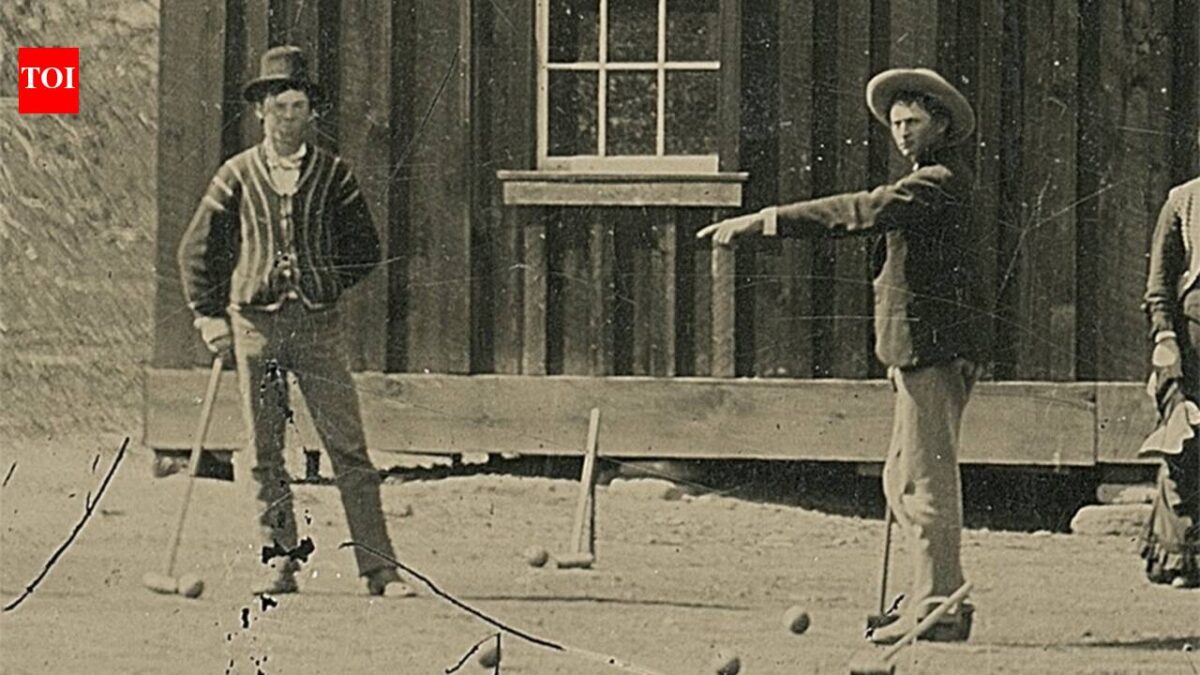
In 2010 a California man paid $2 for three old photographs at a junk shop, and five years later the world is buzzing over a possible Billy the Kid selfie. The cheap purchase has morphed into a $5 million insurance claim that could rewrite the mythic outlaw’s image.
According to Times of India, the photograph was later examined by a team of Western historians and photographic analysts who concluded that the figure could be the notorious outlaw playing croquet during the late summer of 1878. The experts linked the scene to documented social gatherings of the Kid’s gang, noting that croquet clubs did sprout in frontier towns as a genteel diversion for men who otherwise lived by the gun.
In the Hunt for the Billy the Kid Croquet Snap
The saga began when Randy Guijarro, a hobbyist collector, stumbled on the three‑image bundle while sifting through a California junk shop’s attic stock. He bought the lot for a mere two dollars, unaware that one of the glass plate negatives might capture a moment of outlaw leisure. After the purchase, Guijarro posted the image on a niche forum, prompting a cascade of inquiries from academic circles and antique dealers.
A coalition of photographic conservators and Western scholars then conducted a forensic analysis, measuring the plate’s emulsion, grain, and exposure settings. Their report, filed with a major insurer, placed the image’s provenance in the 1870s and assigned it a market value of $5 million, a figure that stunned both collectors and historians. The insurance policy, drafted by a boutique firm that specializes in high‑value cultural assets, listed the photo as a “unique artifact of American frontier culture.”
Why the Croquet Photo Matters Beyond the Myth
First, the image humanizes a figure usually reduced to a caricature of violence. If authenticated, it shows Billy the Kid not as a perpetual gunslinger but as a participant in a genteel pastime, suggesting a more nuanced social life. This challenges the binary narrative that has long served tourism boards, Hollywood scripts, and political rhetoric that glorify “wild” western lawlessness.
Second, the valuation underscores a growing market for “lost” artifacts that blur the line between historical evidence and speculative investment. Investors see the photo as a ticket to a $5 million payout, while museums argue that such commodification threatens scholarly access. Critics warn that the hype may be more about profit than history, urging caution before museums allocate exhibition space based solely on monetary allure.
Third, the case spotlights the role of amateur collectors in unearthing cultural treasures. Guijarro’s discovery illustrates how private hobbyists, often dismissed by academia, can become key players in the preservation of heritage. Yet it also raises questions about ownership rights, especially when a single individual can leverage a national legend for personal gain.
In the legal paperwork the photo was listed as a cultural artifact,
Source: Times of India