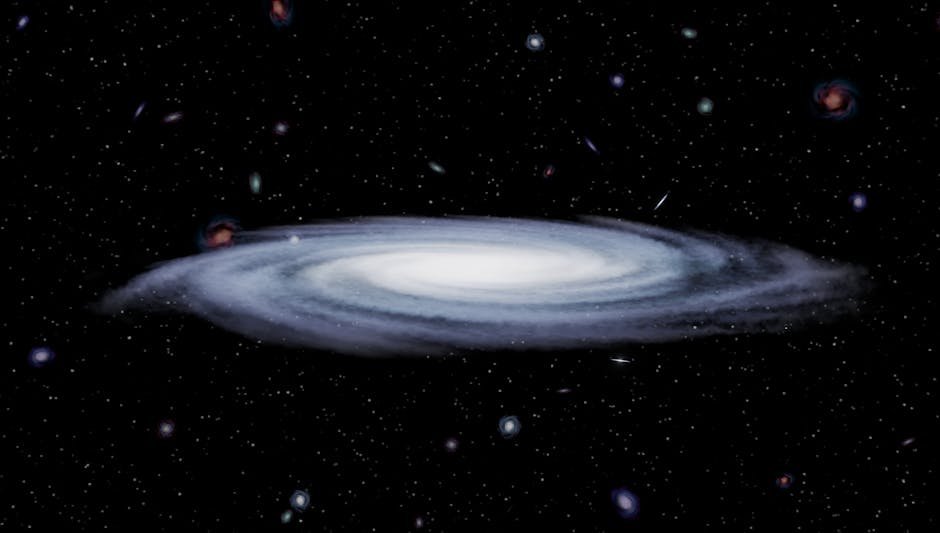
What does it say about our understanding of the universe when a black hole forms before the very galaxy it calls home? This revelation from NASA is not just a curiosity in the realm of science; it challenges the very foundations of astrophysical models that have guided us for decades.
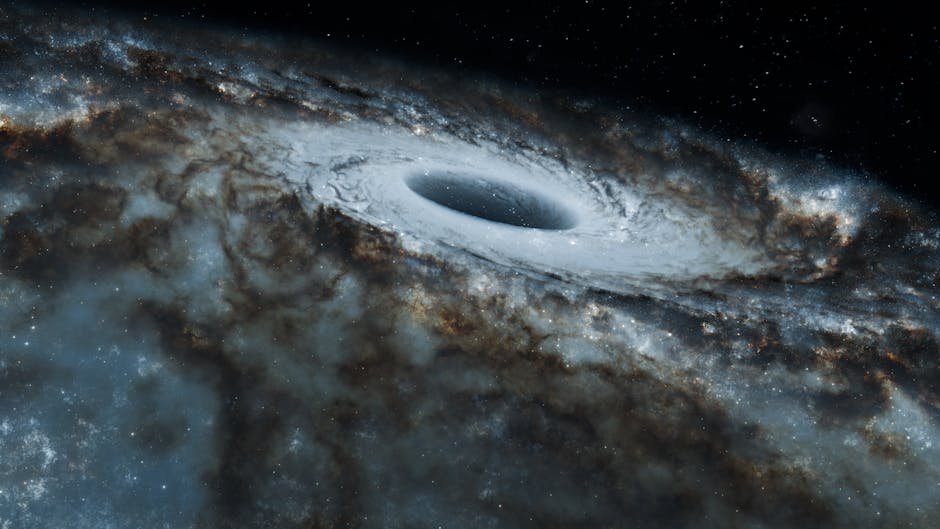
According to NASA’s recent findings, the James Webb Space Telescope has uncovered a black hole that existed before the galaxy it currently inhabits. This extraordinary discovery pushes back the timeline of black hole formation, suggesting that these cosmic giants may have emerged before their host galaxies could take shape.
The Cosmic Stakes in Science
This finding comes amid a broader quest to understand the formation and evolution of galaxies. Black holes, once thought to be a consequence of galactic development, now appear to wield influence from their inception. The implications are staggering. For scientists, this shifts the narrative around cosmic evolution, suggesting that black holes could be critical in shaping their surroundings, rather than mere byproducts. The players in this unfolding drama are not just astronomers but also astrophysicists and cosmologists who rely on these revelations to refine their theories.
Why now? In an era where we are grappling with dark matter and dark energy, the revelation of a pre-galactic black hole adds an essential piece to the puzzle. This could mark a new frontier in our exploration of the cosmos, with Webb’s observations propelling our understanding forward.
Who Wins and Who Loses in This New Scientific Era?
In the grand scheme of science, the winners are those who dare to challenge the status quo. This discovery empowers researchers to reconsider existing models of cosmic formation, potentially leading to breakthroughs in our comprehension of the universe. However, established theories may face a tough reckoning. Institutions that built careers on outdated models might be left scrambling to adapt.
What could go wrong? If scientists fail to fully grasp the implications of this discovery, we risk entering a chaotic phase of competing hypotheses that could further muddy the waters of astrophysical understanding. The mainstream narrative might also downplay the revolutionary nature of this finding, treating it as just another interesting tidbit rather than the seismic shift it represents.
As we stand on the brink of a new era in science, this revelation beckons us to reconsider our position in the universe. Are we truly at the mercy of black holes, or do they serve a greater purpose in the cosmic tapestry? The questions are as vast as the universe itself, and the answers may drive us deeper into the mysteries of space.
The cosmos is full of surprises, but the surprises don’t stop at black holes. Will we discover even more about the formation of galaxies as our technology and understanding evolve? As we peer deeper into the universe with tools like Webb, only time will tell what other secrets await us in the darkness.
Source: Google — Space & Science