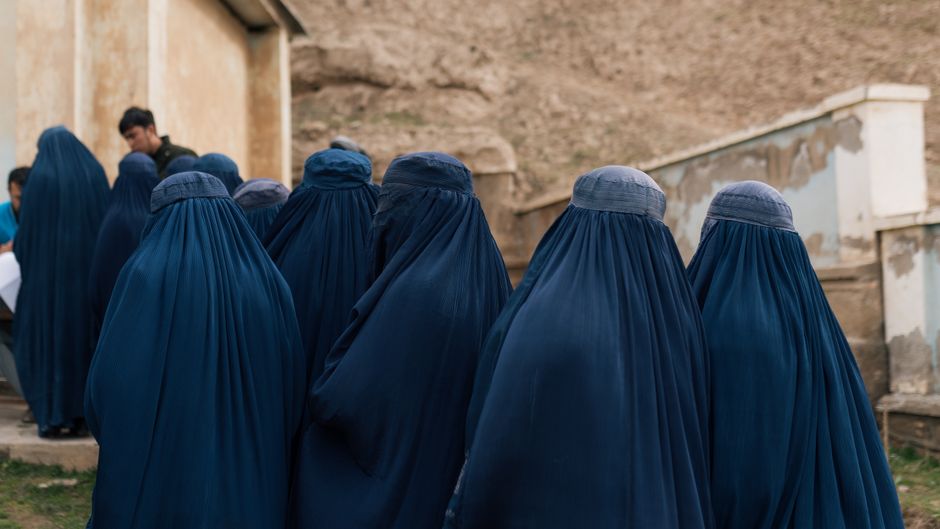
Five years. Five years since the world watched Afghanistan collapse into the hands of the Taliban, promising a new era of “peace” — or at least, predictable tyranny. Yet, if you believed the claims of absolute control and suppressed dissent, the latest revelations from the United Nations should shatter that illusion completely.
According to Al Jazeera, the United Nations confirms that armed groups opposed to the Taliban government remain actively engaged across Afghanistan. This isn’t just a minor skirmish; it’s a stark acknowledgment of persistent resistance, surfacing exactly five years after the Taliban’s dramatic return to power.
Five Years of Fractured Peace
The narrative spun by the Taliban since August 2021 has been one of bringing order to chaos, of finally unifying a country torn by decades of war. However, the UN’s assessment, meticulously gathered and presented, paints a very different picture. It suggests that far from a consolidated iron grip, the Taliban’s authority is continually challenged, contested from within and without its declared dominion. This isn’t just a political inconvenience; it’s a fundamental crack in their claim to legitimacy and effective governance.
What we are witnessing is a complex tapestry of dissent. These aren’t just remnants of the former Afghan National Army, though some certainly persist. They include regional militias, ethnic groups wary of central Pashtun dominance, and, most alarmingly, transnational terrorist organizations like ISIS-K, who view the Taliban as ideological rivals, not allies. Each faction presents its own unique threat, exploiting the deep-seated grievances and power vacuums that have plagued Afghanistan for generations. Therefore, the idea of a stable Afghanistan, even under the Taliban’s austere rule, remains a dangerous fantasy.
The international community, meanwhile, has largely opted for a policy of wary disengagement, punctuated by humanitarian aid. This approach, however, implicitly accepts the Taliban as the de facto authority, even as that authority proves increasingly tenuous. It forces a moral compromise, trading the hope of stability for the grim reality of a nation still very much at war with itself. The lingering question remains: how long can the world afford to look away?
The Illusion of Absolute Control
Let’s be blunt: the Taliban’s proclamations of security are a hollow echo in the valleys and mountains of Afghanistan. Their inability to fully extinguish these armed opposition groups, even after five years with no external military threat, speaks volumes. It exposes a fundamental flaw in their governance model, which relies on brute force rather than genuine public consent. This isn’t about holding territory; it’s about winning hearts and minds, a battle the Taliban are demonstrably losing.
The stakes here are astronomical. A perpetually unstable Afghanistan is not just a problem for its own people; it’s a festering wound in the heart of Central and South Asia. Regional powers like Pakistan, Iran, and the Central Asian republics watch with bated breath, well aware that instability in Afghanistan has a nasty habit of spilling over borders. The rise of groups like ISIS-K, operating under the Taliban’s nose, is a clear and present danger to global security, offering a potential safe haven for extremist ideologies to flourish once more.
Furthermore, the ongoing conflict is an unmitigated disaster for ordinary Afghans. It perpetuates a cycle of violence, displaces communities, and ensures that basic human rights, especially for women and minorities, remain a distant dream. The mainstream narrative often focuses on the Taliban’s repressive social policies, which are indeed horrific. However, it often overlooks the underlying, grinding reality of continued armed struggle, which drains resources, prevents development, and keeps the population in a constant state of fear. The world cannot credibly condemn the Taliban’s human rights abuses while ignoring the very conflict that undermines any semblance of peace.
This isn’t just a tactical failure for the Taliban; it’s a strategic defeat for their legitimacy. How can a government claim to rule when significant parts of its territory are contested, and its opponents are actively recruiting and operating? The answer is, it can’t. The continued activity of armed opposition groups serves as a constant, inconvenient reminder that the “Islamic Emirate” is far from a universally accepted entity. Its fragility is becoming increasingly apparent with each passing month.
The next five years will truly test the resilience of both the Taliban and their myriad opponents. Will the international community continue its detached observation, or will it finally acknowledge the undeniable truth? Afghanistan remains a battlefield, and pretending otherwise is a disservice to all.
Source: Al Jazeera