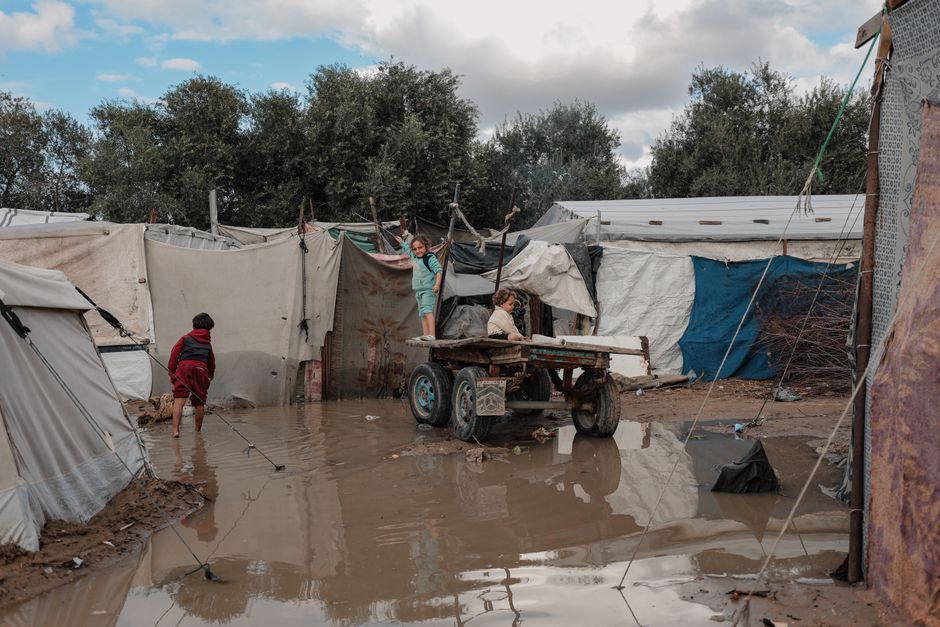
Let’s be brutally honest: the world often has a preferred “style” for its tragedies, a certain dramatic flair it expects from conflict. But sometimes, the most profound injustices unfold not with a bang, but with the quiet, persistent drip of displacement and despair. The ongoing situation with Israeli settlers in the West Bank is a stark reminder of this uncomfortable truth, a truth many would rather not acknowledge.
According to BBC Middle East, Israeli security forces have reportedly withdrawn from a West Bank village, leaving about a dozen settlers to continue a siege on two Palestinian families that began on Sunday.
The Unfolding Context in Israel’s Shadow
This isn’t a random incident; it’s a predictable chapter in a long-running, deeply asymmetric narrative. The West Bank, occupied by Israel since 1967, is a mosaic of Palestinian towns and villages interspersed with Israeli settlements, which are illegal under international law. These settlements, however, continue to expand, often encroaching on Palestinian land and resources. The presence of settlers, often backed by a complex web of legal and security frameworks, fundamentally alters the daily lives of Palestinians. This current siege, where security forces withdraw and leave private citizens to exert pressure, highlights the alarming erosion of any semblance of neutral authority. It screams of a system where power is consolidated, and the vulnerable are left exposed.
Meanwhile, international bodies issue statements, and diplomats engage in careful, measured language. It’s a performative dance of concern that rarely translates into tangible protection for those on the ground. The issue isn’t just about land; it’s about dignity, freedom of movement, and the very right to exist without constant fear. When security forces, theoretically responsible for maintaining order, absent themselves from such volatile situations, it sends an unmistakable message. It suggests a tacit approval, or at least a willful blindness, to the actions of those left behind. This dynamic is not new, but it is perpetually devastating.
The Hot Take: A Deliberate Abdication of Responsibility
Let’s strip away the polite diplomatic language. This isn’t merely a “withdrawal”; it’s a deliberate abdication of responsibility, a strategic maneuver that empowers one side while leaving the other entirely vulnerable. When uniformed personnel step back and armed civilians remain, the message is clear: the state is, at best, neutral, and at worst, complicit. This kind of calculated inaction is far more insidious than outright aggression, because it masks state-sponsored violence behind the veneer of private disputes.
Who wins here? The settlers, obviously, who are now free to press their advantage without immediate state intervention. They are the beneficiaries of a system that allows them to operate with near impunity, slowly but surely altering the facts on the ground. Who loses? The Palestinian families, trapped in their homes, facing an existential threat to their property and peace. They are not just losing land; they are losing faith in any concept of justice or protection. Their daily lives become a grim exercise in endurance, a constant battle against encroachment.
The mainstream narrative often frames these incidents as isolated clashes. However, this is a pattern. It is the steady, unyielding pressure that makes life untenable for Palestinians in areas desired for settlement expansion. We talk about two states, about peace processes, about a future for the region. Yet, while these discussions unfold in air-conditioned rooms, the ground reality is being reshaped, brick by brick, siege by siege. The “fashion” of global diplomacy, with its focus on grand gestures and photo opportunities, often misses the grim, detailed work of dispossession happening quietly in places like this West Bank village. The international community, with its carefully curated statements, has developed a peculiar “style” of observation that rarely leads to intervention. They prefer to witness the slow-motion tragedy, rather than prevent it. This isn’t just a failure of policy; it’s a failure of moral courage.
So, while the world turns its attention to the latest cultural phenomenon or geopolitical flashpoint, these families remain besieged, their fate hanging in the balance, a raw testament to the brutal realities of power dynamics in Israel and the occupied territories. We can pretend this is complex, but the truth is simple: power is being exercised, and lives are being systematically dismantled. The elegance of international law means little when it is ignored on the ground, day after day.
The question isn’t whether peace is possible, but whether the world will ever truly look at these escalating realities and decide that the cost of inaction is simply too high. Or will we continue to watch as the slow, grinding siege becomes the accepted “style” of occupation, until there’s nothing left to protect?
Source: BBC Middle East