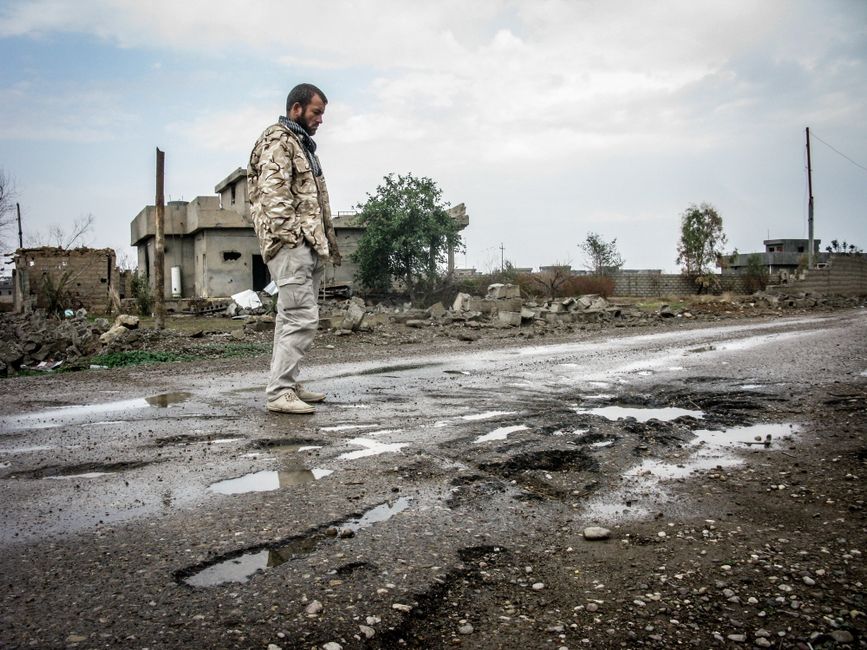
Another day, another fiery declaration from the Middle East. Are we truly surprised when an **Iraqi** militia group, Harakat Hezbollah al-Nujaba, issues bold threats against established powers? Or have we become so desensitized that the drums of war just fade into background noise?
According to Middle East Eye, this influential Iraqi faction has explicitly warned that US and Saudi interests now stand squarely in its crosshairs, following what it describes as deadly attacks. This isn’t just empty rhetoric. It’s a calculated escalation. Harakat Hezbollah al-Nujaba is not some fringe outfit; it is a powerful, Iran-backed Shia militia deeply embedded within Iraq’s political and security landscape.
Their targets, the United States and Saudi Arabia, represent the twin pillars of a regional order that many groups like Nujaba actively seek to dismantle or at least drastically alter. The US maintains a significant military footprint in Iraq, ostensibly for counter-terrorism operations, while Saudi Arabia frequently finds itself at odds with Iran and its proxies across the wider region.
The Shifting Sands of Iraqi Power
For years, Iraq has been the reluctant arena for a proxy conflict. Its fragile sovereignty is constantly tested by internal factions vying for influence, often with external backing. The very fabric of **Iraqi** governance is stretched thin between nationalist aspirations and the powerful pull of regional patrons.
The unspecified ‘deadly attacks’ referenced by Nujaba are crucial here. While the details remain murky, such threats typically follow perceived aggressions against their own forces or allies. This often involves strikes attributed to US forces or regional actors aligned with American or Saudi interests.
This latest pronouncement injects a fresh dose of instability into an already volatile environment. It signals a renewed willingness to challenge the status quo directly, potentially drawing the region further into a direct confrontation that no one truly desires, yet everyone seems to be preparing for.
Escalation and the Iraqi Dilemma
Let’s be blunt: the biggest loser in this escalating game of brinkmanship is, inevitably, the **Iraqi** people themselves. Their nation, still reeling from decades of conflict and instability, becomes the primary battleground. Every threat, every retaliatory strike, further erodes their chances of lasting peace and economic recovery.
The mainstream narrative often paints these groups as simple villains, ignoring the complex web of grievances, historical injustices, and geopolitical maneuvering that fuels their existence. While their methods are undeniably destabilizing, to ignore the roots of their power is to misunderstand the entire conflict.
For the US, this is a dangerous tightrope walk. Maintaining influence in Iraq is critical for regional stability, but every aggressive response risks validating the militias’ anti-American stance and fueling recruitment. Saudi Arabia, on the other hand, watches anxiously as its principal regional adversary, Iran, flexes its muscle through well-armed and ideologically aligned proxies.
The cycle is depressingly familiar: perceived aggression, a swift and aggressive response, followed by threats of further retaliation. Each step tightens the knot, making de-escalation exponentially harder. This isn’t just about protecting interests; it’s about saving face in a region where honor and perceived strength dictate so much.
What the world is missing is the immense danger of miscalculation. One wrong drone strike, one poorly timed rhetoric, and the entire powder keg could ignite. These groups operate with a different calculus, often prioritizing ideological goals over conventional diplomatic solutions. That makes them incredibly dangerous, and their threats must be taken seriously.
Of course, some argue that a firm hand is the only language these groups understand, that any perceived weakness would only invite greater aggression. This perspective advocates for robust deterrence, even at the risk of escalating tensions. However, history shows that such a purely militaristic approach in Iraq has often backfired, creating more enemies than it eliminates. The pursuit of security through dominance often breeds resentment, laying fertile ground for the next generation of armed resistance.
So, here we stand, at the precipice of another potential regional conflagration, triggered by a familiar refrain from an **Iraqi** militia. Will cooler heads prevail, or are we witnessing the inevitable march towards a wider conflict where no one truly wins? The answer, I fear, lies not in Washington or Riyadh, but in the volatile streets of Baghdad and beyond, where the fuse is already lit.
Source: Middle East Eye