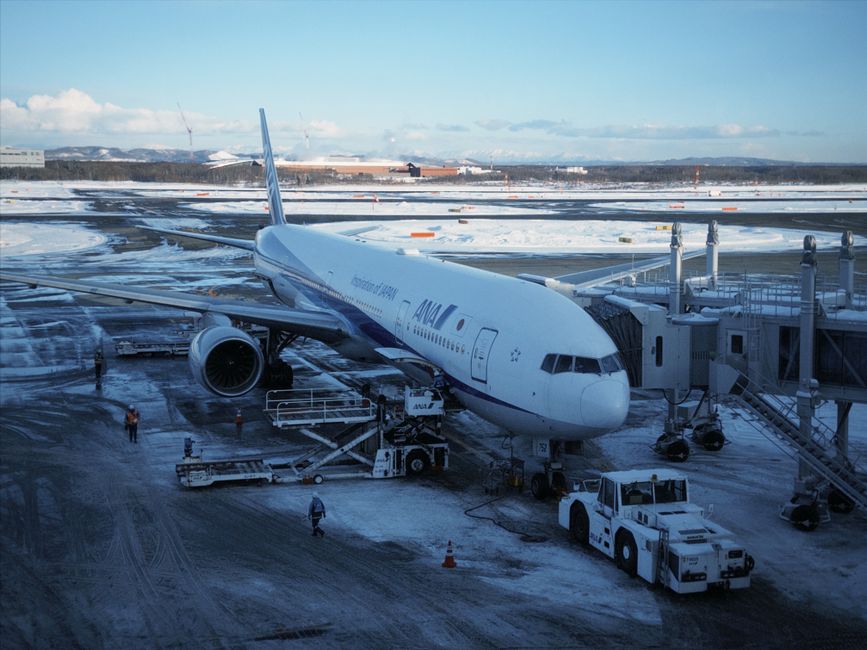
The strategic gambit unfolding at **Hokkaido Airport** is less about planes and more about pixels.
The New Chitose Airport, through its recent flurry of announcements highlighted by NewsonJapan.com, is clearly attempting to redefine its very purpose. No longer content to be a mere conduit for travel, the facility is pitching itself as a destination in its own right. The implied spokesperson here isn’t a single official but the collective ambition of Hokkaido’s tourism and airport authorities, making their case directly to the public – and crucially, to prospective travelers and local visitors – through the conduit of positive news. The political context is clear: post-pandemic travel is booming, and competition for tourist dollars is fierce. With passenger numbers reportedly hitting a record 26 million in 2025, the airport isn’t just expanding; it’s attempting a full-blown identity transformation, from transit hub to tourist hotspot, complete with new direct flights and, perhaps most notably, an anime-themed commercial complex.
What landed
Credit where it’s due: the sheer ambition of this transformation cannot be understated. To declare an airport a “destination” is a bold play, and New Chitose appears to be putting its money where its mouth is. According to NewsonJapan.com, the airport has already seen a “record 26 million” passengers in 2025, an impressive figure that provides a robust foundation for further development. This isn’t just a hopeful projection; it’s a testament to existing demand, which presumably these new initiatives aim to amplify.
The strategy itself seems multi-faceted. The inclusion of “new direct flights to North America” is a pragmatic, universally appealing move that directly addresses a core function of any airport: connectivity. Improved accessibility to Hokkaido will undoubtedly bolster tourism for the region as a whole. Similarly, “upgraded security facilities” are a non-negotiable in modern travel, and while hardly a thrilling “attraction,” their enhancement contributes to a smoother, safer passenger experience, which is an encouraging sign of foundational operational improvements.

However, the real headline-grabber, and perhaps the most genuinely innovative aspect, is the “major anime-themed commercial complex.” This is a clear, targeted appeal to a global audience segment with significant spending power and a deep cultural connection to Japan. It demonstrates a keen awareness of market trends and a willingness to lean into a unique selling proposition. In an era where airports worldwide often feel like interchangeable shopping malls, New Chitose is attempting to carve out a distinct identity, offering something genuinely different beyond the usual duty-free fare. This specific niche focus could very well prove to be a masterstroke, attracting visitors who might otherwise bypass Hokkaido entirely.
What doesn’t add up
While the vision is certainly grand, a closer look at the airport’s narrative raises a few wry eyebrows. The claim of “destination” status, while catchy, carries a certain philosophical weight that might not quite align with the practical realities of air travel. Is an airport truly a destination, or simply a particularly elaborate waiting room? One can’t help but wonder if the average traveler, eager to reach the ski slopes or hot springs of Hokkaido, genuinely yearns to spend an extended period immersing themselves in an anime complex *before* even leaving the airport. There’s a subtle tension here between the airport’s primary function as a point of transit and its new ambition as a place to linger.
Then there’s the curious chronology. NewsonJapan.com points out the “record 26 million” passenger numbers in 2025, *before* these new attractions were fully implemented. This begs the question: if the airport was already experiencing such robust growth, were these elaborate new additions truly necessary, or are they a speculative investment based on an already proven success? It almost feels like a solution in search of a problem, or at least an attempt to justify a significant capital outlay by packaging basic operational upgrades (like security) alongside more whimsical commercial ventures. The “upgraded security facilities,” while essential, are hardly a draw in the same vein as an anime wonderland; to frame them as part of the “attraction” package feels like a slight rhetorical sleight of hand.
Furthermore, relying heavily on an “anime-themed” complex, while astute for a segment of the market, also carries risks. Will this niche appeal truly resonate with the entire 26 million (and growing) passenger base? What about travelers seeking a more traditional or universally appealing experience? The narrative, as presented, implies a universal benefit from these specialized attractions, a notion that might not entirely hold up to scrutiny. One might be skeptical about the long-term sustainability of an airport’s identity being so singularly tied to a pop culture phenomenon, however popular. The goal, ostensibly, is to appeal to “travelers and local visitors alike,” but the “anime-themed” aspect primarily targets a specific, albeit large, demographic. It leaves one wondering what the airport offers to those who merely wish to catch their flight efficiently and perhaps grab a coffee without navigating a labyrinth of cartoon characters.
The stakes on Monday morning, for New Chitose Airport and indeed for the broader aviation industry, are surprisingly high. This isn’t just about an airport adding a few shops; it’s about a fundamental reimagining of the airport experience. If New Chitose successfully cultivates its “destination” identity, we could see other airports around the world scrambling to replicate this model, transforming sterile transit zones into bespoke cultural or commercial hubs. For travelers, it could mean a future where layovers are less dreaded and more anticipated, albeit with the potential for increased commercialization at every turn. Conversely, if the anime complex becomes a white elephant, or the “destination” status fails to alleviate congestion and improve the core travel experience, it will serve as a cautionary tale, reminding us that sometimes, an airport is best when it simply gets you where you need to go, efficiently and without too much fuss.
Source: OnTheRecord