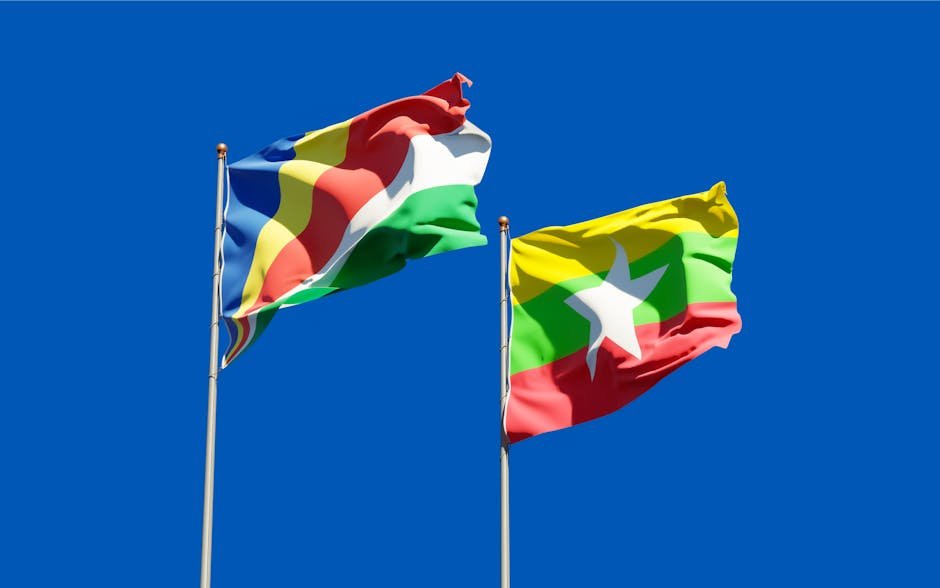
Myanmar’s President Min Aung Hlaing is making waves in South Asia, but should we really be rolling out the red carpet for a figurehead of oppression? His visit to India is being scrutinized, and for good reason. While the Indian government prepares to welcome him, many are left wondering what this means for democracy, human rights, and regional stability.
According to BBC reports, Min Aung Hlaing’s trip comes after years of military rule in Myanmar that has led to a humanitarian crisis and widespread condemnation from the international community. He’s not just a guest; he’s a controversial leader trying to fortify his position amid a brutal crackdown on dissent back home.
The Stakes in South Asia
Why does this visit matter? First, it underscores India’s delicate balancing act in South Asia. India has long been seen as a counterweight to China’s influence in the region, and welcoming Hlaing could be an attempt to assert its power. However, engaging with a pariah state raises serious ethical questions. The military coup in Myanmar in 2021 resulted in mass atrocities, and by extending a hand to its leader, India risks alienating not just its domestic audience but also other international partners who have condemned the junta.
Moreover, the ongoing conflict in Myanmar presents a security risk for South Asia. The fallout from the conflict often spills over into neighboring countries, creating waves of refugees and instability. Hlaing’s presence in India is not merely a bilateral issue; it has implications for the broader geopolitical landscape. Will India choose strategic interests over moral responsibility? The answer to that question may define its role in South Asia for years to come.
A Hotbed of Controversy
Back to the hot take: this situation is fraught with peril for both India and Myanmar. If India plays its cards right, it could strengthen its geopolitical clout. However, the backlash from civil society groups and pro-democracy activists is inevitable. The narrative is simple: engaging with a military leader who has blood on his hands sends a dangerous signal that human rights can be compromised for political gains.
The mainstream dialogue often overlooks the real human cost of these political maneuvers. Hlaing’s visit could serve to legitimize his regime, further entrenching the military’s power while the people of Myanmar continue to suffer. There’s a risk that India may become complicit in the atrocities committed by the junta simply by associating with Hlaing.
Moreover, while some argue that engagement is necessary for influence and could open up channels for reforms, others point to the fact that history is riddled with examples where legitimizing brutal regimes has led to greater repression. Often, those who advocate for dialogue forget that negotiation with dictators often leads to further entrenchment of their power, not their downfall.
As South Asia stands at a crossroads, the question remains: is India ready to make a choice that could define its moral standing on the global stage? Or will it continue to follow a cynical path of realpolitik, ignoring the cries for justice from its regional neighbors?
In closing, as Min Aung Hlaing walks the halls of power in India, let’s hope that the lessons from history are not lost on those who should know better. South Asia deserves leaders who prioritize freedom over tyranny, not just in words, but in actions. The challenge will be whether India can rise to that occasion or whether it will continue to play a dangerous game of political chess that comes at a high cost to the very values it claims to uphold.
Source: Google — South Asia