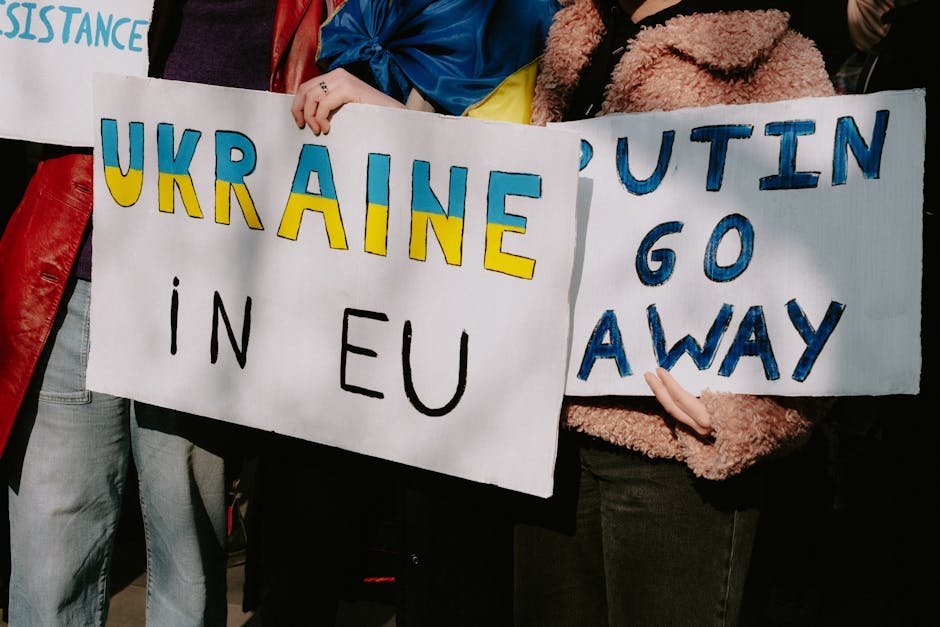
The United States appears poised to flex its geopolitical muscles yet again, but is anyone really convinced that this show of unity against Iran will yield meaningful results? According to News On AIR, President Trump has declared that the United States and the European Union stand united in their commitment to ensure that Iran never acquires nuclear weapons. But while the rhetoric may sound reassuring, it’s time to peel back the layers and examine the implications of such statements.
The Current Landscape of US-EU Relations
In a joint effort to squash Iran’s nuclear ambitions, President Trump emphasized the strength of the alliance between the United States and the EU. Reports from News On AIR highlight Trump’s assertion that collaboration is crucial, particularly as tensions in the Middle East continue to escalate. Both sides have historically been wary of Iran’s nuclear capabilities, with fears that such power could destabilize an already volatile region.

However, this “unity” is far from unshakeable. The reality is that while the United States and the EU may share goals, their strategies could not be more different. America is all about hard-hitting sanctions and military posturing, while many EU nations prefer diplomatic engagement and dialogue. This divergence often leads to friction, undercutting the very unity Trump extols.
An Opportunity for Hostility or Cooperation?
The stakes are high as this geopolitical chess match unfolds. The United States may think it has the upper hand with its powerful rhetoric, but let’s be honest: threats alone rarely accomplish much. They risk triggering a cycle of hostility that could embolden Iran rather than deter it. Meanwhile, Iran’s leadership has a long history of playing the victim card to galvanize domestic support, so any perceived aggression from the West might only fuel their resolve.

What’s more, the mainstream narrative often downplays a critical factor: public sentiment in both the United States and Europe. Many Americans are weary of foreign entanglements, especially following two decades of military interventions in the Middle East. Similarly, Europeans are growing increasingly skeptical of U.S. dominance, particularly as they face their own domestic challenges.
In this context, the unwavering commitment to preventing Iran from acquiring nuclear weapons could easily devolve into an empty promise. If the United States and EU continue to pursue separate paths rather than a cohesive strategy, they risk both looking weak and ineffectual.
As the world watches, Iran is not the only actor at play; Russia and China also have vested interests in the region. If the United States continues to isolate Iran, it could inadvertently push Tehran closer to these nations, complicating an already intricate geopolitical web. Collaboration will not only require overcoming internal divisions but also addressing the actions and reactions of these other global players.
The question looms large: can the United States really handle the complexities of this situation, or will it find itself back at square one, facing an emboldened adversary?
While the rhetoric of unity against Iran may resonate with certain political bases, it’s crucial to recognize that real alliances require more than just words. As we move forward, the stakes have never been higher, and we must ask ourselves whether the United States can navigate this treacherous terrain effectively or if it is destined for failure.
In the end, what’s more concerning is not just whether Iran will acquire nuclear weapons, but whether the United States can maintain its influence without resorting to the same old playbook of aggression and isolation. The clock is ticking, and the world is watching.
Source: Google — UK & Europe