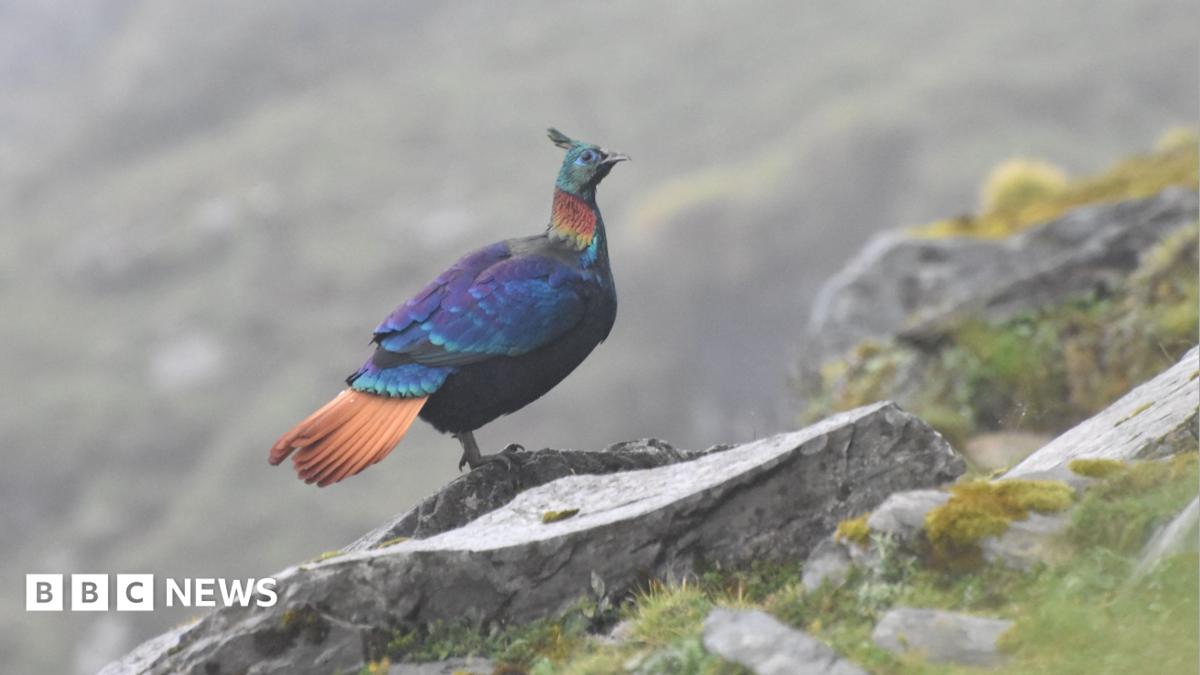
The Himalaya’s most flamboyant resident, the iridescent monal, is losing its signature trill—not to predators or climate shifts, but to the relentless surge of human footsteps, vehicles and low‑frequency noise. The very word *Himalayan* now carries a double meaning: a mountain range famed for its grandeur and a warning bell for an ecosystem under siege.
According to a BBC Asia report, researchers have documented a measurable alteration in the monal’s vocal repertoire across several valleys where tourism, road‑building and seasonal grazing have spiked in the past decade. Field recordings taken in pristine zones still echo the bird’s rich, metallic calls, while sites teeming with trekkers reveal a muted, higher‑pitched chatter that travels less far.

Himalayan Bird’s Vanishing Song
The shift in the monal’s song is not a trivial footnote; it signals a cascade of ecological consequences. Birds use calls to claim territory, attract mates and warn of danger. When those calls are drowned out by motorbikes or compressed by a thinner acoustic space, the monal’s ability to reproduce and defend its niche erodes. The scientists, employing automated acoustic sensors and machine‑learning algorithms, found that the altered calls are not merely louder—they are structurally different, suggesting the birds are adapting in real time to a noisier world.
Why does this matter now, as we stare at the upcoming Monday agenda? The South‑Asian region is about to grapple with a trio of high‑stakes discussions: a parliamentary debate on expanding the trans‑Himalayan highway network, a tech summit unveiling next‑generation satellite monitoring tools for wildlife, and a market briefing on eco‑tourism revenues. Each of these threads intersects directly with the monal’s plight. The highway proposal promises economic growth but also threatens to amplify the acoustic footprint that already forces the Himalayan monal to rewrite its song. Meanwhile, the tech summit’s promise of “real‑time biodiversity dashboards” could finally give policymakers the data they need—if they’re willing to act on it.
The research underscores a broader pattern: human activity is no longer a distant background hum; it is a reshaping force that rewrites the very language of nature. In the same valleys where trekkers now post selfies beside the bird’s vivid plumage, the monal is whispering a new dialect that may go unheard by future generations if the trend continues.
What This Means for South‑Asia’s Ecology and Policy
The immediate losers in this acoustic scramble are the monals themselves and the communities that rely on them for cultural identity and tourism dollars. A quieter, less distinctive bird reduces the allure for bird‑watchers, potentially denting the niche market that feeds boutique lodges and local guides. On a larger scale, the alteration of a keystone species’ communication can ripple through the food web, affecting predator‑prey dynamics and plant pollination patterns that are already fragile in the high‑altitude zones.

Conversely, the emerging tech sector stands to win if it can turn these acoustic data into actionable intelligence. Companies developing AI‑driven sound‑analysis platforms are already courting governments, promising to flag “ecological distress signals” before they become irreversible. If the Monday technology briefings showcase successful pilots, investors may pour capital into a new niche of environmental monitoring—turning the monal’s altered song into a marketable commodity.
Politically, the parliamentary debate on the highway could become a litmus test for how South‑Asia balances development with conservation. Proponents argue that better connectivity will lift remote economies, yet they often sidestep the hidden costs: increased noise pollution, habitat fragmentation, and the very cultural loss embodied by the monal’s fading call. Opposition leaders can now point to hard scientific evidence—rather than vague sentiment—that the Himalayan monal is already paying the price.
Critics may claim that wildlife will adapt, that nature is resilient, or that the monal’s song change is merely a curiosity. While adaptation is real, it is not without trade‑offs. The birds may survive, but at the expense of genetic diversity, mating success and ecosystem stability. Moreover, relying on “nature will figure it out” excuses inaction at a time when policy windows are open and the technology to monitor is finally affordable.
In the end, the monal’s new voice is a barometer of human influence in the Himalayas. It forces us to ask whether we are willing to let economic ambition drown out the natural soundtrack of these mountains, or whether we can harness emerging tech to preserve the original melody. As Monday’s agenda unfolds, the answer will set a precedent: will the Himalaya be a showcase of sustainable progress, or a cautionary tale of a beautiful bird silenced by its own admirers?
If the monal’s altered song becomes the first headline in a market report on eco‑tourism decline, we will know that the cost of ignoring the acoustic crisis was not just ecological—it was economic, political, and deeply cultural. The choice, as always, lies in whose voice we decide to amplify.
Source: BBC Asia