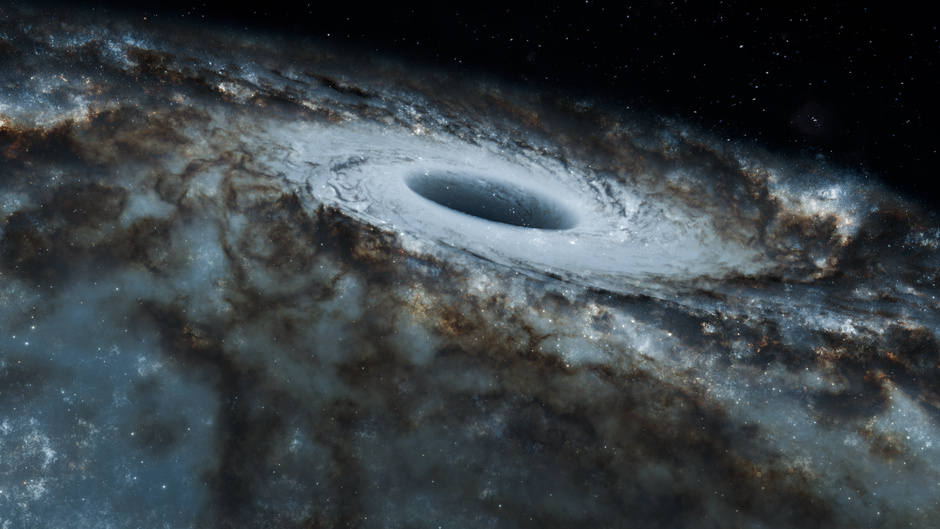
Think you know the universe? Think again. The cosmos, it turns out, is far more chaotic and fascinating than our tidy textbooks ever dared to suggest. The **James Webb** Space Telescope isn’t just taking pretty pictures; it’s actively demolishing long-held models of cosmic evolution, and its latest discovery is a head-spinner that should make every astrophysicist sit up straight.
According to Live Science, the James Webb Space Telescope has now identified what appears to be the oldest and closest pair of black holes ever observed in the early universe. This isn’t merely an astronomical curiosity; it’s a profound challenge to our understanding of how these monstrous entities first formed and evolved. Finding such ancient, yet closely-paired, cosmic devourers forces a radical rethink of the universe’s formative years.
The James Webb Telescope and Cosmic Rewrites
This discovery matters immensely because it pushes the boundaries of our cosmic timeline. For years, the prevailing scientific narrative suggested that supermassive black holes took a considerable amount of time to grow and merge. They were thought to be relatively rare in the universe’s infancy, gradually accumulating mass and merging over billions of years. However, the James Webb’s unparalleled infrared capabilities are peeling back the veil on an epoch previously shrouded in mystery, revealing a universe far more mature and complex than imagined.
The implication of finding such a duo—oldest *and* closest—is staggering. It suggests that the conditions for black hole formation and interaction were present much earlier than cosmological models currently allow. We are talking about an era when the universe was barely a toddler, perhaps only a few hundred million years old. This rapid formation and proximity fundamentally challenge the standard theories of galaxy formation and the co-evolution of galaxies and their central black holes. It seems the universe was in a hurry to create its most extreme structures.
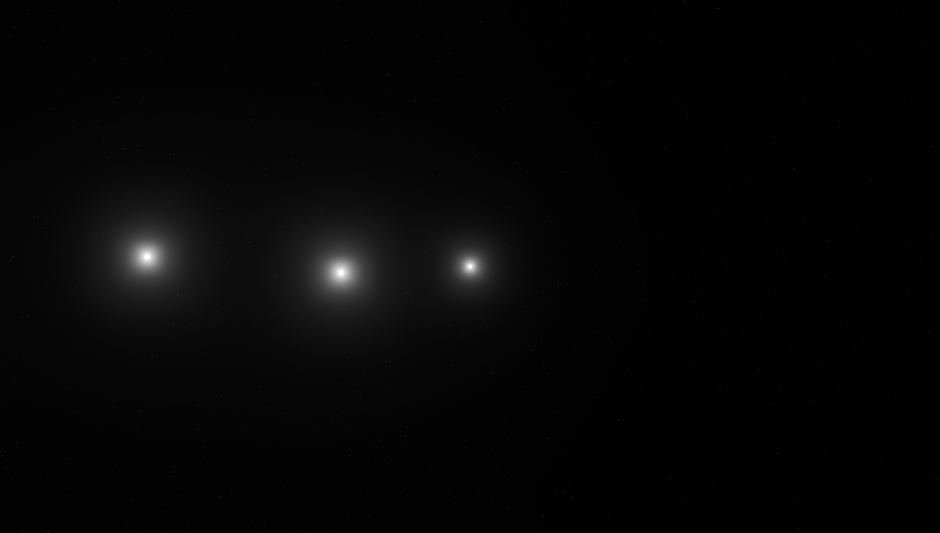
Furthermore, the presence of two such objects in close proximity hints at a universe teeming with activity, even in its youth. It implies that galactic mergers and the subsequent gravitational dance of their central black holes were not just possible but perhaps common occurrences in the early cosmos. This isn’t just about spotting dots in the sky; it’s about reconstructing the entire narrative of cosmic development. The James Webb is essentially providing fresh, inconvenient truths that demand a rewrite of the universe’s autobiography.
Challenging the Cosmic Blueprint
Here’s the hot take: this discovery isn’t just a scientific anomaly; it’s a testament to the arrogance of our previous models. For too long, we’ve constructed elegant, symmetrical theories of cosmic evolution, assuming a gradual, almost stately progression. This new data, courtesy of the James Webb, is a loud, clear signal that the early universe was a far more violent, unpredictable, and ultimately, faster-paced place than we ever gave it credit for. Those who clung to slower accretion models for black hole growth are now facing a stark reality check.
The true winners here are the audacious theorists, the ones who dared to suggest that black holes could form directly from the collapse of massive clouds of gas, or through other ‘seed’ mechanisms that allow for rapid growth. This finding lends significant weight to those unconventional hypotheses. On the other hand, the losers are any dogmatic adherence to outdated cosmological paradigms that can’t accommodate such early and active black hole dynamics. This isn’t a failure of science; it’s science doing what it does best: self-correction in the face of new, undeniable evidence.
What the mainstream might be missing is the sheer intellectual courage required to tear down cherished models and start anew. This isn’t a minor adjustment; it’s a fundamental shift in our understanding of cosmic infancy. It speaks to a universe where chaos and complexity were baked in from the very beginning, not something that gradually emerged over eons. Moreover, the implications for understanding dark matter and dark energy, and their roles in early structure formation, are immense. If black holes were forming and interacting so early, their gravitational influence might have played a far more significant, and earlier, role in shaping the cosmic web than we previously believed.
Ultimately, the **James Webb** is more than a telescope; it’s a time machine and a truth-teller. It forces us to confront the fact that our grasp of the universe, even after centuries of study, remains incredibly tenuous. Every new observation challenges our assumptions, expanding our knowledge while simultaneously deepening the mystery. This latest revelation is a potent reminder that the universe doesn’t conform to our convenient theories; it simply exists, waiting for us to catch up.
So, while we marvel at these celestial wonders, let’s also acknowledge the profound intellectual stakes involved. The universe is not just expanding; our understanding of it is exploding. What other inconvenient truths will the James Webb reveal next, and how much more of our cosmic blueprint will it force us to rewrite?
Source: Google — Space & Science