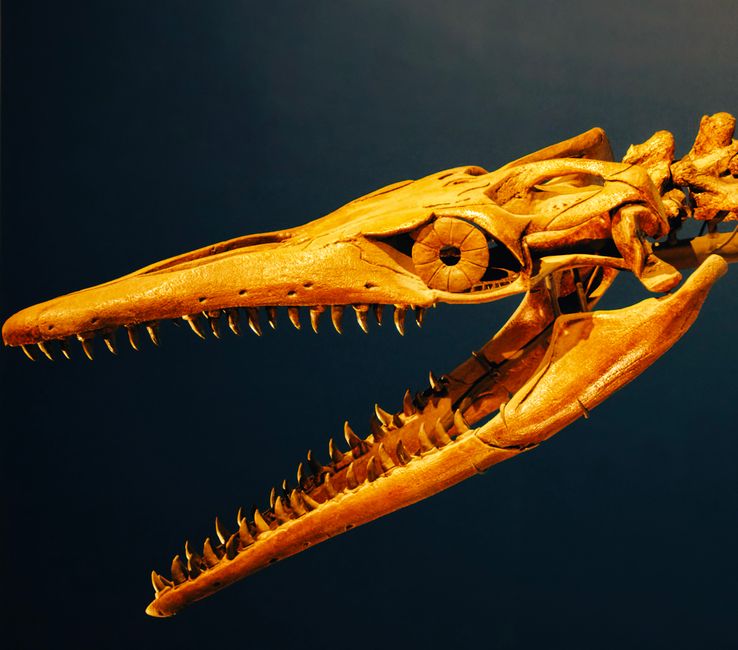
What does it take to unite 2,000 people today? Not a political cause, not a social movement, not even a global crisis, it seems. No, what truly brings us together, in this age of fragmentation, is the ghost of a creature that prowled the primordial waters 240 million years ago, far from the bustling landscapes of modern South Asia.
According to The Hindu, a staggering 2,000 volunteers have joined a meticulous effort to restore the massive skeleton of a Mastodonsaurus. This prehistoric predator, an underwater ambush hunter from the Middle Triassic period, feasted mainly on fish and smaller amphibians.
The Deep Time Echoes Across Continents
This isn’t just a story about a dinosaur’s distant cousin; it’s a profound statement about human nature. Why do we invest so much collective energy into uncovering the remnants of a creature that lived before the continents as we know them even formed? It speaks to a universal human curiosity, a deep-seated need to understand our planet’s epic story. While this specific discovery is making waves outside of South Asia, the scientific community, including scholars and enthusiasts in South Asia, recognizes the global significance of such paleontological breakthroughs.
The sheer scale of the volunteer effort is remarkable. In an era where online discourse often devolves into echo chambers and division, these 2,000 individuals are physically, painstakingly, working side-by-side. They are cleaning, cataloging, and reassembling fragments of a world utterly alien to our own. This collaboration transcends national borders and cultural differences, forging a silent pact with deep time itself. It shows that beneath the surface of our modern anxieties, a primal fascination with our planet’s ancient past endures, uniting people from all walks of life, from seasoned paleontologists to curious students.
The Uncomfortable Truth of Collective Effort
Here’s the rub: we can mobilize thousands for a creature long dead, yet struggle to find similar unity for the pressing issues of our living world. Think about it. Two thousand volunteers dedicating untold hours to a fossil. Meanwhile, critical environmental challenges, social inequities, and global health crises often struggle for sustained, widespread, and truly unified human commitment. Is it because the Mastodonsaurus offers a safe, uncontroversial target for our collective goodwill? There’s no political পক্ষ, no economic stake, just the pure, unadulterated pursuit of knowledge and connection to a forgotten epoch.
Perhaps the mainstream narrative misses the point entirely. This isn’t just about restoring a skeleton; it’s about restoring a sense of shared purpose. In a world saturated with ephemeral digital connections, this physical, tangible act of collective creation is a rare and powerful commodity. It reminds us that complex problems, even those spanning millions of years, can be solved through patience, precision, and an almost religious devotion to a common goal. This kind of monumental effort, whether happening in a European lab or conceptually echoing in archaeological discussions across South Asia, highlights what humanity *can* achieve when it truly pulls together.
The irony, of course, is that while we meticulously piece together the fossilized remains of an apex predator from 240 million years ago, we often seem blind to the predators of our own making today: climate change, habitat loss, and the ever-present threat of human conflict. The Mastodonsaurus, an ancient hunter, couldn’t have imagined the world it would one day help unite. Yet here we are, sifting through its bones, perhaps hoping to find not just scientific answers, but also a blueprint for how to collaboratively tackle the behemoths of our own time. What if we applied this same boundless dedication, this meticulous collaboration, to the challenges that threaten our existence right now?
Source: The Hindu