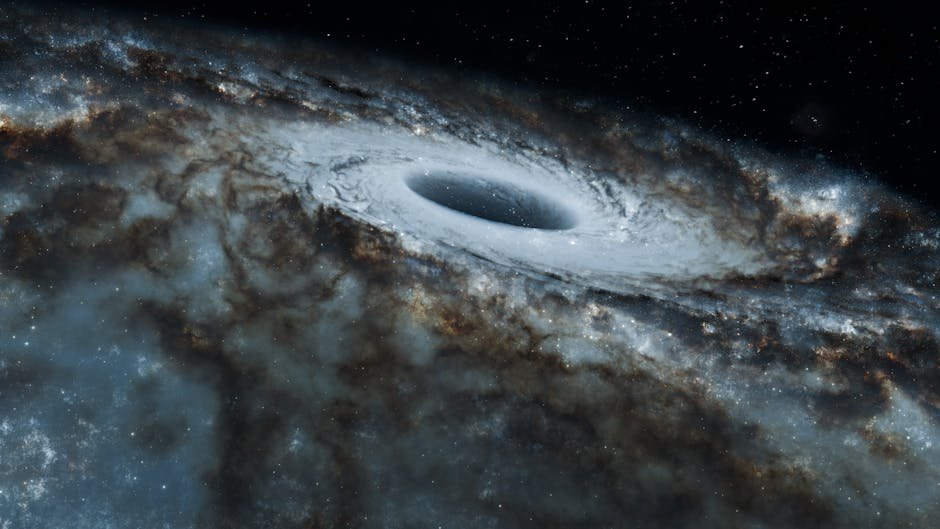
What if I told you our understanding of the universe’s infancy just got a serious upgrade? NASA’s Webb Space Telescope has made a groundbreaking discovery that challenges our conception of galaxy formation and black holes, cementing the importance of science in unraveling cosmic mysteries.
According to NASA, the Webb has detected a black hole that formed before its host galaxy, an extraordinary finding that could rewrite the cosmic story of how black holes and galaxies develop. This revelation has stunned astronomers, as it suggests a more complex narrative than previously understood.
The Science of Cosmic Origins
This discovery matters more than ever as we strive to connect the dots in the vast, often chaotic narrative of the universe. For decades, the consensus was that black holes formed from the remnants of massive stars within galaxies. But this new evidence points toward a black hole emerging independently, challenging the linear timeline we’ve constructed around cosmic evolution. The black hole in question, dating back to a time when the universe was a mere fraction of its current age, raises crucial questions about the processes that led to its existence and the galaxies that eventually budded around it.
The implications of this find cascade through the realms of astronomy and physics. It not only reshapes our understanding of black hole formation but also hints that these cosmic giants may have played a pivotal role in the formation and evolution of their surrounding galaxies. This potential link could ignite a new wave of inquiry, with scientists racing to understand the conditions that allowed such an anomaly to occur.
The Stakes of Discovering Cosmic Anomalies
What’s at stake here? If we buy into the old narrative, we risk oversimplifying the wonderfully complex ecosystem of the cosmos. The mainstream discourse often overlooks the possibility that cosmic events are not linear but rather interwoven in ways we are only beginning to grasp. This black hole discovery exemplifies the need for a more nuanced approach to science, one that embraces complexity rather than shuns it.
Moreover, there’s a significant cultural dimension to consider. For regions like the Middle East and South Asia, where scientific development can often take a backseat to other priorities, this discovery serves as a reminder of the power of curiosity and inquiry. It showcases what can be achieved with investment in science and technology, potentially inspiring the next generation of scientists in these regions.
However, the excitement surrounding these findings can also lead to misunderstandings and hype. The media loves a good story about black holes, influencing public perception of science in ways that can be both positive and negative. If we’re not careful, we might sensationalize this discovery to the point of misrepresentation, losing sight of the methodical process that underpins scientific inquiry.
As we celebrate this new chapter in the science of black holes, let’s hold ourselves accountable to the complexity and mystery that still remains. Will this discovery prompt a renaissance in our understanding of cosmic evolution, or will it fade into the background of popular science? Only time will tell, but one thing is clear: the universe is far more intricate and surprising than we ever imagined.
In the grand scheme of things, science is not just about answering questions; it’s about reshaping the questions we ask. What new wonders are waiting to be uncovered in the infinite tapestry of the universe?
Source: Google — Space & Science