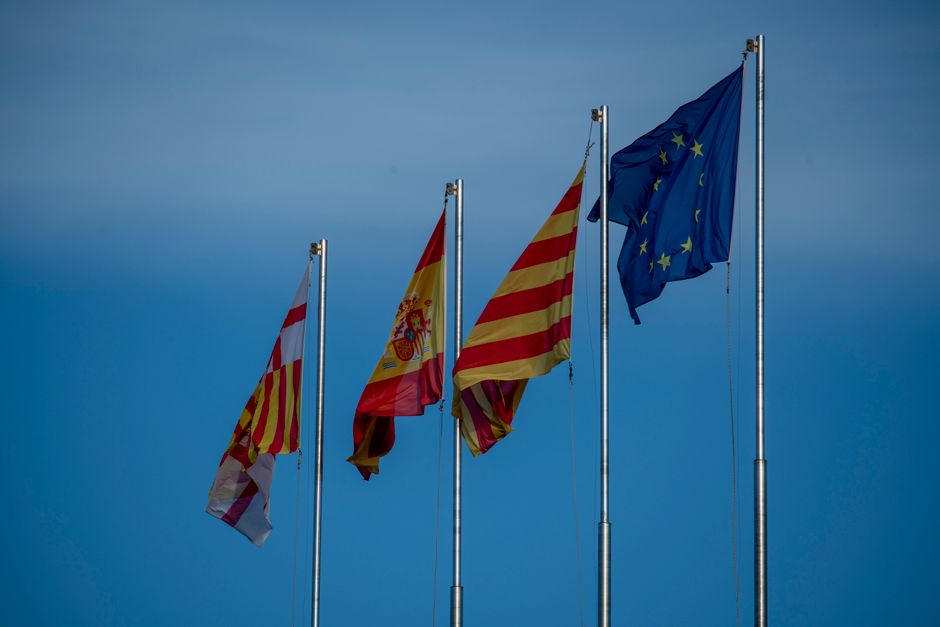
It appears the honeymoon with unchecked frontier fluidity is officially over for several **European Nations**, or at least, for a vocal contingent of their leadership.
The latest crisis at Spain’s North African enclave of Ceuta has triggered a dramatic recalibration of rhetoric across the continent. Following reports of tens of thousands of individuals from Morocco attempting to cross into Spanish territory, leaders from Italy, Finland, and Denmark have publicly voiced a profound regret over the existing open-border system. This collective sentiment, as highlighted by the Daily Caller, goes further, with calls now being made for Spain’s potential removal from the very system that underpins much of the continent’s internal freedom of movement.
This isn’t just about a localized border incident; it’s about the very fabric of European integration. The swiftness and severity of the statements underscore a growing impatience among some member states regarding the shared responsibility of external border management. The political context is thick with national anxieties and the perennial tension between solidarity and sovereignty. The question is no longer *if* the system needs review, but how drastically it might be forced to change.
What landed
Perhaps the most striking aspect of this emerging discourse is the refreshing, if belated, dose of candor. For leaders to openly express “regret” over a foundational policy like open borders, especially one so deeply intertwined with the European project, is a significant moment. It’s an implicit acknowledgment that the ideals, however noble, have collided with complex realities, and that the consequences of certain policies are now undeniable. This shift from guarded optimism to frank concern is a vital step towards addressing what has become an increasingly volatile issue.
Furthermore, there is a clear-eyed recognition of the immediate crisis at hand. The scale of the influx into Ceuta, described as involving “tens of thousands of illegal aliens” by the Daily Caller, is a stark and visible challenge that simply cannot be ignored or downplayed. It demands an urgent response, and the calls from various capitals, even if pointed, indicate a shared understanding that the status quo is untenable. This collective outcry, while perhaps less than harmonious, at least signals a unified recognition that the external borders of Europe require more than just rhetoric; they demand effective, coordinated action.
Finally, the suggestion of holding Spain accountable, even to the point of discussing its removal from the open-border system, while drastic, signals a serious intent to enforce the principle of shared responsibility. It puts other member states on notice that the burden of managing external frontiers, particularly those considered the “gateway” to the continent, cannot be borne in isolation, nor can perceived lapses be overlooked indefinitely. While the method may be contentious, the underlying desire for robust border management and a fairer distribution of responsibility across the Union is a sentiment that many would agree has been lacking.
What doesn’t add up
The suddenness of this “regret” invites a healthy dose of skepticism. The challenges posed by irregular migration, particularly at the EU’s southern frontiers, are hardly a novel phenomenon. Where was this profound introspection when similar, albeit perhaps smaller-scale, events unfolded in previous years? The current crisis, while severe, feels less like a revelatory moment and more like the tipping point for a sentiment that has been simmering for some time. One can’t help but wonder if the regret is truly over the abstract principle of open borders, or merely over the immediate political fallout and the perceived strain on national resources.
Moreover, the call to potentially remove Spain from the open-border system, while a forceful statement, sidesteps a critical nuance: the collective responsibility inherent in such a system. Spain, by geographical happenstance, finds itself on the frontline. To single out one member state for punitive action, rather than engaging in a more fundamental review of the collective mechanisms for border control and migration management, feels somewhat disingenuous. It risks deflecting attention from the broader systemic vulnerabilities that all member states, through their tacit or explicit support of the existing framework, share. The question becomes: is this a genuine attempt at problem-solving, or a convenient way to externalize a shared internal issue?
The proposals also present a tension with the foundational ideals of European integration. The open-border system, often synonymous with the Schengen Area, is a cornerstone of the European Union’s promise of unity and freedom of movement. To discuss a member state’s removal, even if hypothetically, represents a significant departure from this ideal. While flexibility and adaptation are crucial, the abruptness of such a drastic proposal raises questions about the long-term vision for the Union. Is the solution to every shared challenge to fracture the very systems designed to unite? It suggests a reactive rather than a strategic approach to what is fundamentally a complex geopolitical challenge, not just a localized border issue.
Monday morning, the stakes are exceptionally high. This moment of crisis could either galvanize European Nations towards a more pragmatic, unified, and resilient approach to border management and migration policy, or it could accelerate a worrying trend of fragmentation. The challenge now is to transform this belated regret and critical assessment into constructive, collective action that reinforces, rather than dismantles, the European project.
Source: OnTheRecord