
Do we truly understand the silent havoc our presence wreaks on the wild? New findings from Canadian scientists suggest our very whispers, our ambient noise, near wilderness are rewriting ecosystems in ways we’ve barely begun to grasp. It’s not just about deforestation or pollution; it’s about the insidious creep of humanity’s sonic footprint.
According to a recent report by the Times of India, Canadian researchers conducted experiments near Alaska’s vital salmon streams. They discovered that simply playing human voices was enough to send grizzly bears fleeing from crucial feeding grounds, along with eagles. This seemingly minor disturbance had a profound ripple effect, disrupting the natural transfer of essential salmon nutrients from the rivers into the surrounding forests.

The Echo of Human Presence: What Scientists Uncovered
This isn’t just a quirky anecdote about skittish bears; it’s a stark warning about foundational ecological processes. Salmon are not merely fish; they are keystone species, bringing vital marine-derived nutrients inland after their epic spawning journeys. When bears and eagles feed on these salmon, they scatter the carcasses and their waste, enriching the soil, feeding trees, and nourishing a host of other organisms. This nutrient transfer is the very lifeblood of a healthy forest ecosystem, linking the ocean to the land in an intricate dance.
The research highlights a critical vulnerability: the sensitivity of apex predators to human interference, even when that interference is non-physical. Bears and eagles, vital agents in this nutrient cycle, are highly wary of human sounds. Their avoidance of these areas means fewer salmon are pulled from the water, fewer nutrients are deposited, and the entire forest food web suffers. These scientists have pointed out that existing land management practices might be woefully inadequate if they don’t account for such subtle yet destructive forms of human impact.

The implications of this study are global, resonating particularly strongly in densely populated regions like South Asia. Here, rapidly expanding urban centers, massive infrastructure projects, and burgeoning tourism often encroach upon the last vestiges of delicate ecosystems. From the Himalayas to the Western Ghats, human expansion forces wildlife into increasingly fragmented and disturbed habitats. The idea that our mere auditory presence can disrupt an apex predator’s feeding patterns should serve as a stark warning to policymakers grappling with human-wildlife conflict in places like the Sundarbans or near tiger reserves. The pressure to develop often overlooks these invisible costs, prioritizing immediate human needs over the long-term health of our shared planetary systems.
The Unseen Toll of Human Dominance
The mainstream narrative often focuses on grand environmental battles: climate change, plastic pollution, deforestation. While undeniably critical, this research forces us to confront a more intimate, perhaps more uncomfortable truth: our sheer proximity and the noise we generate are fundamentally altering ecosystems, even when we believe we are “treading lightly.” This isn’t about active malice; it’s about passive dominance. It exposes the profound hubris in believing we can simply exist adjacent to nature without fundamentally changing it.
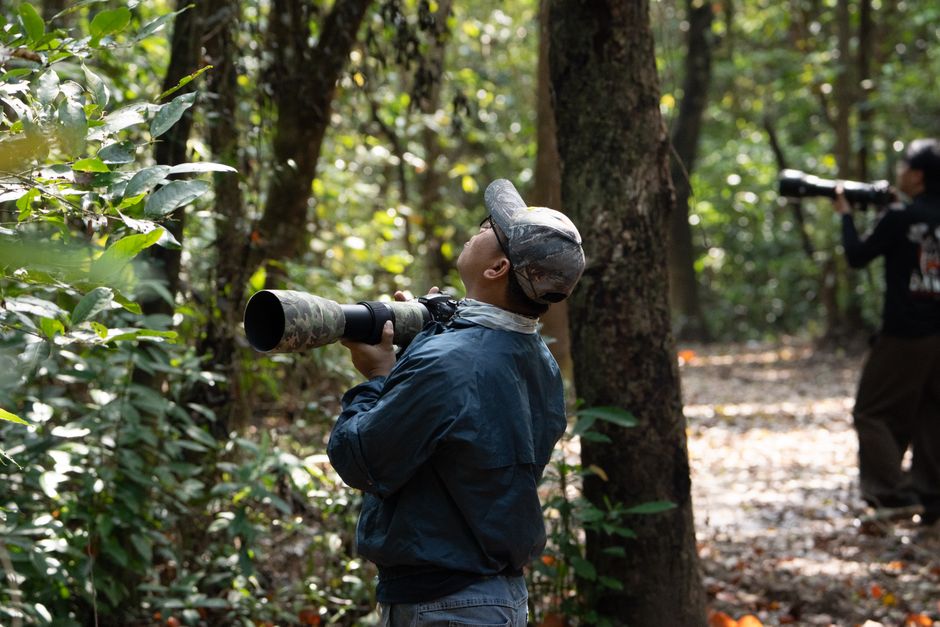
Who wins? Humanity, perhaps, in the short term, as we continue to expand our footprint, our roads, our settlements. But who loses? The intricate web of life, the resilience of ecosystems, and ultimately, ourselves, as we degrade the very natural systems that sustain us. The cost of our comfort, our convenience, our ceaseless expansion, is far greater than we admit. What could go wrong? A slow, imperceptible unraveling of ecosystem health, leading to diminished biodiversity, reduced forest productivity, and ultimately, less resilient natural environments. The proposed “enhanced land management practices” are a start, but they demand a fundamental shift in our understanding of what “impact” truly means. It’s not just visible damage; it’s the unseen stress, the constant threat that our presence represents to the wild. The truth is, many governments, especially those balancing economic growth with environmental concerns in places like India or Bangladesh, might find it incredibly challenging to implement measures against something as intangible as “human sound.”
Ultimately, what these scientists have shown us is a mirror. It reflects not just the vulnerability of nature, but the overwhelming, often unconscious, power of human presence. Are we truly willing to listen to the silence that our own noise is creating, or will we continue to deafen ourselves to the cries of a disappearing wild?
Source: Times of India