
Another day, another government attempting to legislate morality in the digital age, and another slap on the wrist from the courts. This time, it’s France that’s learning a hard lesson about the limits of state control over its youngest citizens. The grand ambition to shield children from the perceived perils of social media through outright prohibition has hit a constitutional wall, exposing the deep chasm between political will and fundamental rights.
According to France 24, the nation’s Constitutional Council has struck down a proposed bill that aimed to ban social media access for individuals under the age of 15. The council explicitly ruled that such a sweeping measure infringed upon the sacrosanct principle of freedom of expression. This judicial rebuke marks a significant setback for President Emmanuel Macron, who has championed the legislation as a vital safeguard for youth. Consequently, Macron has already tasked his prime minister with rewriting the bill, determined to see some form of the reform enacted before next year’s presidential election.

Macron’s Parental Dilemma in France
This isn’t just about a single piece of legislation; it’s a profound manifestation of a global struggle. Governments worldwide are grappling with the pervasive influence of social media on young minds, and the instinct to protect often overrides careful consideration of individual liberties. President Macron, ever the moderniser, has positioned himself as a champion of children’s well-being, framing this proposed ban as a necessary intervention against digital addiction, cyberbullying, and exposure to inappropriate content.
However, the Constitutional Council’s decision underscores a fundamental tension. While the concerns driving the bill are valid, the method chosen by France was arguably blunt and overly broad. This ruling isn’t merely a technicality; it’s a powerful reaffirmation that even well-intentioned state paternalism must bow to the bedrock principles of a free society. The proposed ban would have treated every under-15 as incapable of navigating the digital world, stripping them of agency and, crucially, a platform for expression that is increasingly central to modern communication.

The political stakes for Macron are high. He wants to project an image of a leader proactively tackling contemporary challenges, particularly those impacting families. With an election looming, demonstrating concrete action on issues like youth mental health and digital safety could resonate with a significant portion of the electorate. His determination to rewrite the bill signals that this fight is far from over in France; it’s merely entering its next, more nuanced phase. The Élysée’s insistence on reform before the election suggests that political expediency might still outweigh a truly holistic approach to digital literacy and safety.
The Futility of the Firewall
Let’s be brutally honest: a blanket ban on social media for under-15s was always going to be an exercise in futility. In an age where VPNs and proxy servers are a few clicks away, and where older siblings or friends can easily provide access, such legislation would have been a digital Maginot Line – impressive on paper, but easily circumvented by resourceful teenagers. The Constitutional Council, by upholding freedom of expression, implicitly highlighted the impracticality, if not the outright impossibility, of enforcing such a measure without resorting to deeply invasive surveillance.
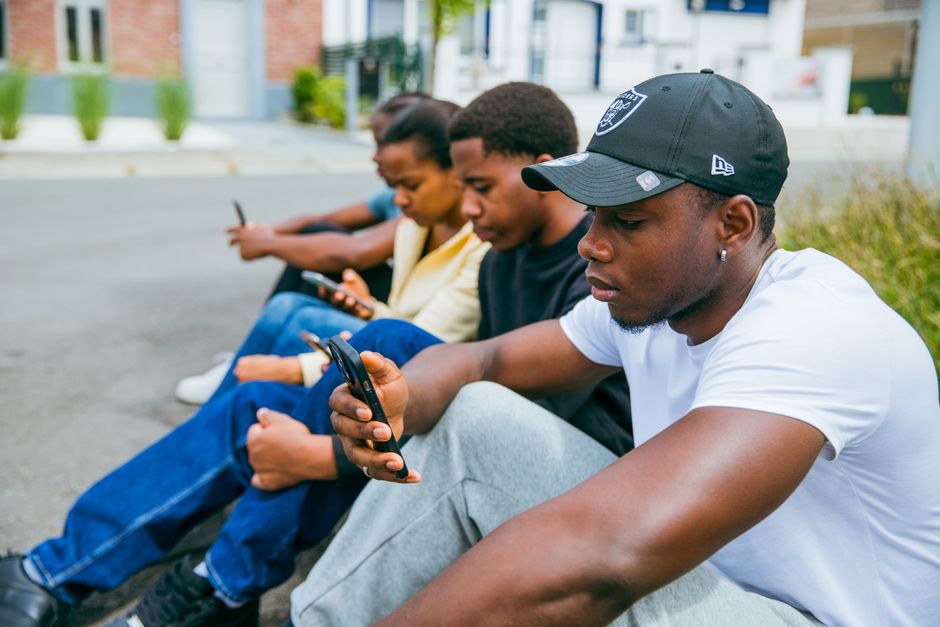
The real fight for France isn’t about age limits enforced by judicial decree; it’s about empowering young people with the critical thinking skills to navigate online spaces safely and responsibly. It’s about demanding greater accountability from tech giants to design safer platforms, rather than expecting the state to police every individual’s internet access. A ban, however well-intentioned, risks driving online activity underground, making it harder for parents and educators to monitor and guide children. It substitutes genuine education and dialogue for a simplistic, authoritarian fiat.
Critics of the ban are not blind to the dangers of the internet. They simply understand that the solution lies not in censorship, but in digital literacy, parental engagement, and robust platform regulation. The mainstream narrative often misses this crucial distinction, preferring the easy headline of a “ban” over the complex, long-term work of fostering a healthy digital ecosystem. Macron’s administration now faces the unenviable task of drafting a bill that addresses legitimate concerns about youth safety without trampling on fundamental rights or creating a law that is utterly unenforceable.
The Constitutional Council’s ruling is a victory for digital rights and a wake-up call for governments globally. It forces a more profound conversation about the balance between protection and freedom in the digital age. Will France learn from this setback, pivoting towards solutions that empower rather than prohibit? Or will it double down on a paternalistic approach, destined to chase an ever-elusive digital firewall? The next iteration of this debate will define what kind of digital future France truly wants for its youth.
Source: France 24