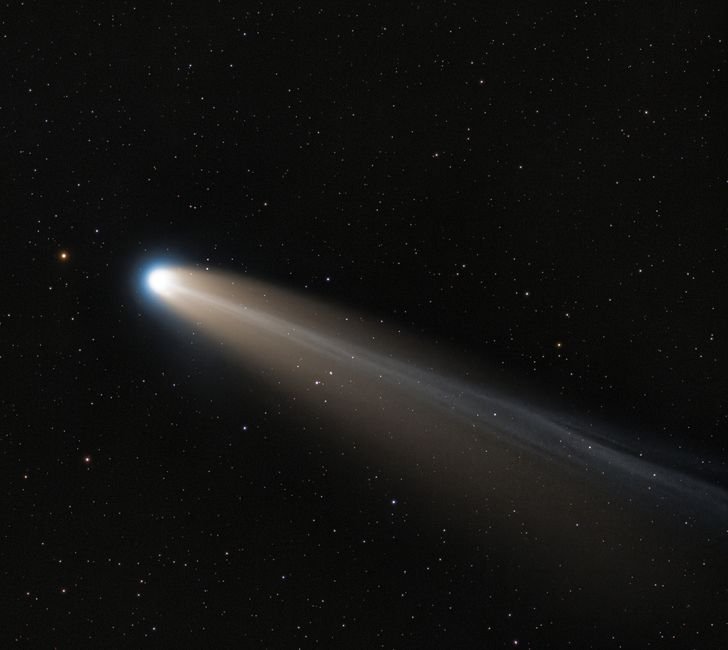
What does it mean when a mere comet bursts onto the scene with a chemistry set that would make even the most seasoned scientists’ heads spin? The recent discovery of methane and bizarre chemical compounds on interstellar comet 3I/ATLAS is shaking up what we thought we knew about these icy wanderers. This is not just another day in the life of **science**—this is a potential game changer.
According to ScienceDaily, NASA’s James Webb Space Telescope has identified methane and unusual chemical interactions on comet 3I/ATLAS, prompting a reevaluation of our understanding of these celestial bodies. This groundbreaking discovery showcases not only the technological prowess of modern space observation but also the mysteries that still linger in our vast universe.
The Chemistry of Comets: Why This Science is Groundbreaking
So why should we care about comet 3I/ATLAS and its cocktail of chemicals? For starters, these findings challenge long-standing assumptions about the building blocks of life and the conditions in space. Comets are often viewed as the remnants of the early solar system, and what we discover about them could reshape our theories on how life emerged on Earth and elsewhere.
The 3I/ATLAS comet hails from outside our solar system, which means it carries with it a unique chemical history. Its detection of methane suggests that organic compounds may be more widespread in the cosmos than we previously thought. This is not just **science** for the sake of academia; this has real implications for astrobiology and our quest to find life beyond Earth.
Science vs. Ignorance: The Stakes Are High
The real stakes here extend beyond the realm of curiosity and into the territory of fundamental human questions: Are we alone in the universe? What conditions lead to life? The mainstream narrative often overlooks the profound implications of such discoveries, focusing instead on the spectacle of the find rather than its significance.
The winners in this scenario? Scientists and researchers who now have fresh data to fuel debates, hypotheses, and future missions. The losers, however, may be the skeptics who cling to outdated beliefs about extraterrestrial life. If more comets start revealing complex organic chemistry, how will they reconcile their views with the mounting evidence?
But the dangers of this discovery extend further. There’s the risk of overstating the implications. Just because we find methane doesn’t automatically mean there’s life out there; it could simply be a chemical reaction caused by environmental factors. We need caution as much as we need enthusiasm in the field of **science**.
Moreover, as we delve deeper into interstellar discoveries, will our interpretations be clouded by biases? Are we prepared to embrace a universe that defies our carbon-based definitions of life?
In the end, the revelations from comet 3I/ATLAS are more than just **science**; they’re a clarion call for humility and openness in our understanding of the cosmos. As we peel back the layers of the universe’s secrets, we inch closer to the profound truth of our existence.
So, what will our next steps be? Will we continue to chase the shadows of ignorance, or will we dive into the depths of the unknown with open minds and hearts? The choice is ours, and the universe is waiting.
Source: Google — Space & Science