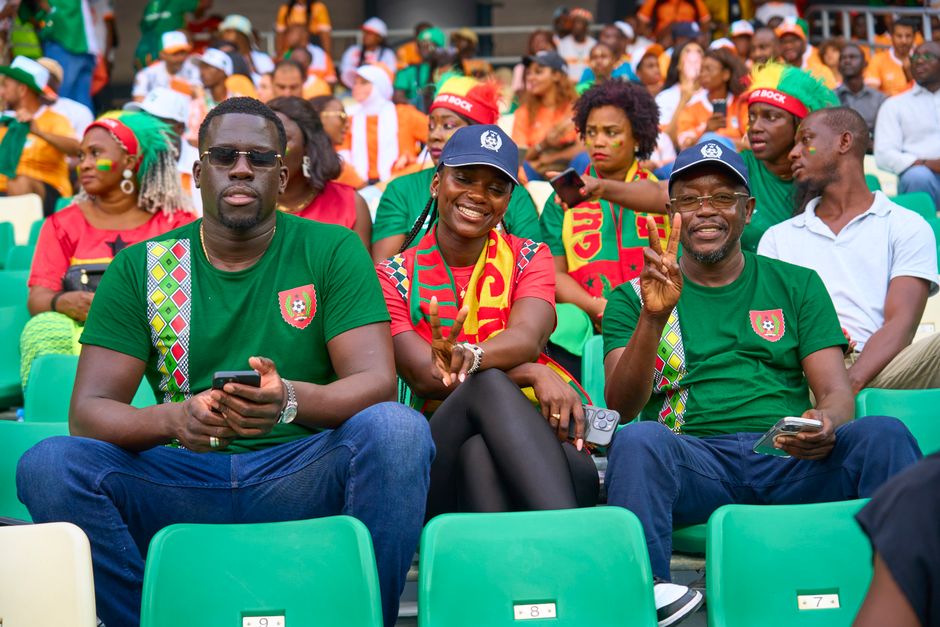
Another Monday, another deluge of headlines about Westminster squabbles or Capitol Hill posturing. The usual suspects dominate the airwaves, shaping our perception of global significance. But while the talking heads dissect every nuance of Western power plays, a truly momentous shift just unfolded far from those predictable narratives: **Cameroon** has claimed its first Women’s Africa Cup of Nations title.
According to France 24, the Indomitable Lionesses secured a decisive 3-0 victory against tournament newcomers Malawi in the final. Marie Ngah Manga netted two goals, with Naomi Eto adding another to seal their historic win. Both finalists, along with Morocco and Algeria, have now secured their spots in next year’s Women’s World Cup in Brazil.

Cameroon’s Unseen Ascent
This isn’t just a football match; it’s a seismic event for African women’s sport. For too long, the narrative around African football has been almost exclusively male-dominated. Think of the Super Eagles or the Pharaohs – their exploits grab global attention and sponsorship deals.
Meanwhile, women’s teams across the continent often battle systemic underfunding, inadequate facilities, and a frustrating lack of media visibility. Their journey is frequently one of sheer grit, overcoming barriers that male counterparts rarely encounter. This victory by Cameroon, therefore, is more than just a trophy; it’s a powerful statement of capability and perseverance.
The Women’s Africa Cup of Nations itself represents a vital platform. It showcases talent that might otherwise remain unseen, and it forces a conversation about equitable investment. Malawi’s unexpected run to the final, alongside powerhouses like Morocco and Algeria also qualifying for the World Cup, underscores the growing depth and competitiveness of the game in Africa. This isn’t an isolated incident; it’s a powerful and accelerating trend.
These teams are not just competing; they are inspiring. They are showing millions of young girls across the continent what is possible, often against incredible odds. Their success challenges deep-seated prejudices and economic disparities within sports structures. It demands recognition that has long been overdue.
Beyond the Scoreline: The Real Stakes
Let’s be blunt: while Western media obsesses over a politician’s latest gaffe or a minor legislative tussle, the true geopolitical and social shifts often happen elsewhere. The mainstream narrative consistently misses stories like this. A victory for **Cameroon** in this context isn’t just about sporting glory; it’s a potent symbol of progress and defiance.
Who wins here? Certainly, the players and coaching staff of Cameroon. More broadly, African women win. Their success chips away at the patriarchal structures that have historically limited their opportunities in sports and beyond. This win provides tangible proof of their competitive prowess on an international stage, earning them a berth at the prestigious Women’s World Cup.
Who loses? The entrenched biases, perhaps. Those who still view women’s football, particularly in Africa, as a niche interest rather than a significant cultural and economic force. The lack of sustained corporate sponsorship and media coverage, often directed towards more ‘palatable’ Western narratives, is the biggest casualty here. This isn’t just about fair play; it’s about equitable investment.
The qualification of four African teams for the World Cup is a massive leap forward. It suggests a burgeoning infrastructure and talent pool demanding greater attention and resources. Imagine the ripple effect this will have across communities, empowering girls and challenging traditional gender roles. This isn’t merely a game; it’s a movement with profound social implications.
However, the fight is far from over. The real test comes after the celebration subsides. Will this victory translate into sustained investment? Will the media spotlight linger, or will it quickly pivot back to the ‘safer’, more familiar stories from London or Washington? The burden often falls on these teams to continuously prove their worth, rather than receiving the proactive support they deserve simply by virtue of their talent.
This is where the hypocrisy lies. We talk about global development, about empowering women, about investing in Africa. Yet, when African women achieve something spectacular on their own terms, the broader world often shrugs, or worse, remains entirely oblivious. This isn’t just an oversight; it’s a systemic failure of attention and a reflection of skewed priorities.
The significance of this triumph for **Cameroon** extends far beyond the pitch. It’s about national pride, certainly, but also about a continent asserting its presence in a domain where it’s often been marginalized. This isn’t just a story for sports pages; it’s a socio-political earthquake demanding our full attention.
So, while the pundits continue to dissect the mundane political machinations of the global north, remember what truly moved over the weekend. Remember the roar of the crowd, the skill on the pitch, and the powerful message sent by **Cameroon**. The world changes not just in parliaments, but also on football fields, especially when those fields are in Africa and the players are women defying expectations. Are we paying attention to the right revolutions?
Source: France 24