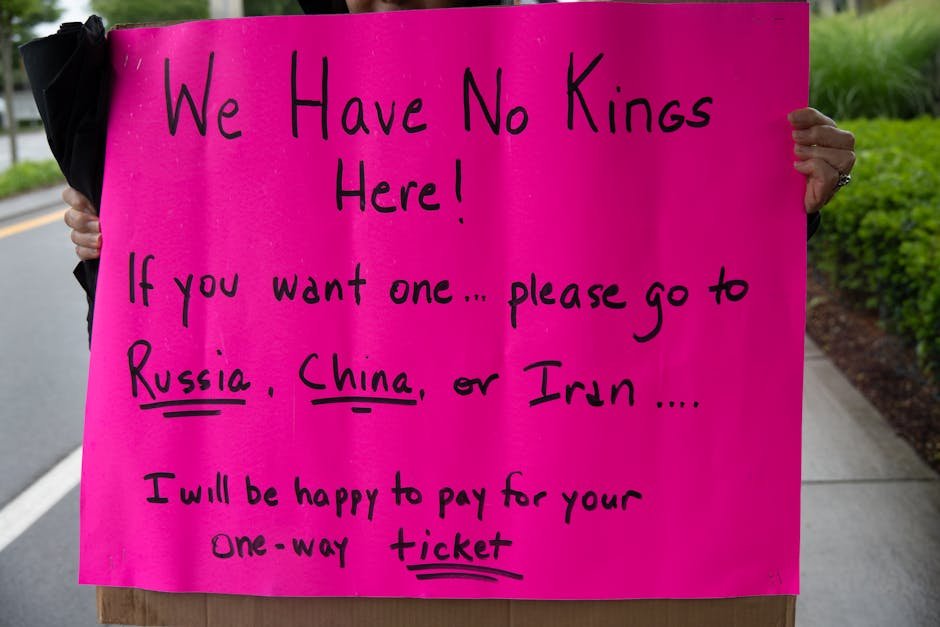
The world is on the edge of a nuclear precipice, and the United States has positioned itself as the guardian against Iran’s ambitions. But is this posture sustainable, or merely a hollow display of unity? According to News On AIR, President Trump recently declared that the United States and the European Union stand united to ensure that Iran never acquires nuclear weapons.
In a statement that echoes decades of diplomatic tension, Trump reaffirmed a commitment to preventing Iran from obtaining nuclear capabilities. This assertion comes at a time when diplomatic relations are increasingly strained, and the specter of conflict looms ever larger.
The Stakes for the United States and Global Diplomacy
This development matters more than ever as the geopolitical landscape shifts. The United States has long viewed Iran as a destabilizing force in the Middle East, a perception bolstered by Iran’s support for militant groups and its antagonistic rhetoric towards Western nations. The Joint Comprehensive Plan of Action (JCPOA), the nuclear deal initially brokered in 2015, aimed to curtail these aspirations but has seen challenges and a collapse in trust, especially after the U.S. withdrawal in 2018.
Now, as Trump emphasizes unity with the EU, we should consider what this really means. Are we witnessing a genuine coalition against nuclear proliferation, or simply a political maneuver to divert attention from domestic issues? In an era where alliances are tested and countries pursue their own interests, the resolve of the United States to curb Iran’s nuclear ambitions holds significant implications for global security.

Hot Take: Whose Interests Are Really at Stake?
It’s time to get real—this grandstanding could lead to more than just diplomatic fallout. The United States may be rallying allies, but is it actually helping the situation? If diplomacy continues to falter, military action could become the last resort, leading to disastrous consequences for both regional stability and U.S. foreign policy.
While the mainstream narrative celebrates unity against an “evil” Iran, it often neglects to mention that this approach could drive Iran further into the arms of adversarial countries like Russia and China. With alliances shifting, who really stands to win if tensions escalate?

There’s a risk that in a bid to appear tough and decisive, the United States opens itself up to ridicule, or worse, missteps that lead to conflict. The rhetoric of solidarity might resonate in Congress, but on the ground, it could stoke flames rather than douse them.
As the week unfolds with potential market impacts and diplomatic engagements, one thing is clear: the stakes could not be higher. Will the United States navigate this treacherous landscape with wisdom, or are we marching towards a new conflict?
In the end, the question remains—how long can the United States maintain this façade of unity, and at what cost? As Iran’s nuclear ambitions persist, the price of failure may be steeper than we are willing to pay.
Source: Google — UK & Europe