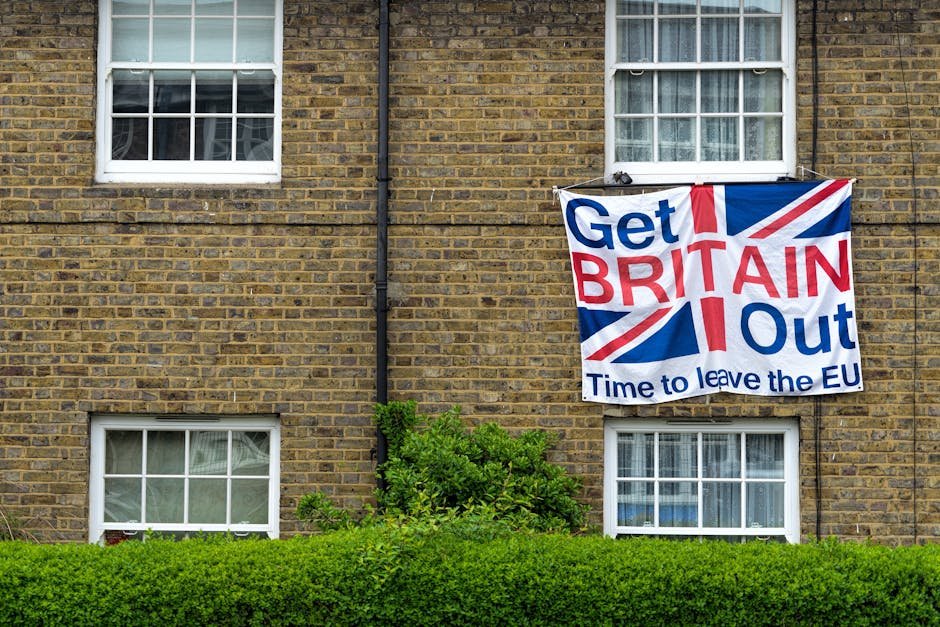
Brexit Slow frames the debate here: Brexit may have been sold as a triumph, but the truth is that it’s been a slow-motion disaster for the UK. Now, Europe is poised to fast-track Britain’s return to the fold, and the stakes couldn’t be higher. Could the post-Brexit recovery be a road paved with pragmatic concessions, or simply another chapter in the saga of British hubris?
According to The Independent, European Union officials are reportedly willing to accelerate the process of Britain rejoining the bloc following the chaos and economic fallout that has plagued the UK since its departure. This shift comes in the wake of significant political and economic turmoil, pushing Westminster to reconsider its once-certain stance on sovereignty and independence.

The Context of Europe’s Embrace
This matters now more than ever as the ramifications of Brexit have become painfully clear. The soaring costs of living, disrupted supply chains, and a diminishing workforce have made many Brits nostalgic for the stability they left behind. Key players in this drama include politicians from both sides of the English Channel, anxious to reshape their futures as the consequences of past decisions loom large. The EU, once seen as the enemy, now appears as a beacon of hope, offering a way out of the Brexit mess.
But let’s not kid ourselves—this isn’t an act of charity on the EU’s part. Europe understands that a weakened UK is not just a loss for Britain; it’s a problem for the entire continent. Economic instability in one member can ripple through the others. The more the UK falters, the more Europe’s own stability hangs in the balance.
The Hot Take on Rejoining Europe
So who stands to gain from this potential reunification? Firstly, the EU can regain a major economic partner and mitigate some of the risks that come with a volatile British economy. In a global landscape increasingly shaped by geopolitics and trade wars, having the UK back in the fold could shore up European influence. However, this could get complicated. The return journey may not be as simple as a quick handshake and a smile at the border.
For Britain, the benefits of rejoining Europe seem obvious—access to the single market, collaborative frameworks on security, and a chance to restore international relationships that have soured. Yet, let’s not ignore the political ramifications at home. The British government will face an uphill battle to convince a population that voted for independence that returning to Europe is not a sign of failure but a step towards recovery.

However, the mainstream narrative is overlooking the significant risks. If the negotiations falter and the UK is unable to secure favorable terms, it could plunge the nation further into chaos. The political fallout would be catastrophic, potentially leading to a new wave of discontent that could fracture the union of the UK itself—never mind the damage to reputations on both sides.
As this situation unfolds, we must ask ourselves: is the EU ready to embrace a Brexit-weary Britain, or are we just witnessing the beginning of another round of political gamesmanship?
In the end, Europe’s hand may be forced not by compassion but by necessity. If that’s the case, we’re left to wonder how far London is willing to bend to reclaim its place at the table. History has shown us that both sides can be stubborn, and it’s difficult to see a resolution that does not stoke the embers of discontent further. Keep an eye on this—what starts as a path to reconciliatory glory might just lead to a spectacular misstep.
That tension around Brexit brexits is not going away.
Observers say Brexit brexits will shape the debate for months.
That tension around Brexit Slow is not going away.
Source: Google — UK & Europe