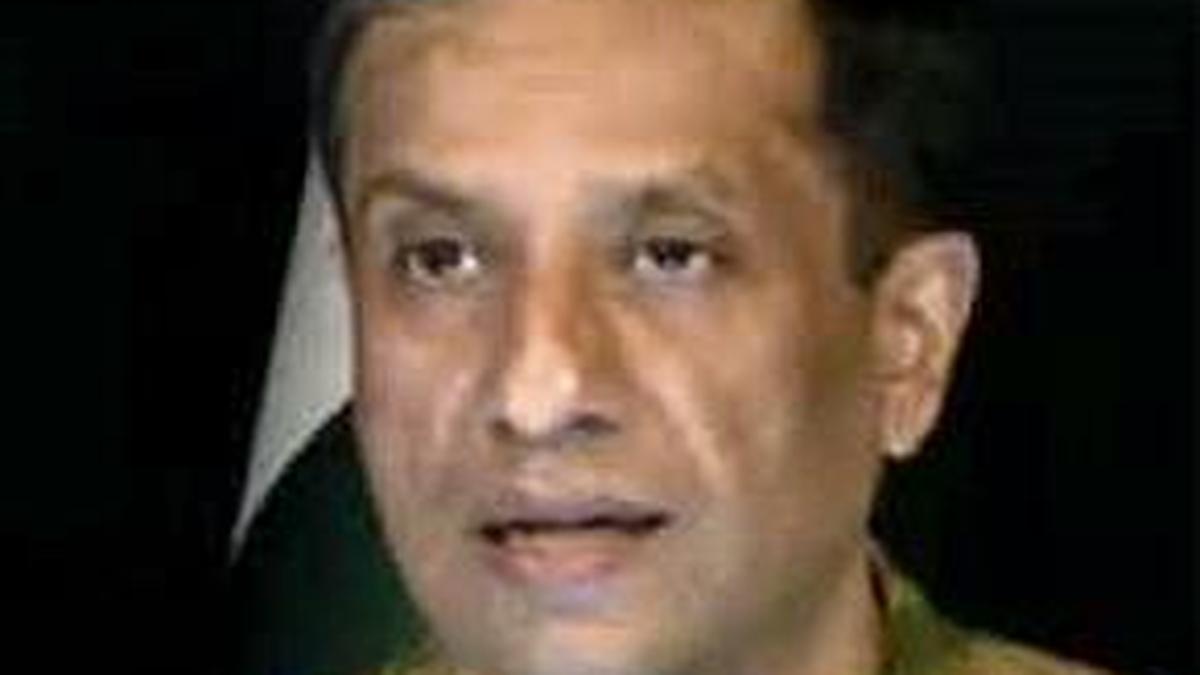
Pakistan has quietly slipped back onto the front‑stage of Middle‑East power politics, promising “whatever support needed” to defend Saudi Arabia, a pledge that could reshape the calculus of Western allies this week. The declaration, made by Lt. Gen. Ahmed Sharif Chaudhry in an interview with an Arabic‑language digital newspaper, signals a deepening of a bond that the United States and the United Kingdom have long tried to manage from a distance.
According to The Hindu, the Pakistani army chief told the outlet that Islamabad would supply any assistance required to protect the Gulf kingdom, now facing a volatile security environment after a spate of regional skirmishes. The statement was not accompanied by details, but the implication is clear: Pakistan is ready to mobilise troops, air assets, or intelligence networks at Riyadh’s request.
Pakistan’s Strategic Gamble in the Gulf
The timing of this promise is no accident. Over the past year, Saudi Arabia has been forced to confront a more aggressive posture from Iran, a renewed insurgency in Yemen, and the lingering threat of extremist groups exploiting the power vacuum left by the United States’ gradual military drawdown. For Pakistan, the calculus blends historic religious affinity, economic necessity, and a desire to assert itself as a regional power broker.
Historically, Pakistan’s ties to the Saudi royal family have been cemented by oil money, pilgrimage revenues, and a shared Sunni identity. In the 1990s, Saudi financing helped Pakistan weather sanctions after its nuclear tests, while Pakistani workers in the Gulf remitted billions back home. Today, the relationship is being reframed as a security partnership, with Pakistan hoping to leverage its sizable military to gain diplomatic clout and perhaps secure new defense contracts.

From a Western perspective, the pledge complicates an already tangled web. The United Kingdom, still negotiating its post‑Brexit defence posture, has been courting Gulf states for arms sales and joint training programmes. The United States, meanwhile, is juggling its own strategic withdrawal from the region with the need to keep Saudi oil flowing and to counter Iranian influence. A Pakistani commitment to Saudi defence could either relieve pressure on NATO allies—by providing a ready‑made force that shares a common religious and cultural background—or it could introduce a new variable that challenges the West’s ability to dictate terms.
Moreover, Pakistan’s military has been grappling with internal challenges: budget constraints, a need for modernisation, and political turbulence at home. By offering to defend Saudi Arabia, Islamabad may be seeking to justify increased defence spending and to rally domestic support around a narrative of Islamic solidarity. Yet the promise also risks overextending a force already stretched thin across its own borders, where insurgent activity in Balochistan and tensions along the Afghan frontier demand attention.
Why the Saudi Shield Matters to the West
For the United Kingdom and the United States, Saudi Arabia remains a linchpin in global energy stability and a counterweight to Tehran’s ambitions. The Gulf kingdom’s oil output underpins a substantial portion of the world’s supply, and any disruption reverberates through markets that directly affect British and American consumers. Consequently, Western capitals have a vested interest in ensuring Riyadh’s security, even if that means tacitly endorsing allied nations’ involvement.
The Pakistani overture could be read as a tacit invitation for the West to share the burden. If Islamabad supplies ground troops or air support, Washington and London might be able to scale back their own deployments, freeing resources for other theatres such as the Indo‑Pacific, where China’s maritime expansion is a growing concern. In theory, a multi‑layered security architecture—U.S. strategic guidance, UK logistical support, and Pakistani operational capacity—could create a more resilient shield around Saudi oil fields and critical infrastructure.
However, the reality is messier. Pakistan’s military doctrine is not fully aligned with NATO standards, and interoperability issues could hamper joint operations. Additionally, the Pakistani establishment maintains a delicate balancing act with Iran, whose own influence in the region cannot be ignored. Any overt military engagement on Saudi soil could provoke a retaliatory response from Tehran, dragging Islamabad into a direct confrontation that the United States and the United Kingdom would prefer to avoid.
Critics argue that Pakistan’s promise is more rhetorical than practical. Without a clear roadmap—whether it involves deploying a brigade, sharing intelligence, or merely offering logistical assistance—the statement risks being a diplomatic flourish that masks deeper uncertainties. Moreover, the domestic political climate in Pakistan, where opposition parties routinely accuse the military of overreaching, could constrain the army’s ability to act decisively without triggering internal backlash.
Nevertheless, the mainstream narrative in Western media tends to downplay the significance of Pakistan’s role, framing the Gulf security dilemma as a binary US‑Saudi or US‑Iran story. This narrow lens overlooks how South‑Asian dynamics increasingly intersect with European and American strategic interests. By positioning itself as a guarantor of Saudi defence, Pakistan forces the West to reckon with a broader coalition of partners, each bringing its own agendas and constraints.
The stakes are high. If Pakistan follows through, it could cement a new axis of cooperation that reshapes power balances across the Middle East, offering the United Kingdom and the United States a valuable ally that eases their own commitments. Conversely, a misstep—whether an over‑ambitious deployment or a miscalculated clash with Iran—could drag Islamabad into a conflict that strains its economy, destabilises its internal politics, and forces Western capitals to reconsider their reliance on a partner whose priorities may not always align with theirs.
In the end, the promise of “whatever support needed” is a double‑edged sword. It signals Pakistan’s willingness to step onto the global stage, but it also exposes the fragile interdependencies that define contemporary geopolitics. As the week unfolds, policymakers in London and Washington would do well to ask: are they prepared to integrate a new, potentially volatile player into a region already teetering on the edge? The answer may well determine whether the Saudi shield becomes a shared safeguard or a flashpoint for the next great strategic crisis.
Source: The Hindu