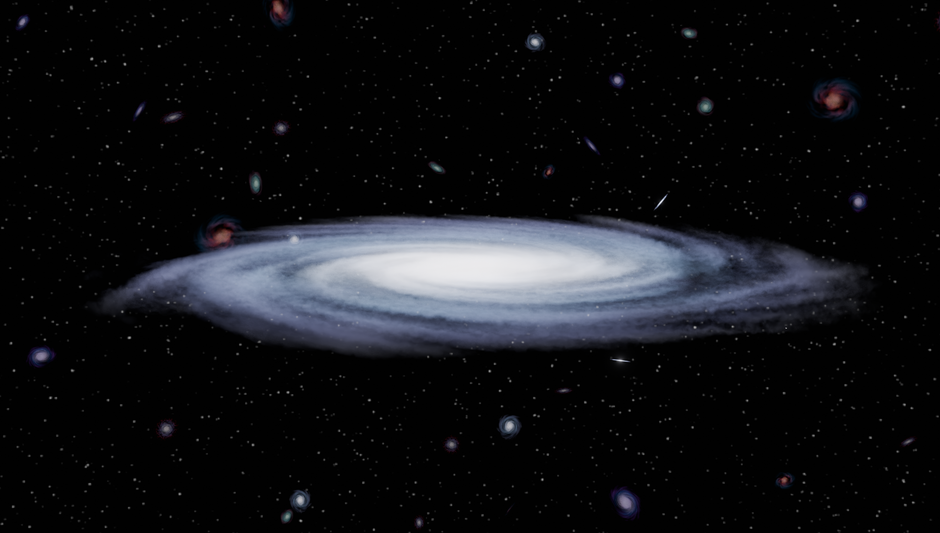
The universe is vast, ancient, and often portrayed as moving at a glacial pace, but sometimes, it throws us a curveball – demonstrating processes that are shockingly **fast**. We talk about cosmic evolution in terms of billions of years, yet beneath the surface, there’s a brutal, rapid dynamic at play that challenges our preconceived notions of time and creation.
According to NASA Science (.gov), astronomers are observing “fast and furious star formation” occurring within starburst galaxies. This phenomenon isn’t just an anomaly; it’s a significant indicator that the universe’s most dramatic events unfold with an intensity and speed that defy some long-held assumptions about how stars are born and evolve across cosmic timescales.

Unpacking Fast Star Formation
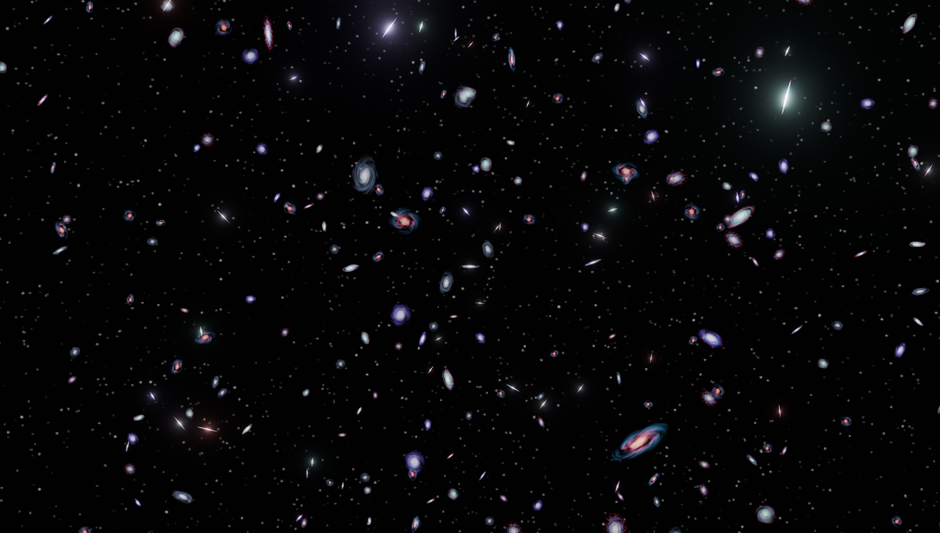
What does “fast” even mean when we’re talking about cosmic events? For billions of years, humanity, perhaps understandably, has thought of stellar nurseries as slow, deliberate factories, gradually coalescing gas and dust into new suns. Our own sun took millions of years to form. However, starburst galaxies utterly defy this placid image. These are not your average, quiescent spirals; they are galaxies experiencing an extraordinarily high rate of star formation, many times greater than the average spiral galaxy like our own Milky Way. Imagine a cosmic fireworks display, but instead of fleeting sparks, these are entire stellar systems igniting simultaneously, each one a sun in the making, all within a compressed timeframe.
This intense activity usually occurs after galactic mergers or close encounters, where vast clouds of gas and dust are compressed by gravitational forces, triggering a rapid cascade of stellar births. Understanding this intense stellar creation is crucial for several reasons. It dictates the chemical enrichment of galaxies, influences the frequency of supernovas, and ultimately, affects the available ingredients for planets and, potentially, life itself. The sophisticated technology allowing us to observe these distant, energetic events is astounding. Advanced telescopes, operating across various wavelengths, are essentially cosmic time machines, capturing light from billions of years ago. These instruments allow us to piece together a narrative of galactic evolution that is far more dynamic and, frankly, more violent than previously imagined. Without these technological leaps, the “fast and furious star formation” would remain mere theoretical conjecture, not observable fact.
The Universe’s Brutal Efficiency
This revelation about incredibly **fast** star formation isn’t just a fascinating astronomical tidbit for dusty academic journals; it’s a profound recalibration of our cosmic clock. For too long, humanity has projected its own slow, incremental understanding onto the universe, expecting grand processes to unfold over eons, matching our perception of time. Yet, these starburst galaxies demonstrate a brutal, beautiful efficiency. They compress billions of years of stellar evolution – from gas cloud to brilliant star to supernova – into what is, cosmically speaking, a mere blink. This rapid star birth and death cycle means these galaxies burn through their fuel reserves incredibly quickly. They are bright, spectacular, and short-lived, relative to their more sedate cousins.
Who wins in this scenario? Humanity, without a doubt, in our relentless pursuit of knowledge. Every observation that upends a previous model forces us to think harder, to build better instruments, and to refine our theories. Who loses? Perhaps those clinging to overly simplistic, linear models of cosmic evolution. The universe is messy, chaotic, and often operates on principles we are only just beginning to grasp. This “fast and furious” burst of creation also has significant implications for the prevalence of heavy elements – the essential building blocks of planets and life. If stars form and die so quickly in these regions, they’re rapidly seeding the cosmos with the necessary ingredients for complex chemistry. It suggests that life, or at least the potential for it, might arise in places and at times we hadn’t fully considered, not just in quiescent, stable galactic environments. The mainstream narrative often romanticizes slow, steady progress, but the universe, it seems, has a penchant for dramatic, high-speed events that fundamentally reshape its landscape.
So, next time you gaze at the night sky, remember that beneath the placid veneer, the cosmos isn’t just expanding; it’s exploding with life and death on scales that beggar belief, often moving at speeds that defy our terrestrial comprehension. The universe isn’t waiting for us to catch up; it’s already on to the next **fast** and furious act.
Source: Google — Space & Science