As the political machinations of August simmered down, leaving a residue of legislative stalemates and international jitters across the US and UK, a different kind of power play took to the skies. While pundits dissected every parliamentary maneuver and congressional deadlock, humanity launched a colossal eye into the cosmos. It’s a stark reminder that even as our leaders squabble on terra firma, the grander ambitions of our species continue, often bankrolled by the very taxpayers distracted by political theatre.
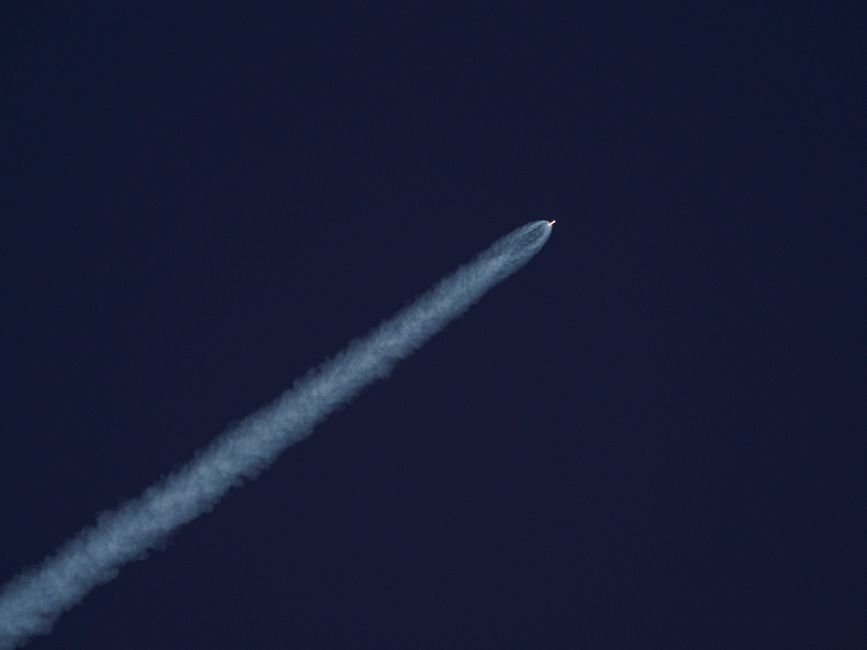
According to NASA Breaking, the Roman Space Telescope successfully launched on August 31, 2026. This monumental event ushers in a new era of infrared astronomy, promising unprecedented views of dark energy, exoplanets, and the universe’s most elusive secrets.
The Political Gravity of August’s Launch
This isn’t just about gazing at distant galaxies; it’s about projecting national prestige and scientific leadership on a global stage. The Roman Space Telescope, formerly known as WFIRST, represents a multi-billion-dollar investment, a testament to long-term planning and bipartisan (mostly) support that often seems impossible in today’s fractious political climate. Such projects don’t merely happen; they are strategic decisions, carefully nurtured through budget cycles and political shifts.
Consider the timing: late August, as summer draws to a close and political campaigns begin their autumn push. A successful launch provides a powerful visual, a feel-good story that momentarily transcends the mundane anxieties of inflation, healthcare, or international crises. It’s a moment of collective pride, an aspiration to something greater, even if the direct benefits are decades away for the average citizen. Governments love a good distraction.

This monumental undertaking, years in the making, finally saw its moment in August, reminding us of the vast resources nations can deploy when a shared, ambitious vision takes hold. The scientific community, of course, hails it as a triumph, a critical step in understanding our universe. But we must also ask who champions these projects in the halls of power, and what strategic value they truly hold beyond pure discovery.
The players are not just scientists; they are politicians, lobbyists, and industrial partners who benefit from the massive contracts and technological advancements. This intricate web ensures that projects of this scale, despite their immense cost, rarely face the axe, even when other public services are starved for funding. The allure of space, it seems, can be a powerful shield against budget cuts, regardless of the month.
Science, Optics, and the Unseen Agenda
Let’s be blunt: while the scientific community rightfully celebrates this achievement, the launch of the Roman Space Telescope in August 2026 is as much about optics and political messaging as it is about astrophysics. In an era where trust in institutions, particularly government, is plummeting across the Western world, a grand scientific spectacle offers a much-needed narrative of competence and progress. It’s a shiny object designed to inspire, yes, but also to subtly divert attention.
Who wins? The scientific establishment, undoubtedly, securing funding and legitimacy for decades to come. The aerospace industry reaps massive contracts, stimulating high-tech employment and innovation. And, subtly, the incumbent political class gains a talking point – a tangible achievement to counter criticisms of stagnation or infighting. “Look,” they can say, “while we debate trivialities, we are also reaching for the stars, pushing the boundaries of human knowledge.”
The losers, however, are less visible. They are the underfunded social programs, the crumbling infrastructure, the underpaid educators whose critical needs are often sidelined in favor of projects with more dramatic, headline-grabbing appeal. It’s a zero-sum game when budgets are finite, and the sheer scale of space exploration invariably siphons resources that could address more immediate, earthly challenges. The costs are astronomical, in more ways than one.
The mainstream narrative will focus solely on the scientific marvel, the incredible engineering, and the promise of discovery. What it misses is the underlying political calculus: the soft power projection, the national branding, and the strategic investment in technologies that have military as well as civilian applications. This August launch represents a calculated move on the global chessboard, asserting technological dominance in a way that resonates far beyond academic journals.
We should celebrate human ingenuity, absolutely. But we must also critically examine the priorities that dictate where our collective wealth is invested. Is this the most effective use of taxpayer money right now, given the pressing issues facing society, from economic inequality to climate change? Or is it a convenient, awe-inspiring diversion, allowing politicians to bask in reflected glory while sidestepping harder questions about domestic policy failures? The public is often too dazzled by the spectacle to ask.
So, as we marvel at the Roman Space Telescope’s journey into the unknown, let’s also turn our gaze inward. What stories are we telling ourselves about progress, and what uncomfortable truths are we allowing to drift silently into the background? The universe may be infinite, but our resources and political will are decidedly not. We should always question the true price of looking up, especially when so many are struggling to stand tall on the ground.
Source: NASA Breaking