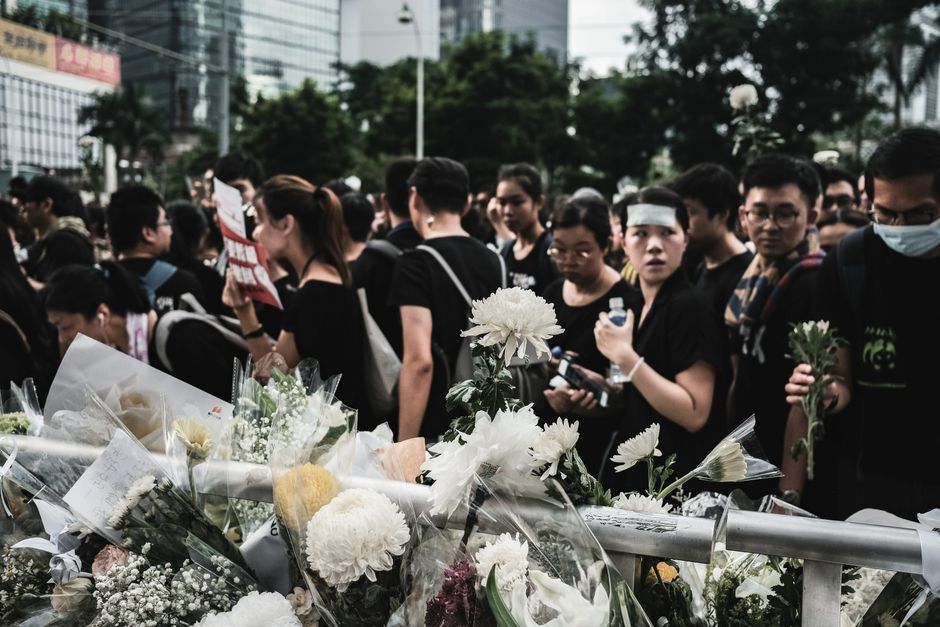
When commemorating the dead becomes an act of subversion, you know freedom is dead. This is the stark reality emerging from Hong Kong this week, as Beijing’s iron fist continues its relentless squeeze on dissent and memory. The world watches, often silently, as another piece of civil liberty is chipped away in what was once a beacon of Asian dynamism.
According to BBC Asia, three prominent activists have been convicted of inciting subversion under Beijing’s draconian National Security Law. These convictions stem from their roles in organizing the annual Tiananmen Square vigil, a poignant gathering that for decades served as a vital symbol of Hong Kong’s unique freedoms. This event, once a bedrock of the city’s identity, has now become a dangerous act of defiance.
The Fading Promise of Hong Kong Autonomy
This latest ruling isn’t just another legal proceeding; it’s a profound statement about the complete erosion of the “one country, two systems” framework. For years, Hong Kong was promised a high degree of autonomy, including freedoms of speech and assembly not enjoyed on the mainland. The annual candlelight vigil remembering the 1989 Tiananmen crackdown was a powerful testament to that promise, a stark contrast to Beijing’s forced amnesia.
The National Security Law, imposed in 2020, fundamentally altered this landscape. It criminalized acts Beijing deems secession, subversion, terrorism, and collusion with foreign forces. Critics, including numerous international bodies and governments, immediately warned it would be used to silence opposition and crush dissent. These warnings have proven chillingly accurate, as this week’s convictions demonstrate.
The activists now face potentially lengthy prison sentences, their fate a stark warning to anyone else contemplating public expression deemed critical of the state. This legal weapon has systematically dismantled civic society, shuttered independent media outlets, and forced pro-democracy figures into exile or incarceration. The very act of remembering a historical tragedy, long tolerated and even celebrated in Hong Kong, is now reframed as a threat to national security.
Beijing’s Iron Grip Tightens on Hong Kong
Let’s be clear: this isn’t about maintaining order; it’s about crushing thought. Beijing is sending an unmistakable message that any form of organized dissent, even historical remembrance, will not be tolerated within what it now considers its fully controlled territory. The conviction of these activists transforms a solemn commemoration into a criminal act, effectively rewriting history through legal decree. This move further isolates Hong Kong from the international community built on rule of law and human rights.
The mainstream narrative often downplays the severity of these events, focusing instead on stability and economic integration. However, the true cost of this “stability” is the very soul of Hong Kong. Who wins? The Chinese Communist Party, which consolidates its power and eliminates any lingering pockets of resistance. Who loses? The people of Hong Kong, stripped of their fundamental rights, and the international community, whose principles of free speech and assembly are openly flouted.
Meanwhile, the response from global powers, particularly the UK and US, often feels like a hollow echo chamber of condemnation. While statements are issued, concrete action remains limited, giving Beijing tacit permission to continue its crackdown. This muted international pushback, especially from nations that once championed Hong Kong’s autonomy, risks normalising authoritarian practices on a global scale. It signals to other regimes that human rights can be sacrificed on the altar of geopolitical convenience without significant consequence.
This conviction is not just a legal verdict; it is a political declaration. It solidifies Beijing’s narrative that dissent equals subversion, and that memory itself can be a crime. The once vibrant, outspoken city of Hong Kong is being systematically remade in the image of the mainland, one conviction at a time. The question now isn’t if more freedoms will vanish, but how many more will fall before the world decides enough is truly enough.
Source: BBC Asia