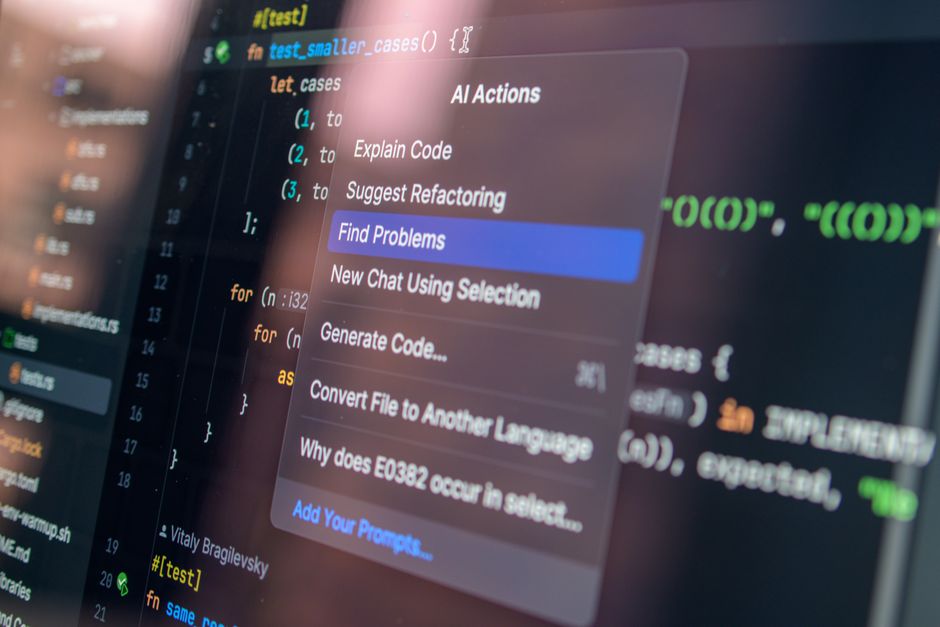
The latest pronouncements on **artificial intelligence** sound less like a revolution and more like a reckoning for code quality.
The digital airwaves, courtesy of a press release distributed by PR Newswire, recently carried a stark warning from Info-Tech Research Group. This isn’t a sit-down with a CEO, but rather a declarative statement from an industry analyst firm, issued with the gravity of a market correction. Their subject: the increasingly pervasive adoption of AI-assisted development and its unintended consequences for the software development lifecycle. The context is undeniable: AI tools are becoming ubiquitous, promising efficiency and speed, yet Info-Tech suggests this promise comes with a significant, often overlooked, caveat.

The firm’s communiqué serves as a cautionary siren call, suggesting that the very tools meant to streamline code generation are, in practice, introducing a host of new problems. It’s a sobering counterpoint to the relentless hype cycle surrounding AI, moving beyond the abstract fear of job displacement to the more tangible reality of tangled codebases.
What landed
Info-Tech Research Group’s core assertion lands with the force of a well-aimed bug report: AI-generated code is “introducing quality, security, and maintainability issues into the software development lifecycle.” This isn’t a nuanced observation; it’s a direct accusation. The firm goes further, stating that “without proper oversight, organizations risk embedding defects and inconsistent standards.” This framing effectively shifts the burden of proof from the AI tools themselves to the human organizations adopting them.

The explicit mention of “accelerate defects and technical debt” provides a vivid, if concerning, image. It suggests that the perceived speed gains from AI-generated code are merely front-loading future problems, exchanging immediate productivity for long-term technical burden. For any developer or IT manager grappling with legacy systems, the idea of *accelerated* technical debt is enough to induce a cold sweat. It’s a powerful statement because it taps directly into an existing, well-understood pain point within the software industry. The report, as summarized by PR Newswire, also highlights “inconsistent standards,” a subtle but critical detail that speaks to the chaotic potential of multiple AI models, or even a single model, generating code without a unified stylistic or architectural guide. This fragmentation can quickly lead to an unmanageable mess, making collaboration and future development a nightmare.
What doesn’t add up
While Info-Tech’s warning about the pitfalls of unmanaged AI-generated code is certainly pertinent, the statement, in its summarized form, leaves a number of crucial questions lingering, betraying a certain strategic vagueness. “Without proper oversight” and “clear guardrails” are phrases that, while intuitively appealing, lack any substantive definition. What *constitutes* proper oversight? What *are* these clear guardrails? The press release identifies the problem with admirable clarity, but the proposed solutions remain frustratingly generic, almost as if designed to be filled in by a subsequent (and presumably paid) Info-Tech consultation or report.

Furthermore, the declaration focuses exclusively on the negative externalities of AI-generated code. There’s no acknowledgment of the benefits that have driven its widespread adoption in the first place, even with the caveats. Is it truly all defect acceleration and technical debt? Or is there a trade-off, where some gains in speed or novelty are made at the cost of immediate quality? A more balanced, even if critically skewed, perspective would acknowledge this tension rather than presenting a seemingly monolithic doom-and-gloom scenario. This one-sided portrayal could be seen less as a comprehensive analysis and more as a calculated effort to highlight a problem for which Info-Tech, predictably, positions itself as a purveyor of solutions.
The very premise of “accelerating defects” implies a quantitative measure. Yet, the summary provides no data, no case studies, no metrics to substantiate this claim. It’s a pronouncement delivered with authority, but without the underlying empirical evidence readily available in this public facing statement. While one assumes such data exists within Info-Tech’s full report, its absence here makes the warning feel more like an alarm bell rung without showing the fire. This approach, while effective at grabbing attention, leans heavily on the firm’s reputation rather than transparent evidence, inviting a healthy dose of skepticism about the full picture.
Come Monday morning, development teams across industries will likely be having uncomfortable conversations about their AI adoption strategies. The stakes are higher than ever: the promise of unprecedented productivity could quickly devolve into an unprecedented pile of technical debt, making the dream of agile development a slow, debugging nightmare. Organizations will be scrambling to define those elusive “guardrails,” creating a fresh market for the very expertise firms like Info-Tech purport to offer.
Source: OnTheRecord