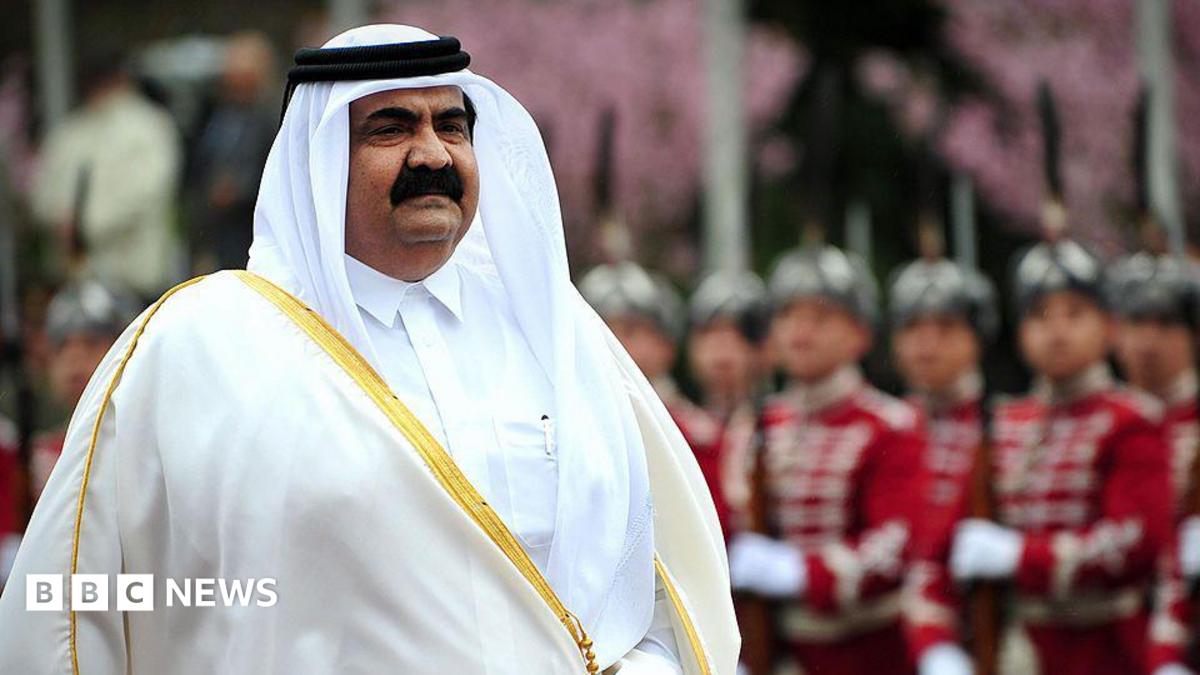
Forget the flowery eulogies. The death of Sheikh Hamad bin Khalifa Al Thani, the **Former Emir** of Qatar, isn’t just about mourning a leader; it’s a stark reminder of how power is seized, consolidated, and passed on in a region constantly reshaping itself. This isn’t just another Gulf obituary; it’s a moment to dissect a legacy that fundamentally altered the Middle East’s diplomatic landscape.
According to BBC Middle East, Sheikh Hamad, aged 74, passed away. He famously ascended to power in 1996, executing a bloodless coup against his own father. This pivotal move set the stage for Qatar’s dramatic transformation into the gas-rich global player we know today.
Before Sheikh Hamad’s ascension, Qatar was largely an afterthought on the global stage, a small peninsula overshadowed by its larger, more boisterous neighbours. Its identity was, to a great extent, subsumed by the regional gravitational pull of Saudi Arabia. His 1996 power grab, though bloodless, was a seismic event. It shattered the illusion of immutable succession across the Gulf, sending quiet tremors through every royal palace.
The vision of the **Former Emir** was clear: to transform Qatar from a geographical footnote into a geopolitical heavyweight. He didn’t just stumble into wealth; he engineered a nation. He leveraged Qatar’s immense natural gas reserves with strategic foresight, transforming a nascent economy into an undeniable financial powerhouse. This financial muscle then allowed Qatar to carve out an outsized and often controversial role in regional diplomacy, media, and international sporting events.
His era was defined by audacious moves, often flying in the face of Saudi Arabian and Emirati regional hegemony. The very foundation of modern Qatari foreign policy – its willingness to engage with diverse, often ideologically opposed, actors – was laid during his reign. Consider Al Jazeera, the global news network, which became a powerful tool of Qatari soft power, challenging narratives from Cairo to Riyadh. Moreover, Qatar’s successful bid for the World Cup dramatically boosted its global profile. These bold initiatives, however, came at a price, creating deep-seated rivalries that continue to ripple through the region to this day.
The mainstream narrative will likely praise the **Former Emir** for his vision and his undeniable success in elevating Qatar from obscurity. However, that glosses over the inherent instability embedded in his rise and reign. His coup, while a masterstroke for Qatar, also sent a clear, unsettling message across the Gulf: power is not always hereditary; it can be taken. This dynamic continues to shape the paranoia and suspicion among Gulf monarchies.
This independent streak, cultivated under Sheikh Hamad, created deep-seated rivalries that continue to define Gulf politics. Remember the 2017 blockade? That wasn’t just about Al Jazeera or alleged support for certain groups; it was fundamentally about a small state daring to chart its own course. It was an audacity cultivated directly under Hamad’s assertive leadership. His strategic support for various Islamist groups, perceived by some neighbours as destabilizing, further fueled these tensions.
His passing, therefore, isn’t merely the end of an era; it’s a moment to reflect on the double-edged sword of ambition in autocracies. While he delivered unprecedented prosperity and influence, he also established a model where statecraft is a high-stakes game of chess, often played with little regard for established norms or regional consensus. The question now isn’t just about his legacy, but about whether the current leadership can maintain that precarious balance without his direct hand on the tiller. The path he forged for Qatar is bold, but it remains a path fraught with risk, constantly navigating the resentments of its neighbours and the unpredictable currents of global energy markets.
His death marks a moment for reflection on power, ambition, and the unpredictable nature of Gulf politics. Will his legacy ultimately be one of unbridled success, or a cautionary tale of how quickly fortunes can turn when a state punches above its weight? The sands of the Arabian Peninsula rarely stay still for long.
Commentary · Current Affairs desk · Facts attributed to sources · Editorial policy · Corrections
Source: Source