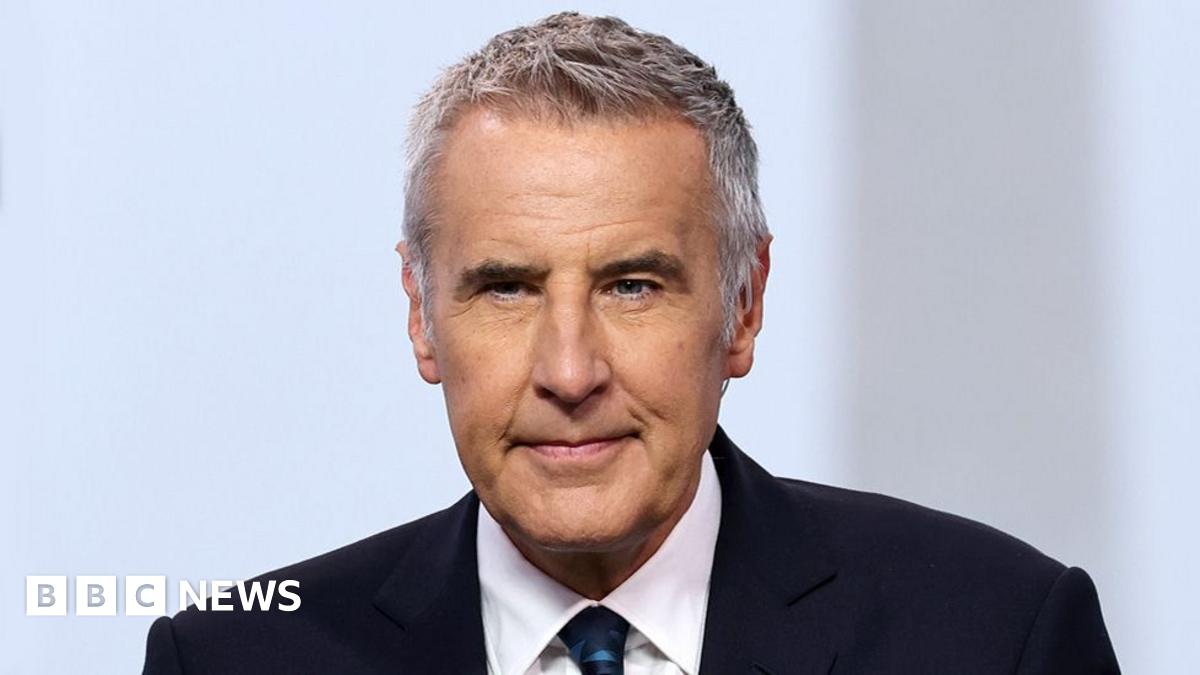
The public spectacle of grief for a familiar face often masks a deeper truth about what we value in our news. When the BBC announced the passing of Dermot Murnaghan, the immediate outpouring of **tributes** was a predictable, yet profound, moment of national reflection. It forces us to ask what, precisely, we are mourning.
According to the BBC, the former BBC, ITV, and Sky News journalist died after publicly revealing his battle with stage four prostate cancer. His long career spanned decades, making him a steady, reassuring presence in British living rooms through periods of significant national and global upheaval.

Dermot Murnaghan was more than just a newsreader; he was an institution, a reassuring voice that guided millions of Britons through everything from general elections to royal weddings, terror attacks to sporting triumphs. For decades, his calm delivery and authoritative presence shaped how the United Kingdom understood its own unfolding story. His ability to seamlessly transition between the BBC, ITV, and Sky News wasn’t just a testament to his versatility, but to a shared national trust in his journalistic integrity.
In an era increasingly defined by sensationalism and partisan shouting matches, Murnaghan represented a steadfast commitment to clarity and measured reporting. He embodied a particular brand of British broadcast journalism: professional, unflappable, and seemingly impartial. This unwavering professionalism provided a crucial anchor for audiences navigating a world that often felt chaotic and uncertain. His quiet strength behind the news desk allowed the stories themselves to take centre stage, rather than the personality delivering them.

The collective memory of a figure like Murnaghan is intrinsically linked to our own personal histories. We remember where we were when he delivered a major announcement, or the comfort of his presence during a late-night bulletin. Therefore, the **tributes** now pouring in are not just for a journalist, but for a constant in the complex narrative of British life. They speak to a deep-seated appreciation for those who dedicate their careers to informing the public, often under immense pressure and scrutiny.
The immediate rush of public **tributes** for Dermot Murnaghan is certainly heartfelt, but it also reveals something critical about the state of our media. We are not just mourning a man; we are mourning a vanishing archetype. In a media landscape fractured by social media algorithms and 24/7 opinion cycles, the trusted, neutral anchor is becoming an endangered species.

Murnaghan belonged to an era when news anchors were seen less as commentators and more as conduits of information. His gravitas lent weight to the facts they presented, a stark contrast to today’s often personality-driven narratives.
His passing forces us to confront the question: Who fills that void? Will the next generation of presenters command the same broad respect across political divides? Or will they be confined to echo chambers, preaching to the already converted?
The mainstream narrative focuses on his personal journey and professional milestones, which is valid, of course. However, it often misses the wider implications for public discourse. The loss of such a figure challenges the notion that objective, universally respected journalism can truly thrive in the current climate.
Furthermore, the very act of public mourning for a broadcaster highlights the often-unspoken bond between media figures and their audience. This bond is built not on celebrity, but on reliability. It’s a trust cultivated over years of shared moments, both joyful and tragic.
The danger lies in mistaking this genuine connection for mere sentimentality. This oversight risks overlooking the structural changes in journalism that make such figures increasingly rare. The industry must reflect on what made Murnaghan a figure of such national esteem and consider how to nurture those qualities in an increasingly polarized world.
As the nation absorbs this news and prepares for another week of political wrangling, economic shifts, and global events, Murnaghan’s absence will be felt. His passing serves as a stark reminder that while the news never stops, the steady, guiding voices that help us make sense of it are precious and finite. Perhaps the most fitting tribute to his legacy would be a renewed commitment to the kind of measured, factual journalism he so diligently embodied. We can only hope his impact inspires the next generation to uphold those vital standards.
Commentary · Current Affairs desk · Facts attributed to sources · Editorial policy · Corrections
Source: Source