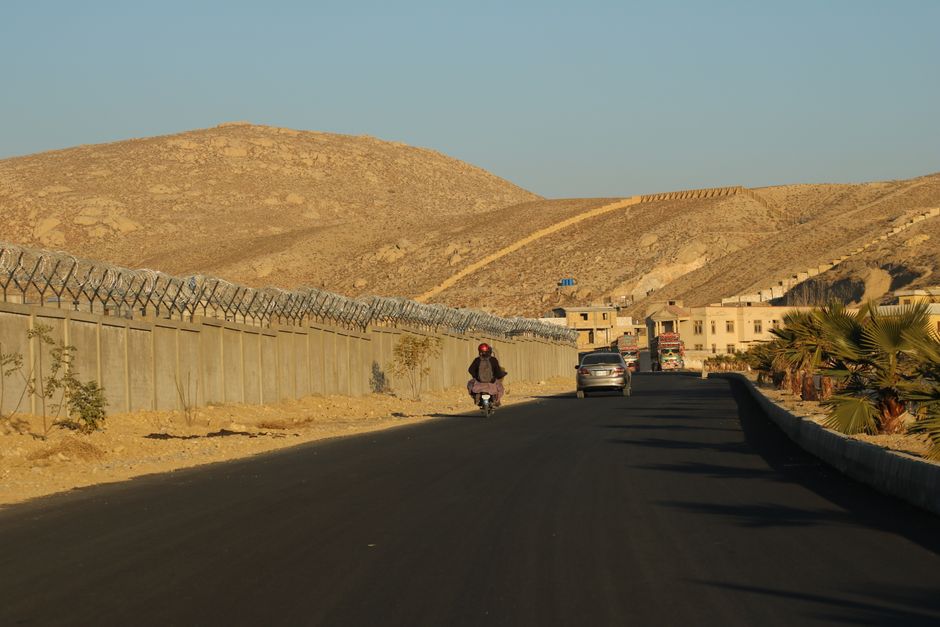
Another week, another headline screaming about **Balochistan terror**. But let’s be brutally honest: for most of the world, it’s just background noise, a distant thrum of violence from a region perpetually on the brink. This casual dismissal is precisely what makes the latest attack so tragic and so infuriating.
According to iranpress.com, nine Pakistani policemen were martyred recently in a terror attack within the restive province of Balochistan. They were serving on the front lines, trying to maintain some semblance of order in a land that rarely knows peace.
The Endless Cycle of Balochistan Instability
Why does Balochistan keep bleeding? This isn’t a new phenomenon, nor is it a simple one. The vast, resource-rich province has been a cauldron of nationalist insurgency for decades. Separatist groups demand greater autonomy and a larger share of the region’s immense natural gas and mineral wealth. They argue Islamabad exploits Balochistan’s natural bounty, leaving its own people impoverished and underdeveloped. This narrative fuels a potent, if often brutally suppressed, desire for self-determination.
Meanwhile, the Pakistani state views these movements as existential threats to its territorial integrity. It cannot afford to lose control of a province that constitutes nearly half its landmass and borders Iran and Afghanistan. This ideological chasm fuels a brutal, low-intensity conflict that shows no signs of abating. The security forces are often caught in the crossfire, representing state authority in areas where that authority is deeply resented.
These attacks are not random; they are strategic blows aimed at destabilizing the region further and exerting pressure on the central government. The Balochistan Liberation Army (BLA) and other factions frequently claim responsibility, asserting their continued operational capability despite state crackdowns. This latest incident, therefore, follows a familiar, tragic pattern of violence, demonstrating the enduring challenges Pakistan faces in asserting control and fostering peace in its largest province.
The province’s strategic location, sitting astride vital trade routes and harboring untapped mineral wealth, further complicates matters. The massive China-Pakistan Economic Corridor (CPEC) project, a flagship of Beijing’s Belt and Road Initiative, runs directly through Balochistan. This corridor, while promising development, is also seen by many Baloch nationalists as an acceleration of their exploitation, turning their homeland into a thoroughfare for foreign interests with little local benefit. Thus, the geopolitical stakes are incredibly high, intertwining local grievances with global power plays.
Who Benefits from Balochistan’s Bloodshed?
Let’s cut through the official condemnations and the predictable hand-wringing that follows every incident of **Balochistan terror**. This attack, like countless others, serves multiple agendas and exposes deep hypocrisies. For the Baloch insurgents, it’s a grim statement: ‘We are still here, and we can still strike, even against hardened targets.’ They aim to remind the world – and Islamabad – that their struggle for self-determination, however violent, remains potent and persistent.
On the other hand, the Pakistani state often leverages these incidents to justify its heavy-handed security operations. It conveniently paints all dissent as ‘terrorism,’ effectively blurring the lines between legitimate political grievances and outright militancy. This narrative often diverts international attention from the deep-seated issues of governance, inequality, and alleged human rights abuses that fuel the unrest in the first place. It allows for a continued military-first approach, rather than a genuine political solution.
The mainstream narrative also frequently misses the external dimensions at play. It is an open secret in regional intelligence circles that neighboring powers, often for their own strategic gains against Pakistan, quietly fund and equip some of these militant factions. A destabilized Balochistan is a continuous headache for Islamabad, complicating everything from internal security to major economic projects like CPEC. The plausible deniability of such external patronage adds another insidious layer to every act of **Balochistan terror**.
The true losers, as always, are the ordinary people of Balochistan. They are caught between a brutal insurgency and an often-repressive state, their lives defined by fear, uncertainty, and underdevelopment. Development projects stall, education suffers, and the cycle of poverty and violence continues unbroken. Their voices are often drowned out by the noise of conflict and geopolitical machinations.
Islamabad’s long-standing strategy of purely military solutions has demonstrably failed to bring lasting peace. While security crackdowns may offer temporary respite and quell immediate threats, they fail to address the root causes of alienation and anger. Until genuine political dialogue, equitable resource distribution, and transparent governance become priorities, these tragic headlines of **Balochistan terror** will keep repeating, year after bloody year.
So, when will Pakistan truly confront the uncomfortable truth about Balochistan? Will it take more fallen officers, more shattered families, more whispers of international interference, before real change is considered? Or will the world simply continue to look away, allowing this slow-motion tragedy to unfold indefinitely?
Source: Google — Pakistan incidents