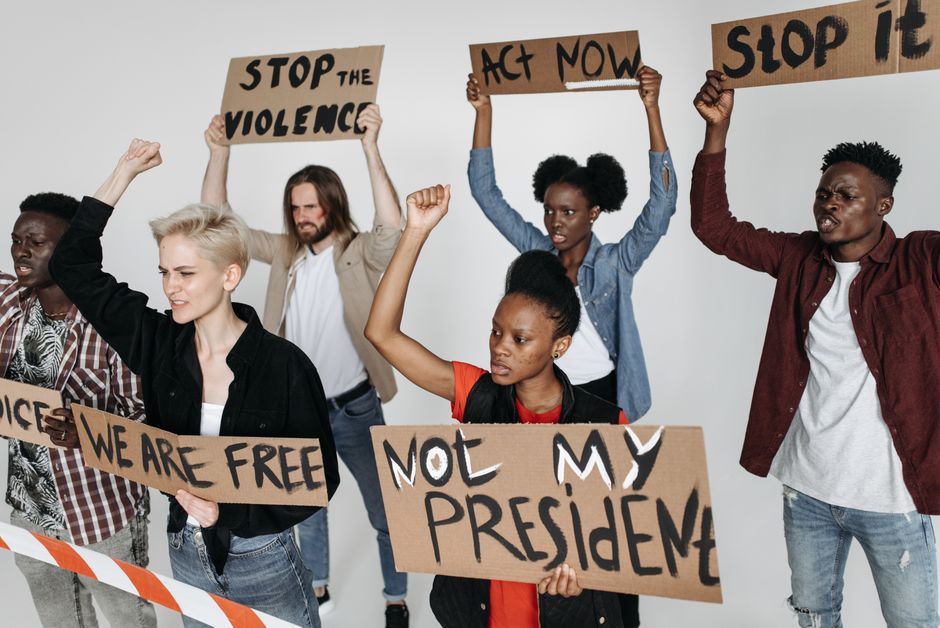
The line between academic sanctuary and federal enforcement just shifted in **California**, begging the question of whether principle or protest finally won the day.
This week, UC San Diego announced it would cease its collaboration with U.S. Border Patrol, pulling the plug on a federal grant program that facilitated campus police aiding border enforcement operations. The decision, reported by KPBS, follows a sustained campaign of student and faculty protests, ignited by a CalMatters investigation into the university’s involvement. For months, the campus has been a flashpoint, with activists demanding an end to what they viewed as a troubling entanglement between academic life and an agency often at the center of contentious national debates.

The university’s prior participation, quietly funded through federal channels, had positioned campus police as an auxiliary to Border Patrol, allowing them to participate in activities that extended far beyond traditional campus security. This arrangement, once a silent bureaucratic fixture, became a loud public liability as details emerged, galvanizing a broad coalition against it. The move marks a significant victory for student activism, demonstrating the power of organized dissent to force institutional change.
What landed
The most impactful revelation from this saga isn’t a statement, but the university’s decisive action itself: UC San Diego is cutting ties with the Border Patrol. This isn’t a mere policy tweak; it’s a wholesale severing of a direct operational relationship that had been in place, quietly, for some time. The university, through its actions, has acknowledged the deep discomfort and ethical quandaries its prior collaboration posed to its community.

By withdrawing from the federal grant program, UC San Diego has effectively declared that its role as an educational institution supersedes its function as an arm of federal law enforcement. This public pivot represents a significant win for the notion of universities as spaces distinct from governmental enforcement bodies, particularly on issues as sensitive and politicized as border security. The message is clear: the campus will no longer be a staging ground for these operations.
Furthermore, the university’s decision implicitly validates the concerns raised by its student body and faculty. The sustained protests and the CalMatters investigation clearly hit a nerve, forcing an institution to re-evaluate its alliances and priorities. It shows that public pressure, when persistent and well-supported by investigative journalism, can indeed move even large, entrenched entities. The university’s move is a concrete step towards aligning its practices with the values articulated by its community members, even if the timing raises eyebrows.

What doesn’t add up
While the outcome is commendable, the timing and impetus behind UC San Diego’s decision certainly invite a healthy dose of skepticism. For an institution to suddenly discover the ethical complexities of a long-standing federal partnership only after a high-profile investigation by CalMatters and widespread student outcry feels less like a principled awakening and more like a public relations maneuver. Where was this introspection when the grant was first accepted?
The university’s prior position, tacitly endorsing and facilitating Border Patrol operations through its campus police, now stands in stark contrast to its abrupt withdrawal. This isn’t a subtle shift; it’s a complete reversal. One must question whether the university genuinely re-evaluated its values or simply capitulated to overwhelming external pressure to avoid further reputational damage. The suddenness of the decision, after a period of prolonged silence on the matter, suggests the latter.
Moreover, the announcement, as reported by KPBS, doesn’t delve into the university’s initial rationale for participating in the program, nor does it offer a robust explanation for why those justifications are no longer valid. This lack of transparent self-reflection leaves a void, allowing cynics to conclude that the institution was more concerned with appeasing an angry student body and a critical press than with genuinely reassessing its role in border enforcement. It’s hard to give full credit for a change of heart when that heart only starts beating loudly once an investigative spotlight is shining directly on it.
Come Monday morning, the landscape for student activists across California universities will look different. UC San Diego’s decision offers a blueprint for how sustained pressure can force institutions to reconsider their alliances, especially those touching on contentious national issues. For Border Patrol, it’s a quiet but potent reminder that not all partnerships are immutable, and for universities, a lesson that the silence of bureaucratic convenience can eventually be shattered by the roar of public demand.
Source: OnTheRecord