
It seems the internet, ever the grand arbiter of what’s in and what’s out, has declared a new foe: ‘lust’. This isn’t merely a theological debate; Dazed Digital’s recent analysis suggests a profound cultural pivot, one that could redefine the boundaries of public discourse around morality and personal expression.
Published in mid-2026, the Dazed Digital article, “It’s a sin: Why gen Z are turning against ‘lust’”, presents a fascinating, if somewhat sweeping, assessment of contemporary youth culture. The piece posits that the once-niche discussions of ‘gluttony’, ‘greed’, ‘sloth’, and particularly ‘lust’, have migrated from #ChristianTok’s digital pulpits into the broader secular consciousness. This migration, according to the article, heralds “a new era of moral policing,” with Gen Z at the vanguard of a perceived rejection of unbridled hedonism.
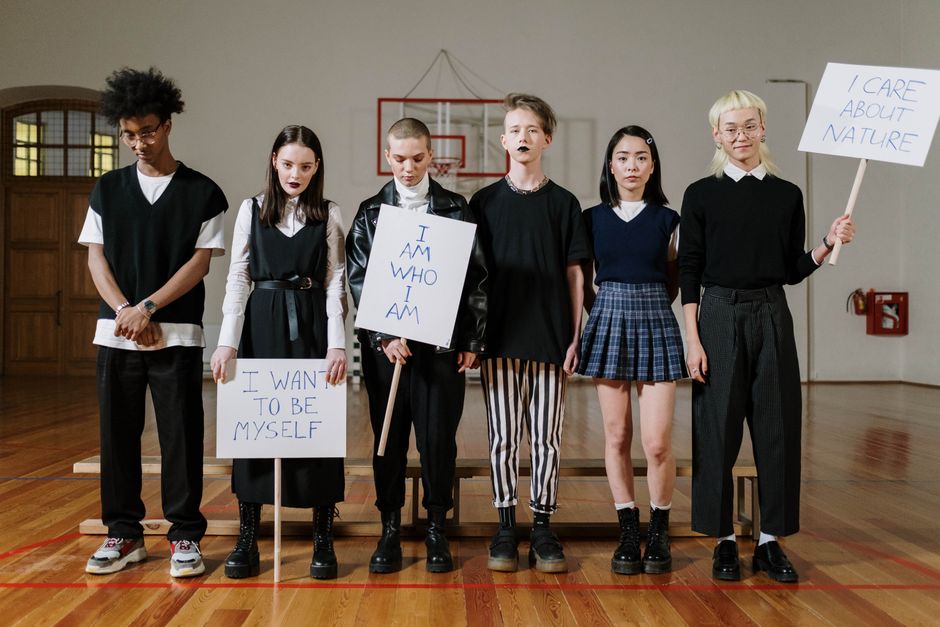
The article paints a picture of a generation, often stereotyped for its fluid identities and boundary-pushing ethos, now grappling with concepts of self-control and societal impact. It’s an intriguing premise, suggesting a cultural pendulum swing away from the ‘anything goes’ digital wild west towards a more curated, perhaps even puritanical, online existence. The implications for social media, brand messaging, and even political rhetoric are considerable, should this trend prove to be as robust as Dazed suggests.
What landed
The Dazed Digital piece certainly lands a compelling observation: the language of ancient sins has found an unlikely, vibrant second life on platforms like TikTok. To see terms like ‘lust’ and ‘gluttony’ detached from overt religious dogma and reframed in a secular context, particularly by a generation often perceived as post-religious, is genuinely noteworthy. The article effectively highlights this semantic shift, demonstrating how cultural touchstones are continually reinterpreted and repurposed in the digital age.

The argument that this isn’t solely a religious phenomenon, but a broader cultural commentary, is also a strong point. It posits that Gen Z’s engagement with these concepts might be a form of self-regulation or a reaction against the perceived excesses and performative perfection that have dominated social media. The article suggests this generation, having grown up under the relentless gaze of online scrutiny, might be seeking a new framework for discussing personal boundaries and collective well-being. It’s a compelling thought that the digital natives, having pushed the envelope of self-expression, are now, perhaps, pulling it back.
Furthermore, the article’s assertion that this trend signifies “a new era of moral policing” does resonate, albeit with a heavy dose of dramatic flair. While the term itself might be debatable, the observation that online communities are increasingly establishing and enforcing their own codes of conduct around consumption, desire, and productivity holds water. Whether this policing is a genuine societal shift or another iteration of online performance remains to be seen, but Dazed effectively draws attention to the burgeoning discourse.

What doesn’t add up
While the Dazed Digital article spotlights an intriguing cultural phenomenon, its grand pronouncements often feel less like incisive analysis and more like ambitious trend-spotting. The assertion of a “new era of moral policing” feels particularly overblown. Is it truly a collective embrace of puritanical ideals, or simply a new aesthetic for discussing mental health, consumerism, and the exhausting demands of modern life? Many online discussions about ‘sloth’ or ‘gluttony,’ for instance, often pivot to critiques of hustle culture or mindful eating, rather than a genuine moral condemnation of indulgence. The term ‘lust,’ too, might be less about a blanket rejection of desire and more about a nuanced re-evaluation of healthy sexual expression versus objectification and exploitation.
The article also risks presenting a monolithic view of Gen Z, a demographic notoriously diverse in its beliefs and behaviors. To declare a widespread “turning against ‘lust’” based on TikTok trends might conflate a vocal, aesthetically-driven online subculture with the lived experiences of an entire generation. One must question the scope: how much of this is a genuine, deep-seated cultural shift, and how much is the echo chamber effect of social media, where niche interests are amplified and then presented as universal trends by outlets keen to capture the zeitgeist?
Moreover, the piece largely overlooks the potential for irony and performativity inherent in online spaces. Is Gen Z truly “turning against ‘lust’,” or are they simply appropriating archaic language to subvert expectations, provoke engagement, or even, wryly, to signal their own perceived enlightenment in a saturated digital landscape? The article’s premise struggles to reconcile the seeming contradiction between a generation celebrated for its sexual liberation and a sudden, widespread embrace of historical moral constraints. It glosses over the possibility that this might be less about a rejection of desire, and more about a re-packaging of existing anxieties around intimacy and connection in an increasingly digital world. The article hints at this complexity but ultimately opts for a more straightforward, sensational narrative of moral reclamation.
Come Monday morning, the Dazed Digital piece will undoubtedly fuel further discussions among cultural commentators and Gen Z alike, prompting reflection on our digital identities and the fluid nature of online morality. But whether it signals a genuine cultural paradigm shift or simply another fleeting iteration of digital performance remains the critical question.
Source: OnTheRecord