How often do we truly grasp the intricate dance of life happening just beneath the surface, or even inside the heads of creatures we barely acknowledge? It’s a stark reminder that many **scientists** are only now beginning to scratch that surface, discovering complexities that should humble even the most advanced human minds.
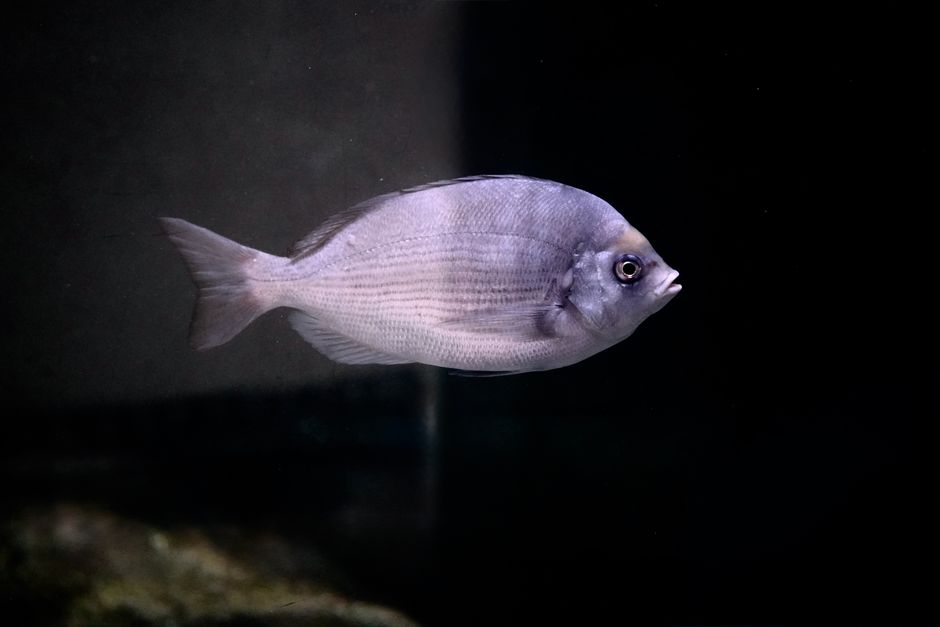
According to NPR Science, a recent study has once again turned our attention to the remarkable elephantnose fish, a creature native to the freshwaters of Africa. This particular species is a favorite among neuroscientists, not for its looks, but for its specialized brain, which bears a striking resemblance to a cerebellum. Researchers meticulously mapped the neurons in the part of its brain responsible for sensing electrical signals, uncovering a filtering mechanism far more intricate than previously imagined.
What Scientists Miss in Plain Sight
Why does a fish’s brain matter right now? Because it’s a profound challenge to our often-simplistic views of what constitutes “advanced” life. We live in an era obsessed with digital filters, noise cancellation, and AI algorithms designed to sort signal from static. Meanwhile, an unassuming fish has been perfecting this very art for millions of years, an organic supercomputer swimming silently in its natural habitat. This isn’t just about biology; it’s about a cultural blind spot, an anthropocentric arrogance that assumes anything complex must be *our* invention. These **scientists** are showing us we’ve been looking in the wrong places for innovation.
The research highlights how evolution, with its infinite wisdom, has engineered solutions that often outstrip our most sophisticated human designs. The elephantnose fish uses weak electrical fields to navigate, communicate, and hunt in murky waters. This means its brain must constantly distinguish crucial signals from a deluge of environmental noise. It’s a task that would overwhelm many of our best sensors without significant computational power. Yet, this fish does it instinctively, without a single line of code or a silicon chip. It leads one to question how much more intelligence and engineering prowess we overlook in the natural world, simply because it doesn’t fit our narrow definitions.
The Silent Brilliance of Natural Design
This isn’t just a quirky biological fact; it’s a profound commentary on the silent brilliance of natural design. Who wins in this scenario? Nature, always. It consistently demonstrates an unparalleled efficiency and elegance that should inspire awe, not just academic interest. Who loses? Our human-centric biases, which often lead us to underestimate the ingenuity present in forms of life we deem “primitive.” The mainstream narrative often fixates on technological breakthroughs as the pinnacle of achievement, forgetting that the blueprint for true complexity often lies in the ancient wisdom embedded in living organisms.
What could go wrong if we fail to grasp this? We risk continuing to undervalue and degrade the natural world, dismissing its intricate systems as mere resources rather than sophisticated models of survival and adaptation. We might also miss crucial opportunities for bio-inspired innovation, constantly reinventing the wheel when a superior, naturally evolved solution is already at play. Of course, the empirical work done by these dedicated **scientists** is invaluable, forming the bedrock of our understanding of neurobiology. Their meticulous mapping of neural pathways is a testament to human curiosity and rigor. However, the larger implications — the philosophical and cultural shifts required to truly appreciate what they’re uncovering — often remain unexamined. We must look beyond the immediate data and consider what this fish’s brain tells us about the very nature of intelligence itself.

So, next time you effortlessly filter out spam emails or the cacophony of city traffic, perhaps spare a thought for the humble elephantnose fish. It’s doing it better, without an app, and has been for millennia. What other profound lessons are swimming just beyond our grasp, waiting for dedicated **scientists** to finally listen with open minds?
Source: NPR Science