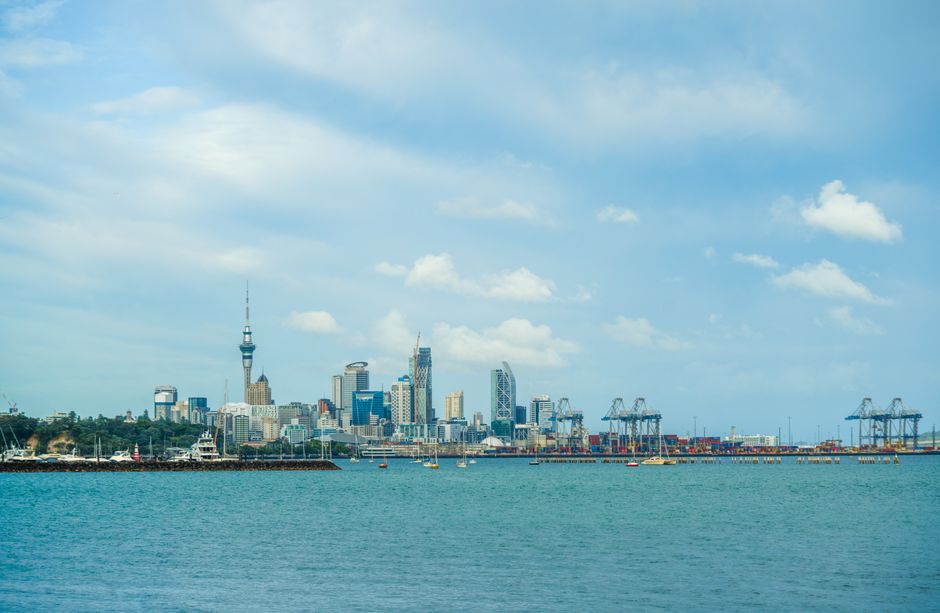
The delicate dance of national identity and strategic imperative takes centre stage as New Zealand considers **Reimagining** its defence posture.
David Santoro, writing in the NZ Herald, offered a timely, if somewhat prescriptive, assessment of New Zealand’s evolving defence outlook. His opinion piece, published amidst rising geopolitical currents in the Pacific, posits that Wellington can forge a deeper security partnership with the United States without abandoning its cherished nuclear-free identity. It’s an argument clearly designed to bridge a historical divide and pave the way for closer cooperation.

Santoro’s analysis arrives as New Zealand’s leadership reportedly signals a shift in perspective, acknowledging that the once-tranquil Pacific is no longer a “peaceful backyard.” This re-evaluation of regional stability, likely prompted by the visible expansion of China’s influence, places an uncomfortable spotlight on New Zealand’s long-held principles versus the pragmatic demands of contemporary defence. The question, then, isn’t *if* the landscape is changing, but *how* a nation defines itself when the world outside its window does too.
This isn’t just an academic exercise; it’s a strategic tightrope walk. For decades, New Zealand’s nuclear-free policy has been a touchstone of its independent foreign policy, a source of national pride, and occasionally, diplomatic friction. Now, as the gears of great power competition grind closer, Santoro suggests that this defining characteristic can coexist with a more robust alignment with a major nuclear power.
What landed
Santoro’s piece lands squarely on the current anxieties gripping policymakers in Wellington and, frankly, Washington. He correctly identifies the growing sentiment within New Zealand’s leadership that the nation can no longer afford the luxury of strategic complacency. The NZ Herald piece reflects a dawning, if reluctant, understanding that the Pacific, far from being a benign expanse, is now a theatre of competing interests, requiring a more active, and less isolationist, approach to security.
The core argument, as paraphrased from the NZ Herald, is that New Zealand’s nuclear-free legislation is not an impediment to deeper defence cooperation with the United States. Santoro suggests that the two nations can find common ground, focusing on conventional defence capabilities, intelligence sharing, and joint exercises, all while respecting New Zealand’s specific prohibitions. This framing attempts to present a path forward that is both strategically sound and politically palatable, an elegant solution to a complex problem.
Indeed, the article makes a plausible case for the *possibility* of cooperation within existing legal frameworks. It highlights the technical nuances of New Zealand’s nuclear-free policy, suggesting it targets nuclear propulsion and weapons, not necessarily *all* defence collaboration with nuclear powers. This parsing of policy is crucial, offering a potential loophole for those eager to see closer ties without outright repealing the landmark legislation. It’s an encouraging, if somewhat optimistic, interpretation of what has historically been a very firm line in the sand.

What doesn’t add up
While Santoro’s vision of a frictionless “reimagining” is appealing, it glides over some rather significant historical and political inconvenient truths. The very premise — that a deeper defence partnership with the world’s foremost nuclear power won’t “compromise a nuclear-free identity” — requires a suspension of disbelief worthy of high political theatre. New Zealand’s nuclear-free stance wasn’t merely a legal decree; it was a profound statement of values, often defined *in opposition* to the nuclear arsenals and power projection of nations like the United States. To suggest that this deeply ingrained identity can simply flex to accommodate a renewed embrace, without any perceived compromise, feels less like a nuanced argument and more like an exercise in rhetorical acrobatics.
What the NZ Herald article notably sidesteps is the uncomfortable reality of public perception. For decades, the nuclear-free policy has been ingrained in the national psyche, a point of pride and a distinct marker of New Zealand’s independent foreign policy. How exactly does one “reimagine” a core identity without the public feeling that *something* has been conceded? The article offers little guidance on how Wellington might navigate the inevitable accusations of caving to external pressure, or how it plans to reconcile this strategic pivot with a populace that has long championed a different path. It’s an omission that suggests a focus on policy mechanics over political realities.
Furthermore, the notion that the Pacific is “no longer a peaceful backyard” — while arguably true from a strategic standpoint — also serves as a convenient justification. It frames the shift not as a choice, but as an unavoidable response to external threats, effectively absolving policymakers of the more difficult conversation about national priorities. The piece, in its eagerness to present a clear path forward, inadvertently becomes an advocate for a particular strategic direction rather than a dispassionate analysis of its full implications. One might wonder if this “reimagining” is driven by genuine domestic security concerns, or if it’s partly a proactive measure to align with allies like the US who are keen to solidify their Indo-Pacific strategy. The article, while hinting at external pressures, doesn’t quite unpack the internal debate.
The article also maintains a curious silence on the potential quid pro quo. What, precisely, does New Zealand expect from the United States in return for this strategic re-evaluation? Defence partnerships are rarely unilateral acts of goodwill. Are there assurances regarding trade, climate action, or regional influence that would sweeten this particular deal? Santoro’s piece presents the benefit as largely New Zealand’s, in terms of enhanced security. But true partnerships are built on mutual benefit, and this critical dimension is left largely unexplored, leaving the reader to wonder what compromises, beyond the explicit nuclear-free one, might be in play.
Come Monday morning, this opinion piece will likely fuel discussions in diplomatic circles, offering both cover and caution to New Zealand’s leadership. The stakes are clear: charting a course that secures the nation’s future without jettisoning the values that have defined its past. Whether Wellington can truly have its security cake and eat its nuclear-free identity too remains to be seen, but the menu, as presented, offers more questions than satisfying answers.
Source: OnTheRecord