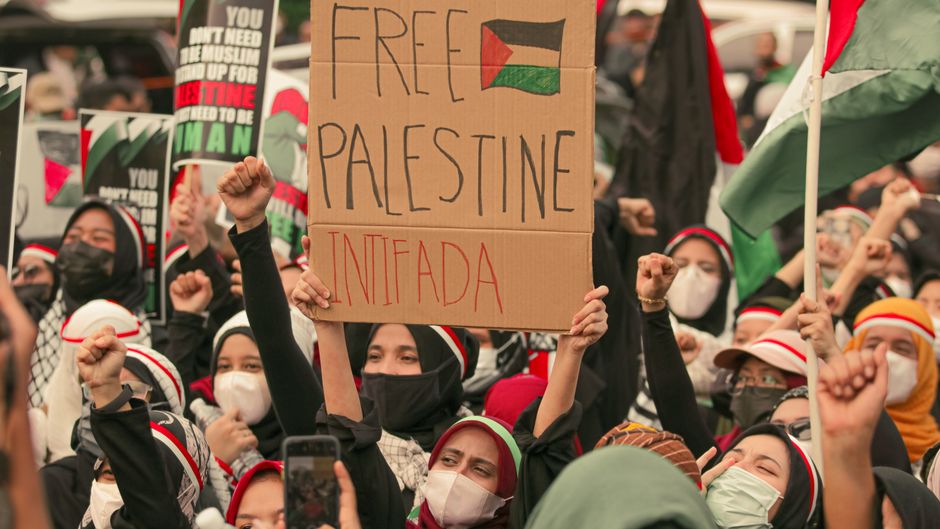
How many bodies does it take for the world to notice a simmering injustice? Another **protest** in a perpetually contested land has turned deadly, leaving a stain on the claims of those who champion “freedom” in the region. This isn’t just another headline; it’s a grim reminder of whose lives are deemed expendable in the great games of nations.
According to Al Jazeera, a protest in Pakistan’s Kashmir has stalled after at least nine individuals were killed in violent clashes. This tragic toll underscores the brutal reality faced by populations caught in the crossfire of geopolitical ambition and local grievances.
The Volatile Ground of Kashmir’s Protest
To understand why a protest in “Pakistan’s Kashmir” — officially known as Azad Jammu and Kashmir (AJK) — erupted with such lethal consequences, one must peel back layers of complex history. This isn’t the Indian-administered Kashmir that often dominates international headlines; this is the other side of the Line of Control, a region Pakistan claims to be “liberated” but which many residents feel is far from free. For decades, the entire Kashmir region has been a flashpoint, disputed between India and Pakistan since partition in 1947. Both nations administer parts of the territory, each claiming the whole.
The people of AJK, despite being on the Pakistani side, have their own distinct set of grievances. These often revolve around issues of governance, resource distribution, and perceived economic neglect. They frequently feel marginalized by Islamabad, even as Pakistan vociferously advocates for the rights of Kashmiris across the border. Historically, any significant challenge to the authority of the Pakistani state within AJK is met with a swift and often heavy hand. The recent clashes represent a dangerous escalation, highlighting the deep-seated frustrations that boil beneath the surface of official narratives. Such incidents expose the inherent tension when a disputed territory’s population attempts to assert its will against its de facto administrators. This latest deadly episode adds another tragic chapter to an already blood-soaked saga.
When “Liberation” Becomes Oppression
This incident rips the mask off Pakistan’s carefully curated image as the sole defender of Kashmiri rights. Islamabad consistently lambasts India for its human rights record in Indian-administered Kashmir, yet when its own citizens in AJK rise in protest, the response is chillingly similar: state force leading to multiple deaths. This is the ultimate hypocrisy, laid bare for all to see. The mainstream narrative often sidesteps the internal dynamics and dissent within Pakistan’s Kashmir, preferring to focus solely on the injustices across the border. However, this deadly crackdown proves that the struggle for self-determination and basic dignity is not a one-sided affair.
Who wins here? Certainly not the people of Kashmir, who continue to be pawns in a larger geopolitical chess match. The Pakistani state, by quashing dissent, temporarily reasserts control, but at the immense cost of legitimacy and trust among its own populace in AJK. This heavy-handed approach risks alienating the very people it claims to protect, potentially fostering deeper resentment and instability in an already volatile region. The international community, often quick to condemn human rights abuses in one part of Kashmir, frequently turns a blind eye when similar incidents occur on the other side. This selective outrage only emboldens regimes to act with impunity. When a peaceful protest results in nine fatalities, it signals a dangerous erosion of democratic space and a stark warning about the lengths to which states will go to maintain their grip, even in territories they ostensibly “liberate.”
The bodies piling up in Pakistan’s Kashmir are not just statistics; they are a damning indictment of a system that prioritizes control over human life. How long will the world pretend that the cries for justice only echo on one side of a contested border? Until we acknowledge the full spectrum of oppression in Kashmir, the suffering will only continue, a permanent scar on the conscience of nations.
Source: Google — South Asia