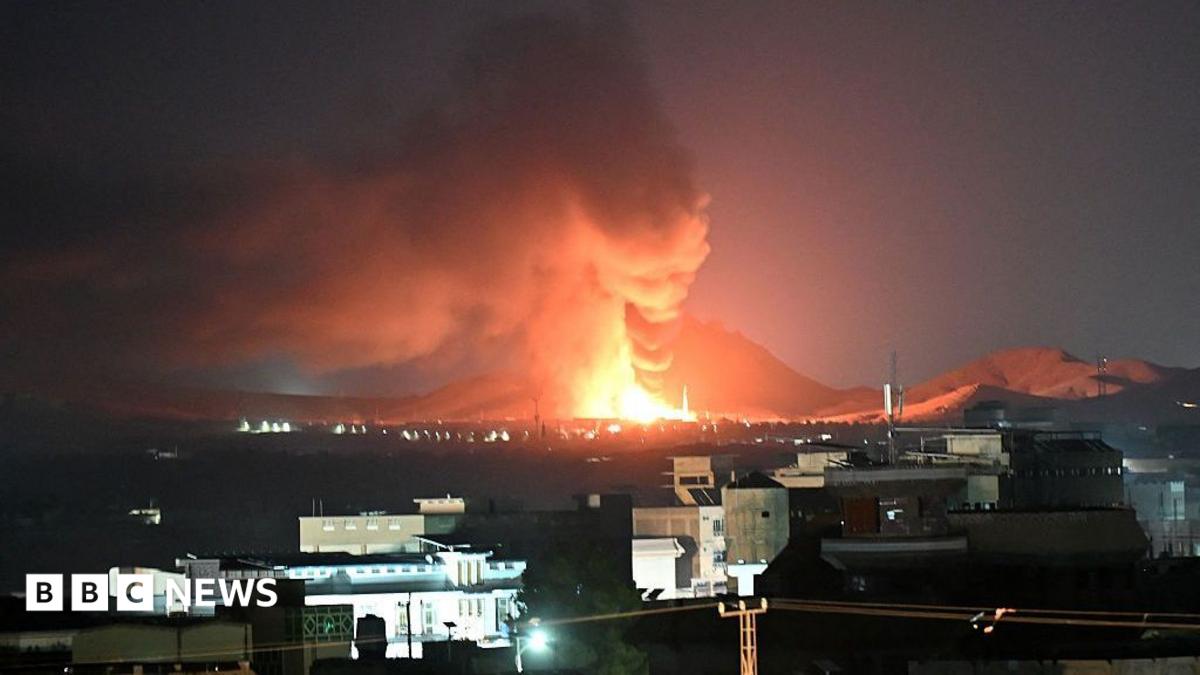
Four civilians are now a grim tally that Pakistan’s cross‑border strikes have added to an already volatile Afghanistan‑Pakistan frontier. The number is small enough to be dismissed as “collateral,” yet large enough to force a reckoning about how far any state will go when it claims to be hunting “identified military objectives.”
According to the BBC, Pakistani forces said they hit ten targets inside Afghan territory on Thursday, insisting the attacks were “strictly limited to identified military objectives.” The same report confirmed that four civilians were killed in the bombardment, a fact that the Taliban quickly highlighted in a public statement condemning the raid.
Why the Four Civilian Deaths Matter
The death of four non‑combatants is not merely a statistic; it is a flashpoint that revives a decades‑long pattern of border skirmishes and mutual accusations. Historically, both sides have used the porous Durand Line as a convenient excuse for incursions, blaming each other for supporting insurgents. The recent strike comes after a series of Pakistani drone operations aimed at neutralising Taliban‑linked militants who allegedly use Afghan soil as a launchpad for attacks inside Pakistan’s Khyber Pakhtunkhwa province. In turn, the Taliban’s government in Kabul has been under pressure from its own populace, who are weary of any violence that drags them back into the nightmare of 2001‑2021.
The timing is crucial. Pakistan is navigating a delicate political transition, with parliamentary elections looming in early 2027 and a fragile coalition that cannot afford a major security misstep. Meanwhile, the Taliban is trying to cement its diplomatic legitimacy, courting regional powers and seeking aid from the United Nations. Four civilian deaths undermine both narratives: they expose Pakistan’s willingness to risk civilian lives for a tactical edge, and they hand the Taliban a propaganda victory to portray the Pakistani military as an occupying force. The episode also threatens to destabilise the nascent peace talks that have been quietly progressing under the auspices of Qatar and the United Nations.
The Hot Take: Regional Power Play and Accountability
The core issue isn’t the number of bodies on the ground, but the message the strike sends to the wider South‑Asia security architecture. Pakistan’s justification that the operation was limited to “identified military objectives” rings hollow when civilians are caught in the blast radius. The claim of precision is increasingly at odds with the reality of outdated intelligence, inadequate coordination with Afghan authorities, and a strategic culture that treats cross‑border raids as low‑cost, high‑reward gambits.
Who wins? In the short term, the Pakistani military can claim it struck at a perceived threat, appeasing hard‑liners who demand a tough stance against any Taliban‑linked militia. However, the long‑term cost could be far steeper. The strike risks alienating Afghanistan’s leadership, pushing the Taliban to lean more heavily on Iran or China for security guarantees, thereby reshaping the regional balance of power. Moreover, the civilian casualties provide fodder for extremist narratives that paint Pakistan as an aggressor, potentially fueling recruitment for anti‑state groups on both sides of the border.
Who loses? The Afghan civilian population, already grappling with economic collapse and drought, now faces renewed fear of becoming a battlefield. The Taliban government also suffers a blow to its credibility; it must now balance its diplomatic overtures with a populace that may view any civilian loss as proof that the new regime cannot protect its people. International donors, already cautious after years of aid fatigue, might reconsider the pace of reconstruction assistance, fearing that renewed conflict could squander their investments.
What could go wrong next? If Islamabad continues to conduct unilateral strikes without transparent coordination, the Taliban could respond with reciprocal attacks, igniting a tit‑for‑tat spiral that drags the border into open warfare. Such an escalation would jeopardise the fragile economic corridors that both countries rely on for trade, especially the transit routes that move Afghan wheat to Pakistani markets and Pakistani textiles into Afghan shops. The broader South‑Asian market, already jittery over global tech supply chain disruptions, could see capital flight as investors brace for instability.
Mainstream coverage often frames these incidents as isolated “border incidents,” but that gloss ignores the systemic failure to establish a joint de‑confliction mechanism. The reality is that both governments have, for decades, preferred ad‑hoc retaliation over sustained dialogue. The four civilian deaths are a stark reminder that the status quo is unsustainable. A credible solution would require a mutually agreed monitoring framework, perhaps under the UN’s auspices, that respects sovereignty while preventing civilian harm. Until then, each strike adds another layer of mistrust.
The episode also reverberates beyond the immediate geography. Western allies watching the region’s stability for their own strategic calculations will note that Pakistan’s willingness to act unilaterally could undermine NATO’s broader goals of counter‑terrorism cooperation. The United States, still wrestling with its own domestic political distractions, may find its influence in the area further eroded if the narrative shifts to “Pakistan versus Afghanistan” rather than a cooperative fight against extremism.
In short, the death of four civilians should not be brushed aside as a statistical footnote. It is a symptom of a deeper strategic malaise that threatens to upend the delicate political dance in South Asia. The question now is whether Islamabad and Kabul will choose the path of reckless retaliation or pursue a pragmatic, if uncomfortable, partnership that puts civilian safety above short‑term tactical gains.
If the regional powers cannot learn from this tragedy, the next headline will not be about four victims but about an all‑out border war that could redraw the political map of South‑Asia. The stakes are too high for anyone to remain indifferent.
Source: BBC Asia