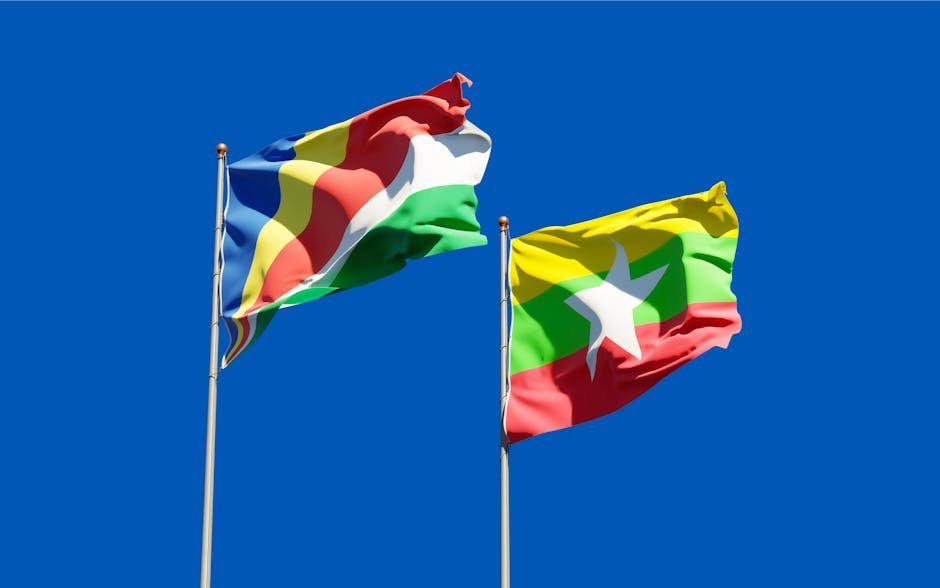
When will the international community come to terms with the fact that South Asia is a chessboard for rogue leaders? Myanmar’s General Min Aung Hlaing has embarked on his first foreign tour as leader, and it’s to India of all places. This visit is as audacious as it is alarming, turning the spotlight back on a figure who has orchestrated a brutal military coup and reignited civil warfare.
According to NPR, Min Aung Hlaing’s trip to India marks a significant moment in his leadership, as he seeks to strengthen ties with a major regional player. It’s not just a casual visit; it’s a calculated move to shore up alliances amid growing international isolation following the coup in February 2021.
The Stakes in South Asia: A Delicate Balance
This visit is a pivotal moment in South Asia’s geopolitical landscape. Min Aung Hlaing comes to India at a time when the region is fraught with tension. India has its own tumultuous history with Myanmar, especially concerning the handling of border issues and insurgents. But here’s the kicker: India also has a vested interest in keeping Myanmar aligned with its strategic interests against China. As China becomes more assertive, India finds itself in an uncomfortable position of potentially legitimizing a leader who has committed atrocities against his own citizens.
The irony is thick. India prides itself on its democratic ideals, yet it appears willing to engage with a man whose regime is anything but democratic. This contradiction raises serious questions about what it means to be a leader in South Asia today. Are principles being sacrificed at the altar of geopolitical strategy?
An Unwelcome Guest: Implications of Min Aung Hlaing’s Visit
Make no mistake—this visit is a double-edged sword. On one hand, it allows Min Aung Hlaing to project an image of normalcy. It sends a message to his supporters and detractors alike that he is still a player on the world stage, not an outcast. But on the other hand, it risks alienating India from its other allies. If India chooses to embrace Min Aung Hlaing openly, it may face backlash from Western nations who have condemned his regime.
The mainstream media may focus on the optics of this visit—diplomatic handshakes, mutual agreements—but what’s missing is the human cost of such decisions. The people of Myanmar are suffering, with reports of significant human rights violations under this junta. Engaging with Min Aung Hlaing isn’t just a political move; it’s an endorsement of his actions and a dismissal of the pleas from thousands who have fought for democracy.
As South Asia navigates this complex web of relationships, the question arises: Will India leverage its influence to push for change in Myanmar, or will it merely accept the status quo for the sake of strategic interests?
In a world increasingly defined by realpolitik, we must ask ourselves—what price are we willing to pay for cooperation, and at what cost to human rights? The visit of Min Aung Hlaing to India may just be the beginning of a troubling new chapter in South Asia, one that challenges our very notion of ethics in diplomacy.
Source: Google — South Asia