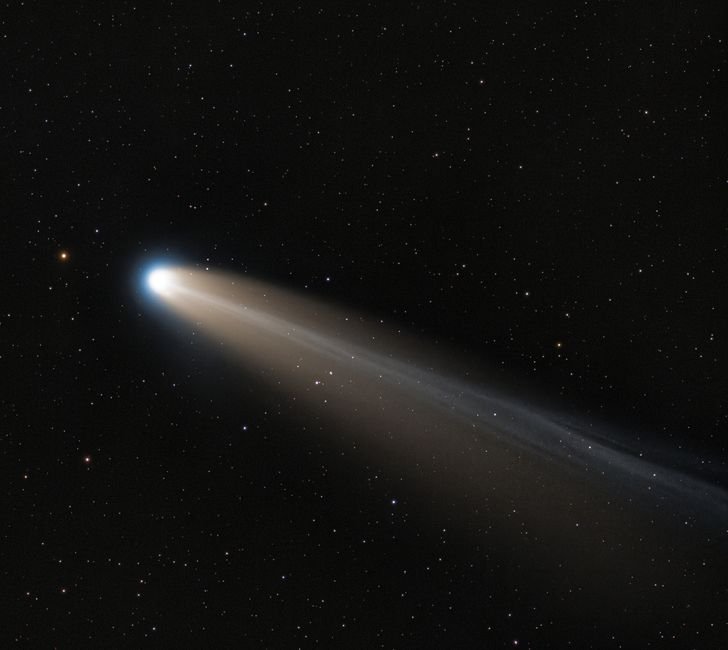
What if you could peer into the depths of space and find a familiar component of life—methane—floating around an interstellar comet? This isn’t just a whimsical thought; it’s a groundbreaking development in the realm of science. NASA’s Webb Space Telescope has detected methane on the interstellar comet 3I/ATLAS, raising profound questions about the cosmic building blocks that may exist beyond our solar system.
According to NASA, this discovery marks the first time scientists have identified methane in a comet originating from interstellar space. The findings were recently reported on their official platform, showcasing the incredible capability of Webb in analyzing distant astronomical bodies.
The Importance of This Scientific Breakthrough
This isn’t just another day at the office for astronomers; this is a moment that reshapes our understanding of the universe. Methane is not merely a byproduct of life on Earth; it is a critical molecule in astrochemistry, hinting at the potential for organic materials and even life elsewhere in the cosmos. Discovering methane on 3I/ATLAS suggests that the ingredients for life may be more widespread than previously believed, potentially leading us to rethink the very foundations of biology in the universe.
The comet was first observed in 2020, and as it raced toward the inner solar system, it drew the attention of scientists and space enthusiasts alike. Before this finding, interstellar comets were considered relatively uncharted territory—mysterious visitors from the depths of space. The presence of methane changes the game, suggesting that our understanding of how organic compounds travel across the cosmos may need a significant overhaul.
Science Meets Speculation: The Stakes of Discovery
So, what does this mean for us? While some may view this discovery as a scientific curiosity, it is much more than that. This could open floodgates for new research and explorations, pushing scientists to investigate other celestial bodies for similar signatures of organics. However, it also raises ethical questions. If these molecules can be found in the cold expanses of space, should we be concerned about what this means for our understanding of life beyond Earth? Are we prepared for the implications of potential extraterrestrial life?
The mainstream narrative often focuses on the search for intelligent life, but the truth is that the universe is teeming with the building blocks of life. The discovery of methane signals a broader biological significance beyond complex organisms. The potential implications of this finding are mind-bending. Who wins? Well, humanity does, in the grand pursuit of knowledge. But who loses? Those who hold on too tightly to the notion that we are alone in the universe.
But let’s not get ahead of ourselves. While methane is a promising sign, its presence does not confirm life. There are numerous pathways through which methane can form, some of which are entirely abiotic. However, this uncertainty does not diminish the excitement surrounding the findings. The scientific community must tread carefully while navigating both the evidence presented and the speculative waters it invites.
As we stand on the brink of what could be a new era in astronomy, one thing is clear: the universe is full of surprises. Methane on interstellar comet 3I/ATLAS invites us to reconsider not just our place in the cosmos, but also the very nature of life’s building blocks. As we unravel these cosmic mysteries, we must ask ourselves: how ready are we to embrace what we might discover next?
Source: Google — Space & Science