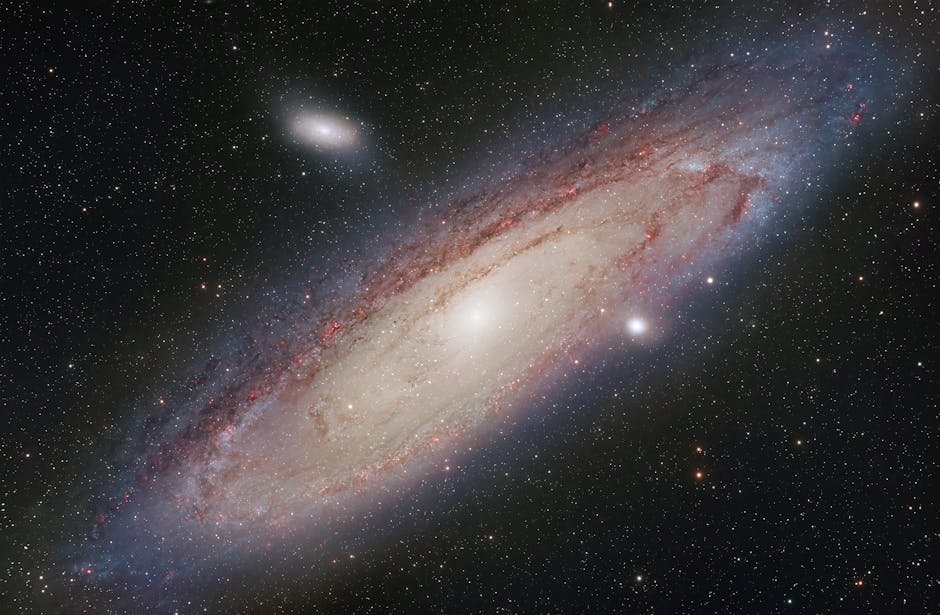
Is the search for extraterrestrial life just a scientific daydream? This question looms larger now as astronomers recalibrate their expectations following disappointments with the James Webb Space Telescope (JWST). The JWST was heralded as the cutting-edge marvel that would unveil the mysteries of the universe and potentially point us toward signs of life. Instead, it seems astronomers have a new plan that may be more science fiction than science.
According to The Planetary Society, astronomers have shifted gears after realizing the JWST might not deliver the expected signs of extraterrestrial life. It’s a sobering moment for scientists who believed that this telescope could revolutionize our understanding of the cosmos and bring us one step closer to answering humanity’s greatest question: Are we alone?
Reassessing the Science: What’s Behind the Disappointment?
In the wake of this revelation, it’s essential to understand what has unfolded. The JWST, launched with grand expectations, has been scrutinized for its inability to detect biosignatures on exoplanets that many had anticipated. While the telescope excels at capturing images of distant galaxies and nebulae, the intricacies involved in detecting life-sustaining elements on other planets seem to have eluded it, at least for now. As excitement wanes, the scientific community finds itself at a crossroads, looking for new strategies to pursue that elusive proof of extraterrestrial life.
The significance of this moment cannot be overstated. The JWST’s initial promise ignited imaginations and inspired a new generation of scientists. Yet, as it stands, this latest turn of events reveals the challenges that come with cutting-edge technology. The JWST’s current trajectory highlights a critical debate in science: Can our most advanced tools truly unveil the mysteries of our universe, or are we overestimating our capabilities?
The Stakes of Scientific Exploration: What Comes Next?
What does the shift in strategy mean for the broader scientific community? The truth is, the stakes are high. If the JWST cannot deliver on its lofty promises, it raises questions about the future of space exploration funding and public interest. Will we continue to funnel billions into projects that might not yield the promised results? Meanwhile, new projects and missions may find themselves under the scrutiny of a public that demands tangible results.
There’s also the risk of scientists getting sidetracked by the overwhelming complexity of the cosmos. While searching for life is undeniably important, this experience with the JWST should prompt the scientific community to explore new methodologies. Collaboration with tech industries to develop better detection technologies or focusing on alternative celestial bodies like Europa or Enceladus, which harbor subsurface oceans, could yield more promising results.
As we grapple with this reality, it’s crucial to remember that setbacks are a part of scientific progress. However, the mainstream narrative often glosses over the hard truth: science is not a straight path; it’s filled with unexpected turns and dead ends.
The new plan for JWST indicates a pivot towards more grounded expectations. It’s time for astronomers to embrace humility and adopt a more nuanced understanding of what their instruments can achieve. Instead of merely tracking down the existence of life, perhaps the focus should shift to understanding our planet’s relationship with the universe.
As we stand on the brink of a new era in space exploration, the question remains: will we ever find the answers we seek? In this journey, our greatest discoveries might not be in finding life beyond Earth, but in understanding the very science that guides our quest.
That tension around Disappointments Jwst is not going away.
That tension around Disappointments is not going away.
Source: Google — Space & Science