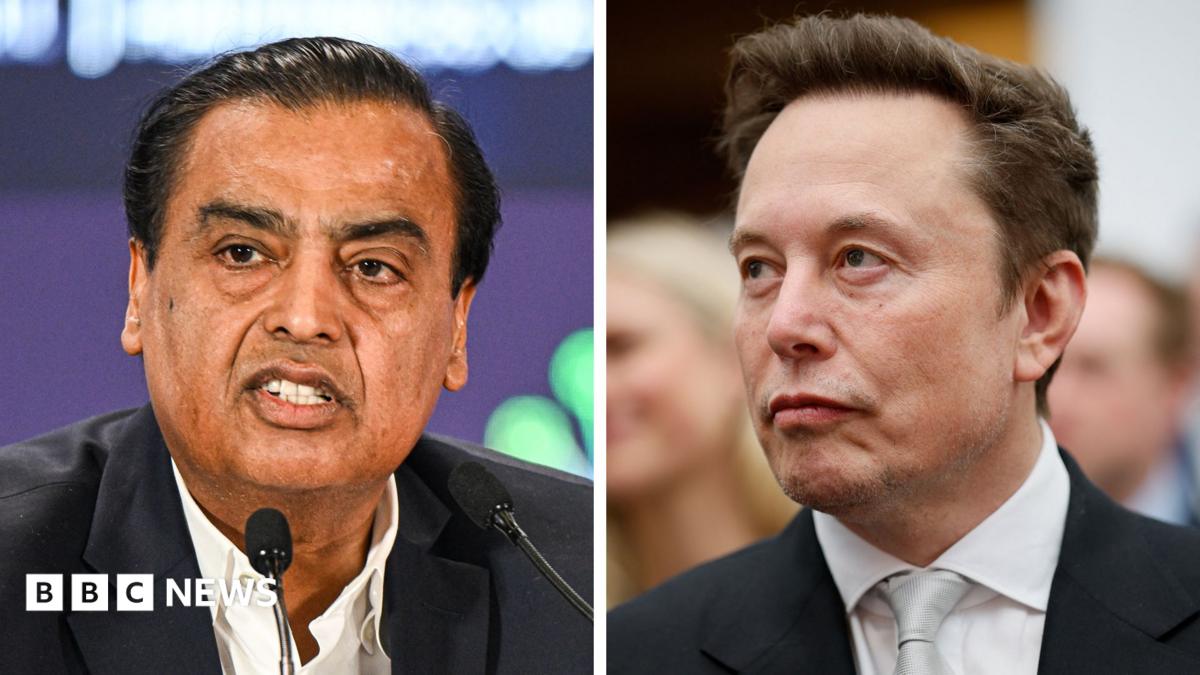
Why Elon can’t seem to keep his satellites from crashing into a political showdown is the question on everyone’s mind as the billionaire’s SpaceX arm, Starlink, hits a wall in India. The phrase “Why Elon” has already become a meme, but the reality behind the snark is a high‑stakes clash between a Silicon Valley titan and the country’s most powerful tycoon. In a series of public jabs, Musk has taken pot‑shots at Reliance Industries’ Mukesh Ambani, accusing the Indian magnate of gate‑keeping a market that could reshape the nation’s digital landscape.
According to the BBC, Starlink’s bid to launch a constellation of low‑orbit broadband satellites over India has stalled, pending approval from the telecom regulator, the Telecom Regulatory Authority of India (TRAI). The regulator has raised concerns about spectrum allocation, data sovereignty, and the potential impact on existing Indian operators. Meanwhile, Reliance Jio, Ambani’s flagship telecom brand, has already secured a dominant share of the 5G market and is preparing its own satellite‑backed services.

Why Elon’s India Gambit Matters Now
The timing could not be more crucial. India’s internet user base has surged past a billion, yet rural connectivity remains patchy, with many villages still dependent on unreliable mobile towers. In fact, the government has pledged to bring broadband to every corner of the country by 2030, a goal that aligns neatly with Starlink’s promise of instant, high‑speed internet from space. However, the path to that promise is littered with regulatory hurdles that have traditionally favored domestic players.
Reliance’s Ambani, who controls more than 40 percent of India’s telecom revenue, has built a sprawling ecosystem that includes content streaming, e‑commerce, and financial services. By keeping foreign satellite constellations at arm’s length, he protects a lucrative monopoly that could be eroded by a low‑cost, globally‑scaled alternative. The TRAI’s cautious stance, therefore, reflects not just a technical assessment but also a strategic defense of national interests—interests that happen to be deeply intertwined with Ambani’s empire.

Musk’s public attacks have taken the form of sarcastic tweets and a recent interview where he suggested that India’s “old‑school” regulators are “stuck in the 1990s.” He even hinted that Starlink could bypass Indian law by partnering with local ISPs, a claim the BBC notes has no legal basis under current Indian statutes. The billionaire’s provocations are not merely ego‑driven; they are a calculated effort to pressure the regulator into granting a fast‑track license, leveraging his global brand as a bargaining chip.
The Real Winners and Losers in the Space‑Ground Tug‑of‑War
If the dust settles in favour of Starlink, the immediate winners would be millions of underserved Indians who finally gain affordable, high‑quality internet. This could accelerate digital education, tele‑medicine, and e‑commerce in remote districts, narrowing the urban‑rural divide that has long plagued the nation. Moreover, a successful Starlink deployment would signal to other foreign satellite operators that India is open to competition, potentially inviting a wave of investment in the country’s nascent space‑tech sector.

On the other hand, the losers would be the entrenched Indian telecom giants, led by Ambani, whose market share could be sliced dramatically. A price war sparked by Starlink’s entry would force incumbents to slash tariffs, eroding profit margins that have funded massive infrastructure roll‑outs. Ambani’s broader conglomerate could also feel the ripple effects, as Jio’s data‑driven services feed into his retail and financial arms. In the broader geopolitical arena, the United States might view a Starlink foothold in India as a strategic asset, subtly shifting the balance of power in the Indo‑Pacific region.
Mainstream coverage, however, often glosses over the deeper implications. The narrative that frames Musk’s challenge as a simple “tech versus tradition” battle ignores the fact that India’s regulatory framework is deliberately designed to protect national security and data privacy. Critics argue that allowing a foreign entity unfettered access to the country’s airwaves could expose sensitive user data to external surveillance—a concern that the TRAI has highlighted in its public consultations.
Nevertheless, the mainstream also underestimates the political capital Musk wields. His ability to mobilise public opinion through social media can force regulators to act faster than they otherwise would. As the BBC reports, Indian officials have already felt the heat of a growing online chorus demanding “the fastest internet, no matter who provides it.” This public pressure could tip the scales, compelling the TRAI to issue a conditional license that satisfies both security concerns and consumer demand.
The counterargument is that India’s sovereign right to dictate its telecommunications landscape should not be compromised for the sake of speed. Ambani’s defenders claim that Reliance’s massive investments in 5G infrastructure have already created jobs and spurred economic growth, benefits that a foreign satellite network cannot match. They also point out that domestic satellite initiatives, such as ISRO’s own communication constellations, are poised to deliver comparable services without ceding control to an overseas corporation.
In reality, the outcome will hinge on how both sides negotiate the fine line between openness and protectionism. If Musk’s provocations succeed in extracting concessions, we may see a hybrid model where Starlink partners with Indian firms under strict data‑localisation rules. Conversely, if Ambani’s lobbying and the regulator’s caution prevail, the Indian market could remain a closed garden, preserving the status quo but at the cost of slower rural digitisation.
The weekend long‑read deserves a final, unsettling thought: the clash between Elon and Ambani is less about satellites and more about who gets to write the next chapter of India’s digital destiny. Will the country choose a globally‑connected future, even if it means sharing its airwaves with a billionaire’s constellation? Or will it double‑down on homegrown control, potentially leaving millions in the dark? The answer will shape not only the telecom sector but also the very fabric of India’s economic and strategic trajectory.
Only time will reveal whether “Why Elon” becomes a footnote in a broader story of Indian self‑reliance, or a rallying cry for a new era of open, sky‑borne connectivity.
Source: BBC Asia