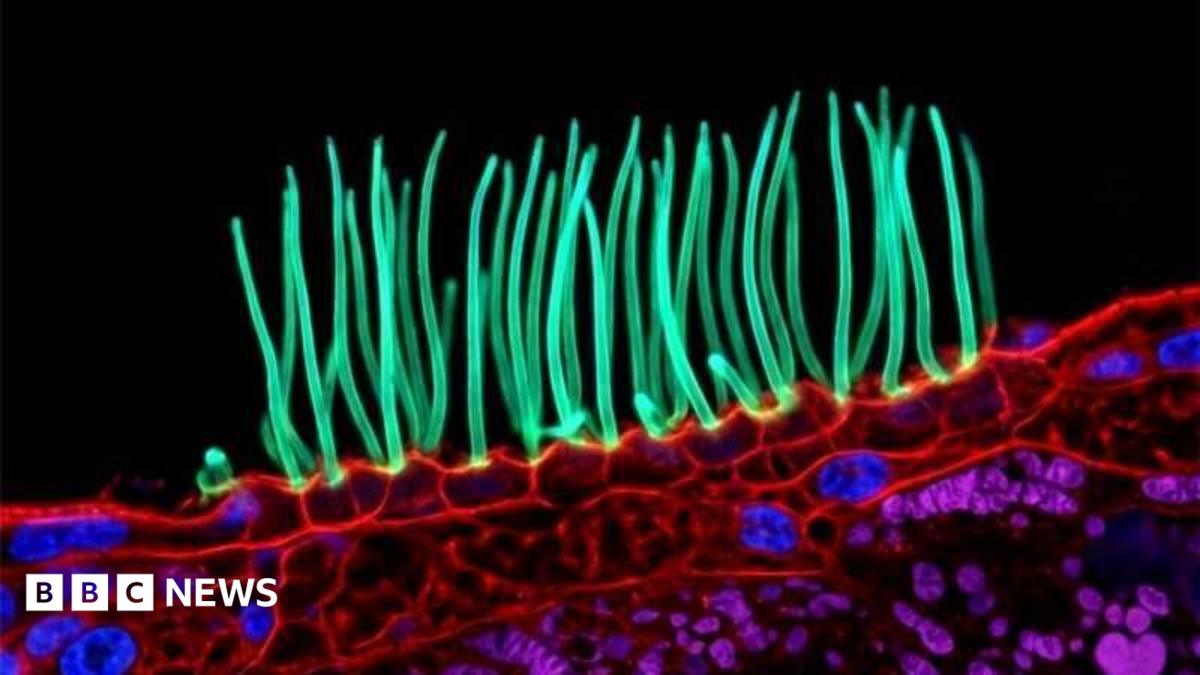
Artificial intelligence has just turned a celebrated photography contest on its head, and the backlash proves we’re still figuring out how to police a medium that thrives on illusion.
The BBC reports that Nikon’s Small World in Motion competition awarded its top prize to a mesmerizing motion‑blur image that, after a public outcry, was revealed to be generated entirely by artificial intelligence. The camera‑maker has now announced a full review of the contest’s rules and judging procedures.
Why the artificial intelligence controversy matters now
The moment the truth emerged, the photography community erupted. For many, the image represented a betrayal of a tradition that prizes technical skill, patience, and a tangible relationship with light. In fact, the Small World in Motion contest has long been a showcase for the most intricate macro and time‑lapse work, a badge of honour for those who master both equipment and environment. By allowing an AI‑crafted piece to slip through, Nikon inadvertently signalled that the line between genuine capture and algorithmic fabrication is porous at best.
The controversy is not isolated. Over the past two years, AI tools have flooded the creative market, offering anyone with a laptop the ability to conjure photorealistic scenes in seconds. This democratization challenges the gatekeepers of visual arts, but it also threatens to erode the value of years of practice. The key question, then, is whether contests like Small World should adapt to include AI as a legitimate tool, or whether they must double down on the purity of analog creation. The answer will shape how agencies, brands, and museums assess visual authenticity for the foreseeable future.
Nikon’s decision to revisit its rules reflects a broader industry dilemma. On one hand, embracing AI could attract a new generation of innovators hungry to push visual boundaries. On the other, it risks alienating the very photographers who have built their careers on painstakingly crafted images. The company’s pause suggests it recognizes the stakes: a misstep could either cement its relevance in an AI‑driven era or render it a relic clinging to outdated ideals.
The fallout and what it reveals about the photography world
The immediate fallout is already palpable. Veteran photographers have taken to social media, demanding clearer guidelines and harsher penalties for deception. Some argue that AI‑generated work should be judged in separate categories, lest it dilute the prestige of traditional awards. Meanwhile, AI enthusiasts contend that the backlash is rooted in fear of change, pointing out that the image in question was judged solely on visual merit, not on the method of its creation.
Nikon’s response, however, may set a precedent far beyond its own contests. By committing to a comprehensive rule overhaul, the brand acknowledges that the current framework—largely designed for film and digital cameras—cannot accommodate the nuanced reality of synthetic imagery. This could lead to a new taxonomy of “authentic capture” versus “synthetic creation,” each with its own judging criteria, submission requirements, and perhaps even separate prize pools.
The stakes extend to the market for photographic equipment. If manufacturers begin to certify that their gear is “AI‑compatible,” we might see a surge in hybrid devices that blend sensor data with generative algorithms. Conversely, a backlash could spur a niche resurgence of “no‑AI” gear, marketed as a safeguard for artistic integrity. Either scenario forces retailers, educators, and even insurance firms to reconsider how they value a photograph’s provenance.
Critics of Nikon’s move warn that over‑regulation could stifle creativity. They argue that imposing rigid definitions of authenticity may push innovators underground, where they’ll continue to experiment without oversight. Yet, the counterargument is compelling: without transparent standards, the public’s trust in visual media erodes, feeding the cynicism that already plagues news photography and documentary work.
In the end, the controversy underscores a deeper cultural tension. As artificial intelligence becomes more adept at mimicking human perception, society must decide whether to celebrate the tool’s capabilities or to safeguard the human hand that has, for centuries, defined visual storytelling. Nikon’s pending rulebook will likely become a reference point for that debate, shaping how galleries, advertisers, and educators treat AI‑infused imagery.
The weekend long read forces us to confront an uncomfortable truth: technology will not wait for consensus. The sooner the photography world draws a line—whether to include or exclude— the less chaotic the transition will be.
If Nikon’s revision ends up carving out a clear, enforceable space for AI, it could become the gold standard for all visual competitions. If it flounders, we may see a splintering of the industry into competing camps, each defending its own definition of what a photograph truly is. Either way, the image that sparked this storm will linger in memory not for its beauty, but for the debate it ignited—a reminder that every revolution begins with a single, contested frame.
Source: BBC Technology