Let’s be clear: when huge crowds fill the streets of Tehran, it’s never just about mourning. It’s a meticulously choreographed political spectacle, a declaration, and, as the banners suggest, a promise of retribution. The world needs to understand the signals sent amidst the grief, especially when those signals point directly to future conflict and regional instability.
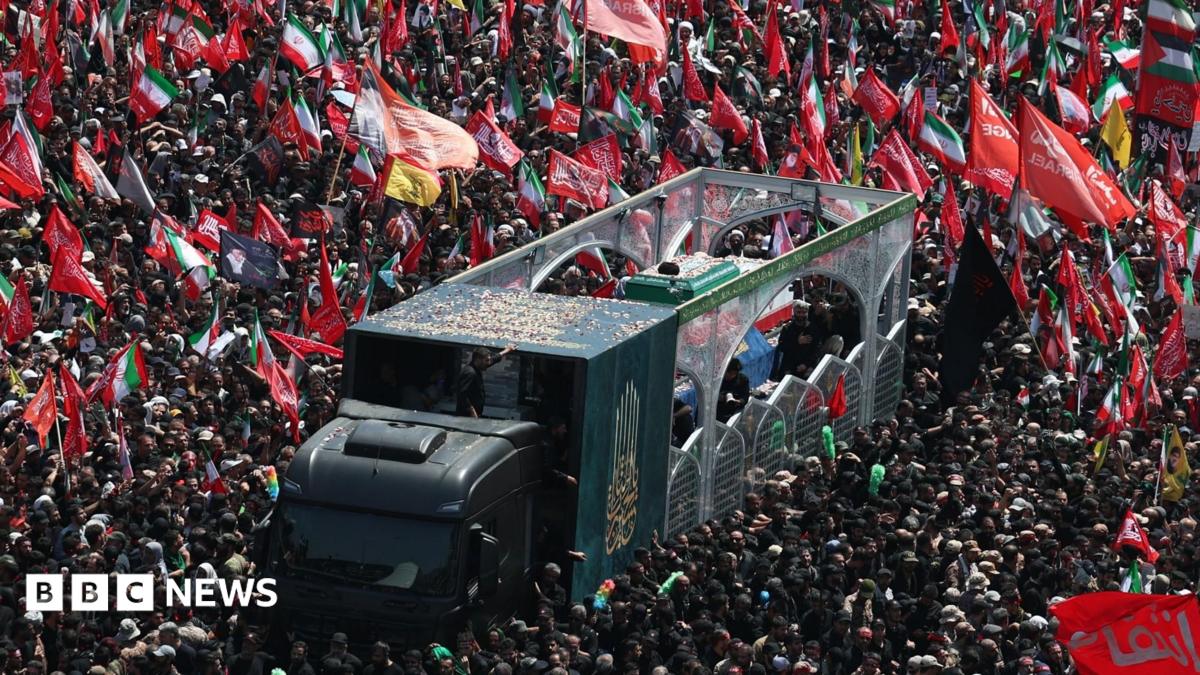
According to BBC Middle East, many people were observed waving Iranian flags and red banners during the funeral procession for the former supreme leader. These red banners, significantly, symbolized vengeance for his “war death.”
This isn’t just any funeral; it’s the farewell to a figure whose demise, described as a “war death,” immediately elevates the stakes. The very public nature of the mourning, amplified by state media and the sheer volume of attendees, serves multiple purposes. It consolidates power internally, projects an image of national unity, and, crucially, sends an unmistakable message to Iran’s adversaries. This immense public gathering, therefore, is less about personal grief and more about national resolve in the face of perceived external threats.
The context here is steeped in decades of geopolitical tension. Iran has long positioned itself as a bulwark against Western influence and a champion of regional resistance movements. The former supreme leader was a central architect of this posture. His death, particularly if perceived as an act of aggression, demands a response within the country’s ideological framework. This is a moment of transition, but also one of potential escalation, as the new leadership seeks to affirm its strength and continuity.
Consider the players: Iran, its regional rivals like Saudi Arabia and Israel, and global powers like the United States. Each watches this display, interpreting every flag, every slogan, every tear. The focus on “vengeance” is not abstract; it’s directed at those deemed responsible for the “war death,” whoever they may be. Such a public vow, backed by a huge show of popular support, inevitably ratchets up the temperature in an already volatile Middle East, making diplomacy harder and the specter of direct confrontation more immediate.
This funeral is not merely an expression of grief; it is a clear, unambiguous statement of intent. The red banners, overtly symbolizing vengeance, are not a subtle hint; they are a direct challenge to anyone who might consider Iran weakened by its leader’s passing. This massive outpouring of public emotion, whether genuine or orchestrated, presents a powerful front of unwavering commitment to the nation’s revolutionary ideals and its hardline stance against perceived enemies. It is a warning shot across the bow of any nation that might have seen the leader’s demise as an opportunity to pressure or destabilize Iran.
The implications for conflict and security are profound. A leadership that publicly vows vengeance is a leadership constrained by that vow. It must, at some point, act on it or risk losing face and authority both domestically and internationally. This puts immense pressure on the incoming regime to respond decisively to the perceived perpetrators of the “war death.” Such a response could take many forms, from proxy actions in regional flashpoints to direct military confrontations. Therefore, the funeral procession itself becomes a catalyst for potential future hostilities, raising the risk of new fronts in existing conflicts or the ignition of entirely new ones.
Moreover, these huge displays of public grief and calls for retribution serve to rally the base, solidifying support for the regime during a critical transition period. For the average Iranian citizen, participating in such an event can be a powerful expression of national identity and solidarity, regardless of their individual political leanings. However, it also creates an environment where dissent can be more easily suppressed under the guise of national unity and the pursuit of justice. The mainstream narrative might focus on the sincerity of the mourning, but the underlying message is one of unyielding power and a readiness for confrontation.
This spectacle also sends a chilling message to any internal opposition, reminding them of the regime’s capacity to mobilize and project strength. The sheer scale of the attendance, whether voluntary or coerced, underscores the enduring power of the state apparatus. On the other hand, some might argue that such large turnouts are often mandatory or heavily incentivized, thus not truly reflective of universal public sentiment. However, the visible impact on international observers remains the same: a powerful, unified Iran, prepared to act.
The world should not mistake this for mere ceremony. This is a crucial moment for Iran, and the signals emanating from Tehran are loud, clear, and concerning. The focus on vengeance, underscored by the vast crowds and potent symbolism, makes it clear that the path ahead is likely to be paved with confrontation rather than conciliation. This huge signal of national resolve is not just for internal consumption; it’s a message to the world that Iran will not be deterred from its trajectory, come what may.
Commentary · Current Affairs desk · Facts attributed to sources · Editorial policy · Corrections
Source: Source