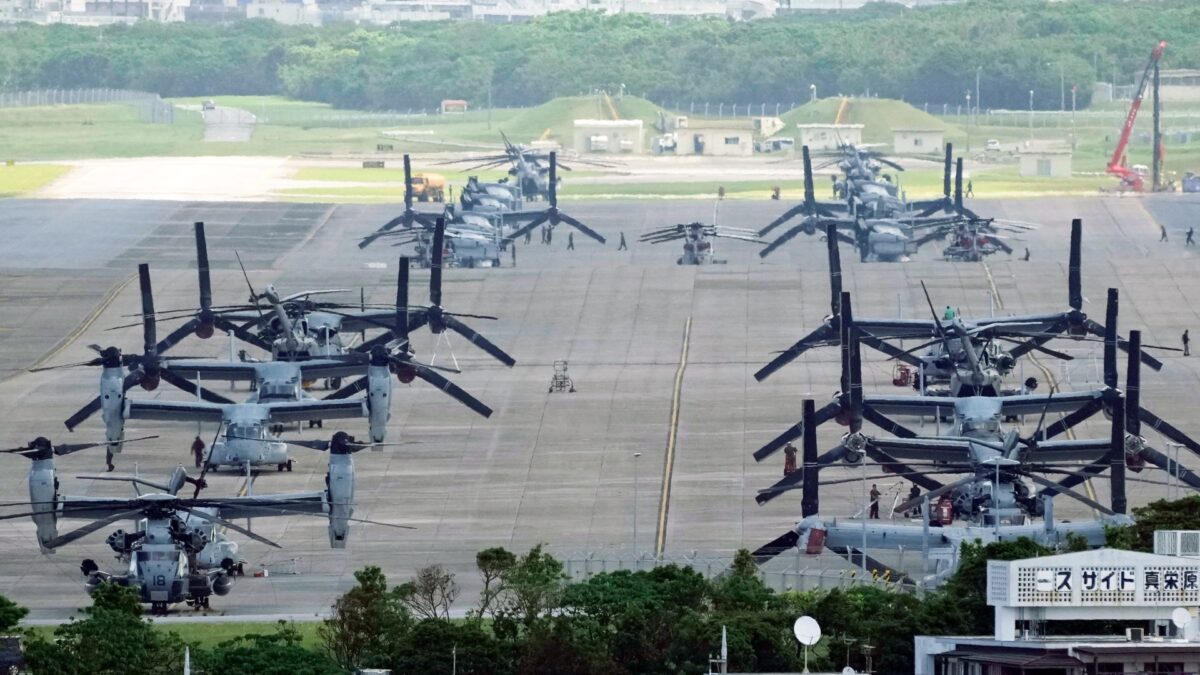
The **growing** fury over a U.S. Marine’s alleged murder of a Japanese woman has turned quiet streets in Okinawa and Tokyo into protest‑filled corridors, forcing Washington to confront a domestic scandal that could ripple through its foreign policy playbook.
According to Al Jazeera, a 20‑year‑old Marine stationed at Camp Kinser was taken into custody on suspicion of killing a 31‑year‑old local woman on a night out. The service member has pleaded not guilty, while demonstrators have gathered in both the Ryukyu archipelago and the capital, brandishing signs that blame the U.S. military’s presence for a pattern of violence and impunity.
Growing outrage and its political reverberations
The intensity of the protests is not merely a local grievance; it arrives at a moment when the United States is juggling an election‑year narrative and a strategic pivot toward the Indo‑Pacific. In fact, senior members of the U.S. Senate Armed Services Committee have already signaled they will press for a review of the Status of Forces Agreement that shields American troops from local jurisdiction. Meanwhile, the Japanese opposition parties have seized the incident to demand a reduction of the 50,000‑strong U.S. presence on the islands, framing it as a breach of sovereignty.
This backlash also dovetails with a broader conversation about how American military conduct abroad influences domestic politics. As the midterm campaigns heat up, candidates on both sides of the aisle are courting voters who view the overseas bases as an unnecessary burden. On the other hand, hawkish legislators warn that any concession could embolden China’s regional ambitions, arguing that the U.S. must maintain a credible deterrent in the East China Sea. Therefore, the “growing” public pressure is being filtered through a lens of partisan calculation, with each side trying to turn the incident into a political trophy.

In the background, the Japanese government is wrestling with its own internal debate. Prime Minister Kishida’s administration has pledged to tighten cooperation with local authorities on crime investigations involving foreign personnel, yet it also relies heavily on the security umbrella provided by the U.S. forces. Consequently, the administration’s response is being judged against both national security imperatives and the public’s demand for justice. As a result, the incident has become a litmus test for how Japan balances its alliance with Washington against the growing demand for accountability on the ground.
The hot take: what this means for U.S.–Japan ties and domestic politics
If the Marine is eventually convicted, the U.S. will face a diplomatic dilemma that could force a recalibration of its base‑rights in Okinawa. A harsh sentence might appease Japanese outrage but could set a precedent that undermines the legal protections long enjoyed by service members abroad. Conversely, a swift acquittal could inflame anti‑U.S. sentiment, feeding narratives that the alliance is a one‑sided arrangement benefiting only Washington.
From a U.S. political perspective, the episode arrives at a juncture where the administration is already under fire for its handling of overseas incidents, from the Philippines to the Middle East. Critics on the left argue that the government’s refusal to address systemic issues within the military justice system reflects a deeper moral failing. Meanwhile, conservative commentators contend that the focus on a single case distracts from the broader strategic necessity of keeping troops stationed in Japan to deter aggression. Both sides, however, agree that the **growing** controversy will dominate the political conversation in the weeks leading up to the elections, shaping voter perceptions of national security competence.
The real danger lies not in the courtroom outcome but in the narrative that will dominate the public sphere. If the media and politicians allow the story to be reduced to a simple “bad apple” incident, the underlying grievances about base noise, environmental damage, and cultural friction will remain unaddressed, perpetuating a cycle of protest. If, instead, the case sparks a comprehensive review of the U.S. presence—potentially leading to a phased drawdown or a renegotiated status of forces—it could alter the strategic calculus that has underpinned American influence in East Asia for decades.
In short, the **growing** outrage is a flashpoint that could either force a constructive dialogue on how the U.S. and Japan share security responsibilities, or it could deepen mistrust and fuel nationalist rhetoric on both sides of the Pacific.
The question now is not merely whether the Marine will be found guilty, but whether Washington and Tokyo can turn this crisis into a catalyst for a more transparent, mutually respectful partnership—or whether they will let it fester into a diplomatic scar that reshapes the balance of power in the region.
Source: Al Jazeera