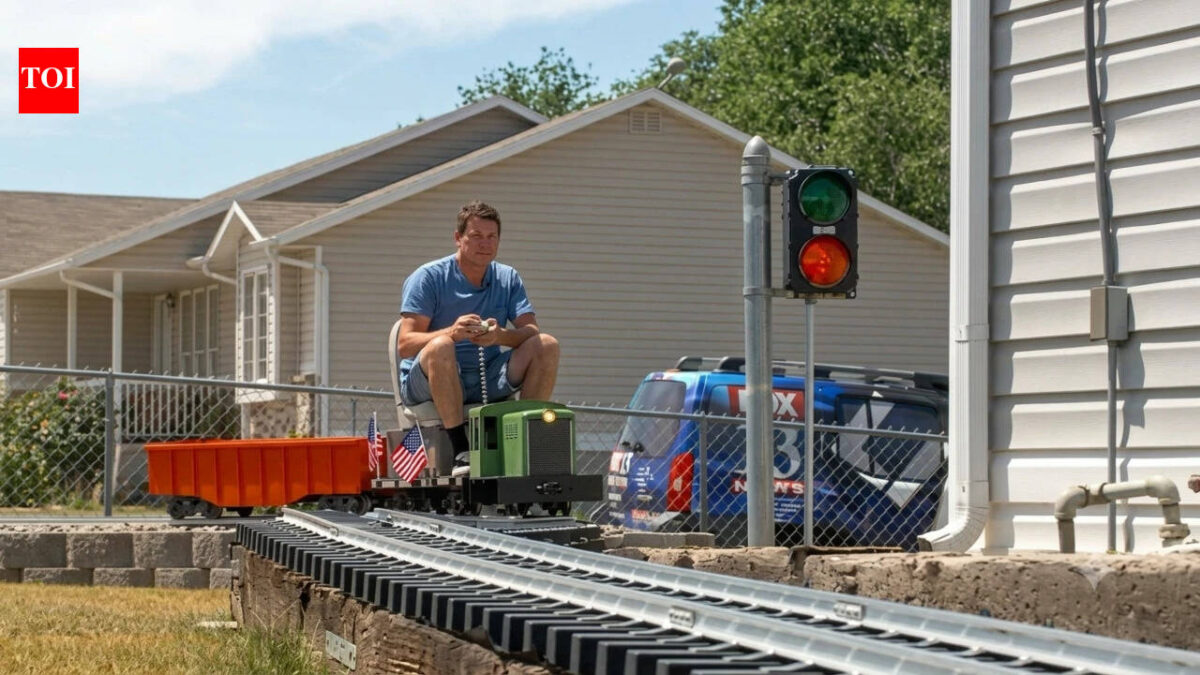
In a world increasingly fixated on grand, often digital, declarations and mega-projects, it’s easy to overlook the quiet, profound acts of community building. We pore over headlines about geopolitical tensions and market fluctuations, yet sometimes the most significant news unfolds not in boardrooms or parliaments, but in a backyard in Utah.
According to a report from the *Times of India*, Cory Mohl of West Valley City embarked on an ambitious backyard railroad project in 2015. He dedicated hundreds of hours and an estimated $18,000, hauling 40,000 pounds of gravel to construct around 400 feet of track. This miniature railway now serves as a beloved neighborhood fixture, bringing joy to local children and fostering connections among residents.
In the Pursuit of Community
Why does a man building a backyard train matter? Because it represents a powerful counter-narrative to the isolating trends of modern life. We live in an era where digital interactions often supersede tangible ones, where gated communities and private screens replace shared public spaces. Mohl’s initiative is a defiant act of generosity, a deliberate effort to weave a stronger social fabric right outside his back door.
In this fragmented landscape, the simple act of providing a place for children to play and neighbors to gather becomes revolutionary. It speaks to a yearning for connection that sophisticated apps and curated online experiences can never truly satisfy. Mohl isn’t just laying track; he’s laying the groundwork for real human interaction. He’s investing in social capital, an asset far more valuable than any stock market dividend.

More Than Just Tracks: The Real Investment
The mainstream media, and indeed our collective consciousness, often prioritizes discussions about large-scale infrastructure, economic indicators, or political maneuvering. We spend our Mondays dissecting the week ahead in terms of GDP, interest rates, and legislative battles. Yet, stories like Mohl’s remind us that true progress often happens on a far more personal, grassroots level. This isn’t about profit margins or electoral victories; it’s about the fundamental human need for belonging.
In fact, Mohl’s project highlights a critical blind spot in how we define “investment.” We track billions poured into data centers and defense contracts, but how do we quantify the value of a shared laugh, a new friendship forged, or a child’s wonder? The $18,000 Mohl spent might seem like a small sum in the grand scheme of things, but its return on investment in community goodwill and shared happiness is immeasurable. This isn’t just a hobby; it’s a public service, privately funded and passionately executed.
Critics might argue that such an initiative is a niche curiosity, irrelevant to broader societal challenges. However, they miss the point. These small, localized acts of kindness and creative effort are precisely what build resilient communities from the ground up. They provide the human infrastructure that underpins everything else, creating a sense of shared ownership and collective well-being that no government program can fully replicate. We need to ask ourselves if we are too busy chasing abstract numbers to recognize the tangible benefits of simple, heartfelt endeavors.
As we look towards the week ahead, perhaps we should shift our focus beyond the usual political machinations and market predictions. What if we started measuring the health of our societies not just by economic growth, but by the number of backyard railroads, community gardens, or shared spaces that ordinary people are creating? In the end, perhaps the real infrastructure worth investing in is the human spirit, the drive to connect, and the courage to build something beautiful for everyone, one rail at a time.
Source: Times of India