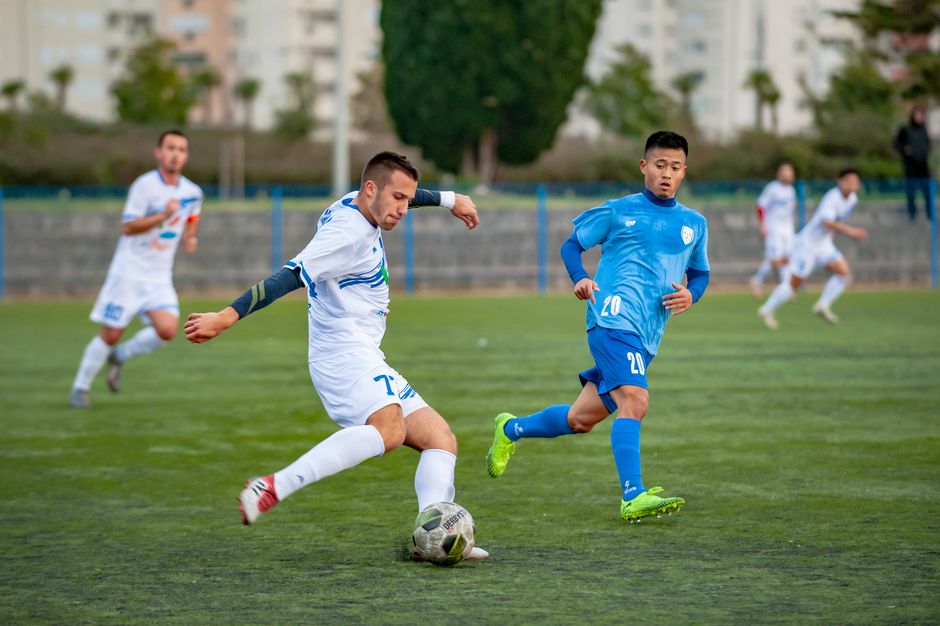
Five years. That’s how long it takes for the sheen to dull, for the roar of the crowd to fade, and for the hard truth of a career to set in. We often celebrate the glory, the medals, the fleeting moment of triumph. But what happens **From Olympic** gold to the grind of everyday football? The reality is often far less glamorous than the podium.
According to `World Football Index`, five years ago Brazil seized gold at the delayed Tokyo 2020 Olympic Games, played in 2021, marking their second historic football championship. This victory saw them successfully defend their title from Rio 2016, cementing their status as an Olympic football powerhouse.

The Road From Olympic Glory
Olympic football, particularly for men, exists in a strange limbo. It’s a youth tournament with an overage player allowance, a showcase for emerging talent and a last hurrah for some established names. For Brazil, a nation that breathes football, an Olympic gold medal is more than just silverware; it’s a validation, a promise of future greatness.
The Tokyo 2020 squad was packed with players hoping to use that platform as a launchpad. Many were already on the radar of European scouts, but a gold medal win significantly amplifies that attention. It adds a layer of expectation, a narrative of ‘champion’ that can either propel a player to superstardom or become a heavy burden. The transition **From Olympic** hero to consistent club starter is rarely smooth.
This retrospective by `World Football Index` isn’t just about nostalgia; it’s a crucial examination of player development. It asks whether the immense pressure and spotlight of such a victory truly translates into sustained success at the highest club and international levels. For every player who ascends, how many others find their careers plateauing or even declining, unable to live up to the hype?
The unique structure of the Olympic tournament means teams aren’t always fielding their absolute A-list senior players. Therefore, the gold medal often goes to a blend of established club players slightly past their peak for senior national teams, and hungry, ambitious youngsters. It’s a snapshot of potential, not necessarily a guarantee of what’s to come.

The Gold Standard or a Golden Cage?
Here’s the inconvenient truth: an Olympic gold medal in men’s football is often a golden cage. For the national federation, it’s a huge win – national pride, bragging rights, and a boost to the youth development system’s image. But for the individual player, especially the younger ones, it can be a deceptive milestone.
The mainstream narrative celebrates the triumph, but rarely interrogates the aftermath with the same intensity. We see the ticker-tape parades, but not the relentless pressure to perform at a higher level, to justify the ‘Olympic champion’ tag. Many promising talents struggle to adapt to the rigors of top-tier club football or the senior national team, where the stakes are even higher and the competition far more brutal.
Consider the sheer number of promising youngsters who shine brightly in such tournaments only to fade into obscurity. The intensity of an Olympic campaign, compressed into a few weeks, demands peak performance and incredible mental fortitude. Yet, these are often qualities still being honed in players barely out of their teens.
The real winners, in many cases, are the clubs who own these players’ rights. A gold medal can instantly inflate a transfer fee, turning a promising prospect into a marketable commodity overnight. They cash in, while the player navigates the treacherous path of career progression under a magnifying glass.
Moreover, the tournament’s timing often clashes with crucial club pre-seasons, leading to fatigue and potential injuries before domestic campaigns even begin. This isn’t just about glory; it’s about player welfare and sustainable career growth. The system, designed for a spectacle, often overlooks the long-term impact on its participants.
Brazil’s success **From Olympic** glory in 2021 was undoubtedly spectacular. But five years on, `World Football Index` forces us to ask: how many of those champions truly reached the elite tier they seemed destined for? How many are still household names beyond their home country, let alone for a global audience? The answer, for many, is a sobering descent back to earth.
So, when we next see the Olympic football final, let’s celebrate the moment, by all means. But let’s also remember that the true measure of success isn’t just a gold medal hanging around a young player’s neck. It’s the journey **From Olympic** triumph into the unforgiving world of professional football – a journey where few truly become legends, and many simply become footnotes in a golden chapter.
Source: World Football Index