
The FIFA Head Sets a curious deadline, revealing less about football’s future and more about its newfound, eye-watering financial ambitions.
This week, the world of football leadership, typically consumed by on-pitch drama and the occasional scandal, turned its gaze to the bottom line. FIFA, the sport’s global governing body, confirmed plans to establish a new commercial entity, valuing it at an astonishing $20 billion. The goal, as reported by OnTheRecord, is to raise $4.2 billion in equity, ostensibly to control FIFA’s “commercial and event operations.” Adding a layer of intrigue, this ambitious venture is explicitly linked to a “Kushner-backed” plan, signaling a significant embrace of private capital.
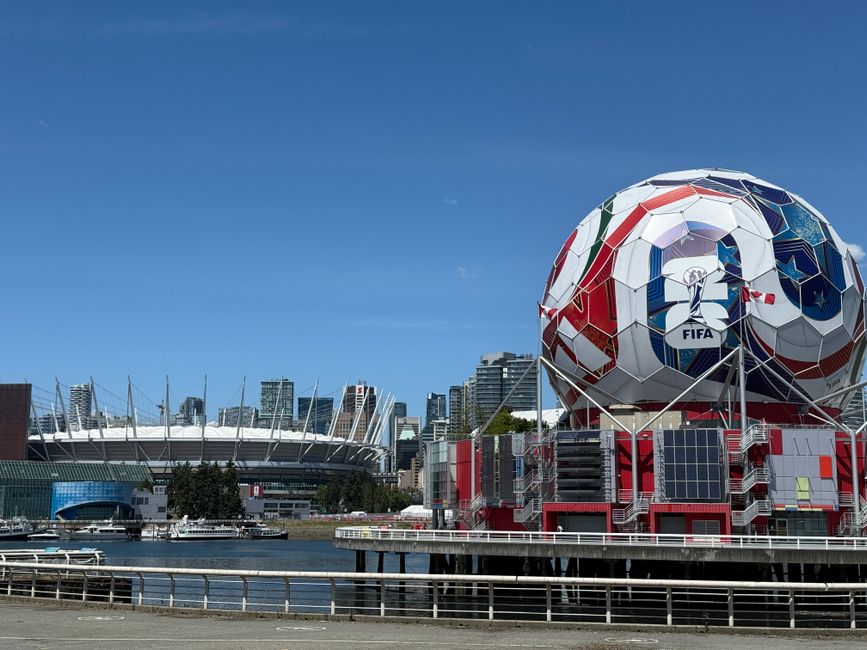
Perhaps most tellingly, FIFA has presented its 211 member associations with a deadline to claim a $20 million payout, a sum that, while substantial for many smaller federations, pales in comparison to the entity’s overall valuation. This isn’t just a financial manoeuvre; it’s a strategic play for buy-in, reshaping how the beautiful game’s commercial heart will beat.
What landed
The sheer scale of this financial undertaking is, frankly, audacious. A non-profit sporting organization, or at least one that purports to be, creating a commercial arm valued at $20 billion is a statement of intent that dwarfs previous footballing enterprises. It firmly plants FIFA in the upper echelons of global corporate finance, far removed from the dusty pitches of grassroots football.

The explicit mention of a “Kushner-backed” plan further underscores this shift. It signals a deliberate pivot towards high-stakes private equity, bringing with it a new cohort of investors and, inevitably, a different set of expectations regarding returns and control. This isn’t just about selling television rights; it’s about monetizing the very essence of the World Cup and other FIFA events on an unprecedented scale.
The $20 million offer to each member association is, from a cynical perspective, a masterstroke. It provides a tangible, immediate benefit to federations, many of whom operate on shoestring budgets. While the sum itself might seem generous, it also serves as a potent incentive, likely intended to smooth over any potential resistance to a deal that consolidates significant commercial power at FIFA’s executive level. It’s a carrot dangled with considerable strategic acumen.
What doesn’t add up
Here’s where the narrative truly begins to fray. FIFA has long maintained its status as a non-profit organization, dedicated to the development and promotion of football worldwide. Yet, the creation of a $20 billion commercial behemoth, actively seeking $4.2 billion in private equity, feels like a spectacular contradiction to that fundamental principle. One might wryly wonder if the ‘nonprofit’ label now simply refers to the *speed* at which profits are funneled elsewhere.
Historically, FIFA’s leadership, particularly in the wake of past corruption scandals, has often emphasized transparency, good governance, and a commitment to redistributing wealth for global football development. This latest move, while promising significant funds to members, simultaneously centralizes an enormous amount of commercial power and potential profit in a new, privately-backed entity. The question isn’t just about how much money is being made, but *who* ultimately benefits, and at what cost to the sport’s broader ecosystem. Is the $20 million a genuine boon, or a tactical payment to secure acquiescence to a structure that might, in the long run, diminish the autonomy and voice of those very member associations?
Furthermore, the briefing is conspicuously silent on the implications for transparency and accountability within this new commercial structure. What kind of oversight will the member associations have over an entity valued at $20 billion, especially one with significant private investment? The past has taught us that where vast sums of money and opaque structures meet, the risk of impropriety often follows. This plan, while financially robust, seems to offer scant reassurance that the lessons of the past have been fully absorbed. It’s a grand financial play, but one that raises more questions about long-term stewardship than it answers.
Monday morning, the reverberations of this announcement will be felt across every football federation, from the smallest island nation to the biggest European powerhouse. The choice before them is stark: accept the $20 million and embrace a new, commercially driven future for the World Cup, or resist and risk being left behind. What changes is not just FIFA’s balance sheet, but potentially the very soul of global football, as commercial imperative takes an even firmer grip on the beautiful game.
Source: OnTheRecord