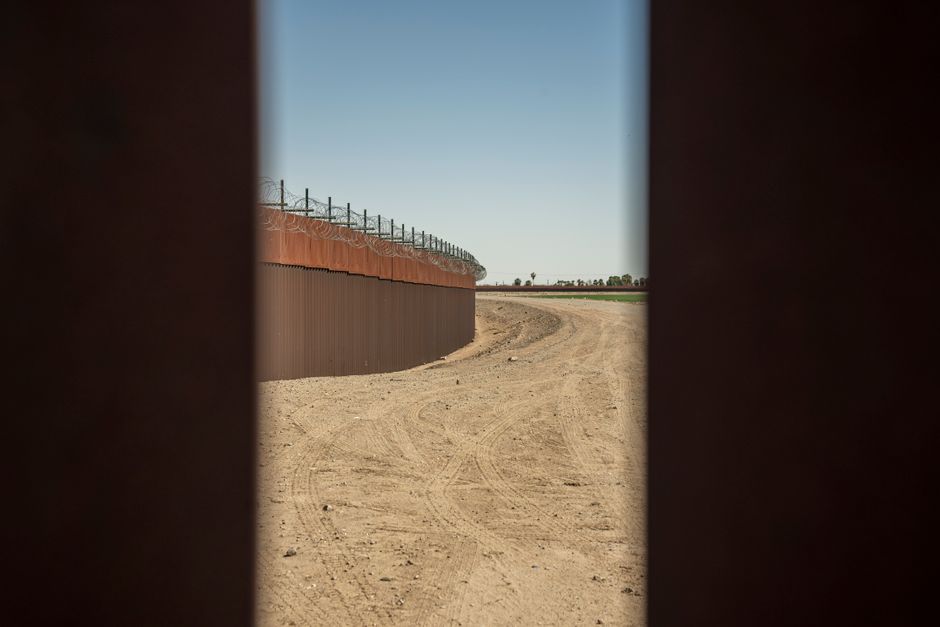
The latest Breitbart report regarding **Illegal Aliens** and Border Patrol isn’t so much an interview as it is a carefully constructed dispatch from the front lines, offering a glimpse into the complex, often contradictory, realities of border enforcement.
This “exclusive,” published by Breitbart, details U.S. Border Patrol agents performing rescues in the rugged mountains east of San Diego. The report centers on two separate incidents where individuals, identified as “illegal aliens,” suffered from heat-related illnesses and required “daring missions” by agents. In the broader political landscape, where narratives of border control often clash with humanitarian concerns, this article positions Border Patrol as simultaneously enforcers and saviors.

The timing, amidst persistent, heated debates over immigration policy and the operational realities at the U.S.-Mexico border, is no accident. It presents a particular facet of border dynamics, one that highlights danger and official response, rather than the broader socio-economic drivers of migration. The piece, in its very structure and language, aims to shape perception of both the individuals crossing and the agents tasked with intercepting them.
What landed
What emerges clearly from the Breitbart piece is the sheer, undeniable brutality of the terrain and the risks undertaken by those attempting to cross outside official channels. The report, in its straightforward account of individuals succumbing to heatstroke, serves as a stark reminder that the desert, unlike political pundits, is entirely indifferent to legal status or intent. Heat-related illnesses are a grim, apolitical reality of these journeys.
The article also, perhaps inadvertently, shines a light on the complex, dual role played by Border Patrol agents. While their primary mandate is enforcement and prevention of illegal crossings, the report unequivocally demonstrates their humanitarian capacity. Responding to distress calls and performing rescues, even for those they are meant to apprehend, reveals a layer of duty that transcends mere policing. It humanizes the agency, presenting agents as individuals who, when faced with immediate peril, prioritize life over legal status. The “daring missions” moniker, while a touch dramatic, effectively conveys the very real risks these agents undertake in such remote and unforgiving environments.
What doesn’t add up
The most glaring incongruity in the Breitbart report rests in its linguistic choices. The consistent and unblinking use of the term “Illegal Aliens” throughout the title and summary, a phrase widely considered dehumanizing by many, sits rather awkwardly next to a narrative celebrating agents who undertake “daring missions” to *save* these very individuals. One could reasonably infer that the publication wishes to highlight the “cost” of these rescues to the taxpayer, a subtle undercurrent that cheapens the humanitarian aspect. It’s a rhetorical tightrope walk, attempting to laud the rescuers while maintaining a specific, often punitive, framing of the rescued.
Furthermore, the “exclusive” tag affixed to what reads as a fairly standard account of operational activities is a curious choice. While the details might be fresh, the underlying story – Border Patrol agents performing rescues – is hardly novel. This branding serves less to break new ground and more to elevate the perceived importance of *this specific report*, perhaps to underscore a particular narrative point: that the border is perilous and agents are heroically managing the fallout. It spotlights the *response* to the crisis while largely sidestepping a deeper analysis of the underlying causes that compel people to embark on such perilous journeys in the first place. There’s a notable silence on the policies, economic pressures, or political instability that fuel these desperate crossings, leaving the reader to focus solely on the symptoms rather than the systemic issues. The article, while revealing the immediate reality, ultimately frames the challenge as one of containment and rescue, rather than comprehensive understanding or systemic reform.
When the dust settles on this report, Monday morning won’t necessarily bring a sea change in policy or public opinion, but it will certainly reinforce existing fault lines. It serves as a stark reminder of the human cost of border crossings, the perilous environment, and the inherently complex, often paradoxical, role of enforcement agencies. For those already convinced of the need for stricter border controls, it highlights the dangers and the strain on resources. For those advocating for more humane approaches, it underscores the desperation that drives individuals to such extremes. Ultimately, it’s a story that both praises and implicitly critiques, leaving the reader to navigate the moral ambiguities of a very real, very present crisis.
Source: OnTheRecord