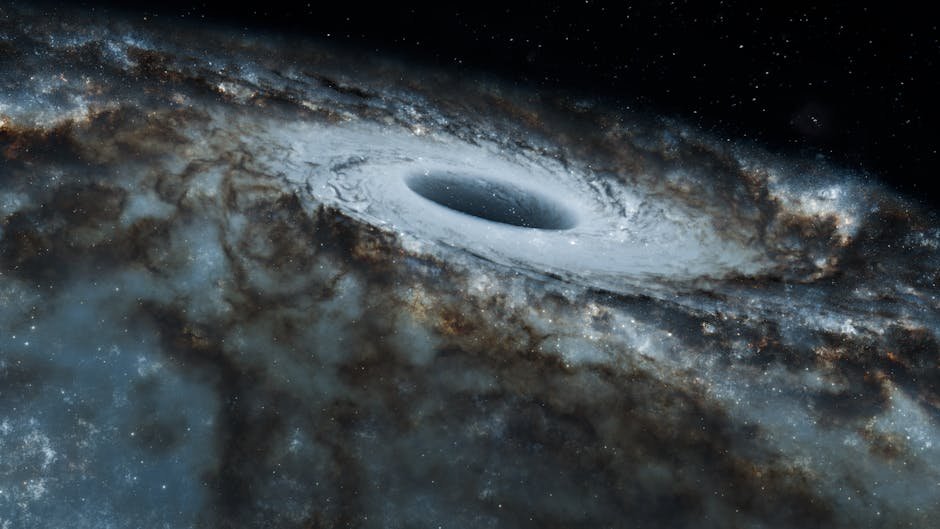
If you think the mysteries of the universe are solely in the realm of science fiction, NASA’s latest revelation might just change your mind. The discovery of a black hole that formed before its own galaxy is not just a scientific curiosity; it’s a cosmic drama that raises urgent questions about how we understand the universe itself.
According to NASA, the James Webb Space Telescope has identified a black hole that emerged prior to the formation of its host galaxy, pushing the boundaries of current astrophysical theories. This surprising find suggests that black holes can develop in isolation, challenging our previous assumptions about the relationship between these cosmic giants and the galaxies they inhabit.
The Importance of This Scientific Revelation
This discovery is significant for several reasons. First, it compels scientists to revisit the timeline of the universe’s evolution. We typically view black holes as the end products of massive stars collapsing, forming after the galaxies themselves have begun to take shape. The revelation that a black hole could predominate in a cosmic void raises questions about how galaxies and black holes interact over time.
The players in this unfolding story are cosmic titans—the black hole at the center, which appears to have formed in the very early universe, and the galaxy that eventually formed around it. The implications stretch beyond mere curiosity; they touch on the fundamental principles of cosmology, including how matter coalesces into larger structures and the role black holes play in this process.
The Stakes of Cosmic Science
The stakes of this scientific revelation are enormous. If black holes can indeed form independently of galaxies, it challenges the established narrative of cosmic evolution. Researchers must now grapple with rethinking how matter behaves in the early universe. This could lead to a paradigm shift in astrophysics, with consequences rippling through our understanding of dark matter, dark energy, and the forces at play in the cosmos.
But let’s not forget the political subtext here. While scientists delve into the intricate fabric of the universe, powerful institutions still wrestle with earthly conflicts and security issues. What does it say about our priorities when we invest billions in understanding distant black holes while our own planet faces existential threats from climate change, war, and social unrest? The irony is palpable: we can peer into the abyss of space yet struggle to resolve the conflicts at our doorstep.
In the grand scheme, the scientific community stands to gain tremendously from this discovery, fostering innovation and sparking public interest in space exploration and science. It might even serve as a reminder of the need for cooperation, both in the scientific realm and in global relations. After all, if humanity is to survive, understanding our universe—however daunting it may be—might just be the first step toward learning how to coexist peacefully on our fragile planet.
As we look to the cosmos, one question remains: will we let the mysteries of the universe inspire us to tackle the pressing issues on Earth, or will we continue to let them drift into the background of our collective conscience? The choice between conflict and cooperation in science, and by extension in society, is one that must be made—before it’s too late.
Source: Google — Space & Science